
How can we sign up more food service outlets?
Discover how to grow your sales in the out-of-home foodservice market (RHF): key figures, industry challenges in 2025, and tips to attract, convince, and retain points of sale.

In short
16 min read
The Horeca sector in France is mostly made up of independent establishments, making each point of sale unique and requiring a personalized field sales approach.
The foodservice sales force acts as a relationship builder and an account manager rather than just a supplier, providing follow-up, product advice, and long-term revenue growth.
The foodservice market is dynamic but complex, representing 20% of out-of-home food spending, with supply chains dominated by wholesalers like Metro or Pomona.
Current trends (digitalization, the rise of under-35s) and challenges (inflation, issues related to mixology and customer experience) require businesses to adapt their offerings and sales pitches.
Attracting restaurant owners now relies on inbound marketing and creating high-value-added content (recipes, expertise) to engage them rather than reaching out to them unnecessarily.
The precise qualification of points of sale using tools like CRM and scoring helps optimize sales reps' time by targeting high-potential establishments.
Customer loyalty is a key driver, boosted by digital tools that facilitate quick contract signing and a consistent field presence to sustain partnerships in a competitive environment.
The Out-of-Home Catering (OOH) sector – locally known as Restauration Hors Foyer (RHF) – encompasses several segments: Horeca (cafes, hotels, restaurants), contract catering (such as Sodexo or Elior), as well as service distributors like Selecta. It is a market that is both dynamic and demanding, presenting numerous opportunities but also specific challenges when it comes to prospecting and selling.
In France, the Horeca sector is characterized by a structural particularity: it is mostly composed of independent establishments, unlike other countries like the United Kingdom or Switzerland, where organized chains and networks dominate. This means it is not possible to sign a few centralized contracts to cover a wide scope. Here, each point of sale must be approached individually, with a sales strategy tailored to its specific characteristics.
For you, the OOH sales team, this implies a stronger field presence, high-quality relationships, and a real ability to persuade. Selling does not rely solely on negotiation, but on a tailored approach adapted to each individual client.
The importance of the sales force in the field
In OOH, sales processes are structured, but the diversity of interlocutors adds complexity to interactions. In this context, relationships play a key role. This is where the OOH sales representative comes in. Their role is not limited to selling a product; they are first and foremost a relationship builder, responsible for establishing solid connections with restaurateurs and retaining them in the long term. Alongside them, the brand ambassador promotes the brand through their product expertise and supports establishments as a true advisor.
The role of the OOH sales rep is not limited to a one-off sale: it is based on an account management approach. It is about managing a client portfolio over time, maintaining a close connection, anticipating needs, and providing concrete solutions.
The objective is clear: to grow revenue by encouraging recurring orders. This involves having a regular presence, highlighting products, developing upselling opportunities, and securing renewals.
All too often, this mission is still delegated to distributors. However, the commercial relationship must remain managed internally. The distributor handles logistics, but it is up to the sales rep to structure, track, and drive the sale. Performance is built in the field, as close to the customers as possible.
The OOH market in figures
The Out-of-Home Catering market is a pillar of food consumption in France. It represents 20% of food expenditures away from home. A dynamic but fragmented sector, with a multitude of players and supply channels.
Nearly 50% of the products consumed come from specialized wholesalers like Metro or Pomona. These distributors play a key role in supplying establishments. Understanding these channels is essential for any brand wishing to establish itself in this market. Every partnership becomes a strategic opportunity.
But beyond traditional channels, the usage patterns and profiles of players in the sector are also evolving.
Over 60% of employees are under 35 years old. A new generation, eager for trends and innovation, is transforming the sector. Digital technology is making its mark: already 30% of commercial catering establishments use digital tools to manage their inventory and orders. An opportunity to seize to adapt your approach.
But the sector must also face major challenges:
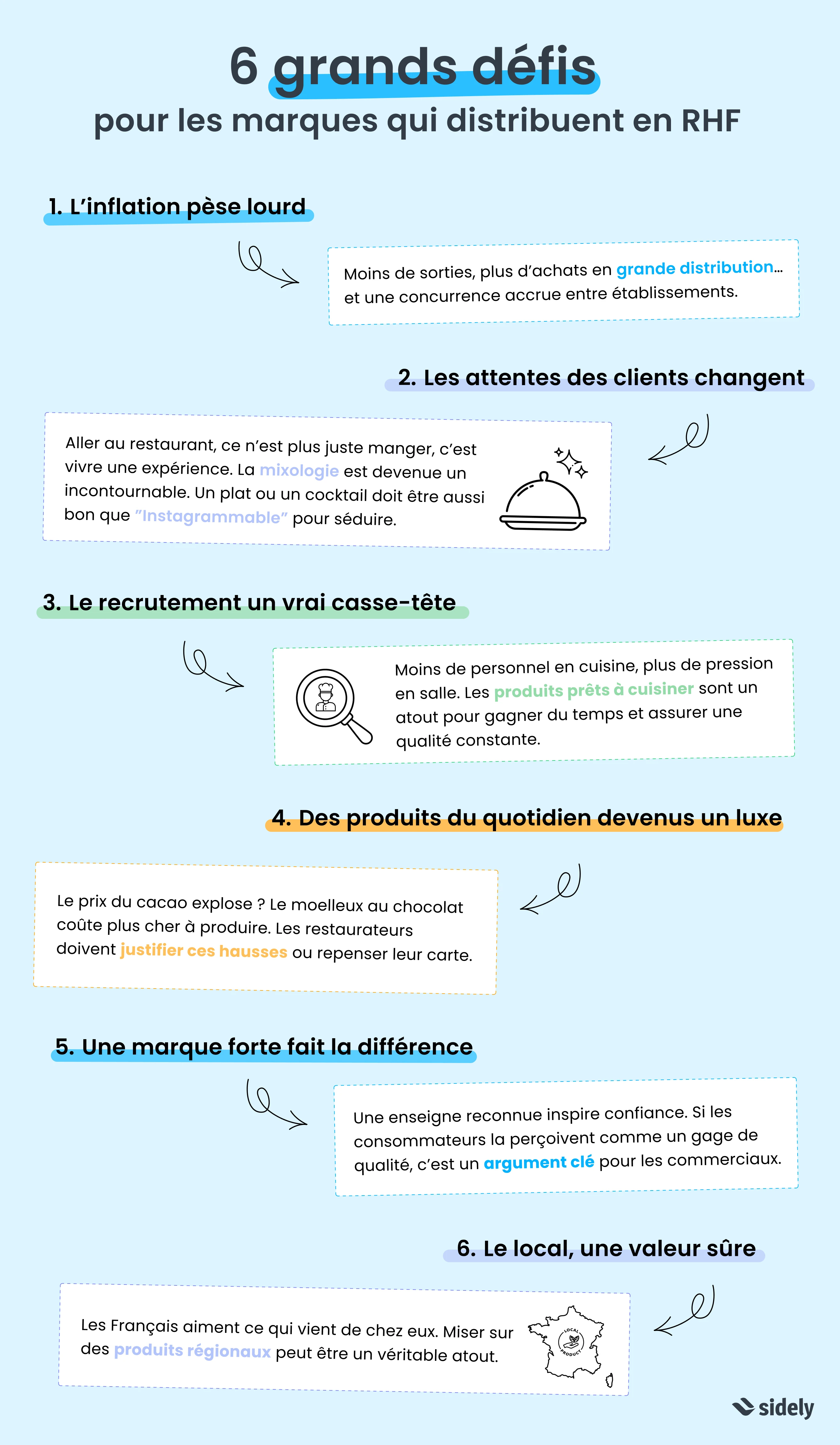
Inflation weighs heavily: fewer outings, more purchases from retail supermarkets... and increased competition between establishments.
Customer expectations are changing: going to a restaurant is no longer just about eating; it's about having an experience. Mixology has become a must. A dish or a cocktail must be as good as it is "Instagrammable" to win people over.
Recruitment, a real headache: less kitchen staff, more pressure in the dining room. Ready-to-cook products are an asset to save time and ensure consistent quality.
Everyday products becoming a luxury: is the price of cocoa skyrocketing? The chocolate fondant is more expensive to produce. Restaurateurs must justify these price increases or rethink their menu.
A strong brand makes all the difference: a recognized name inspires trust. If consumers perceive it as a guarantee of quality, it is a key argument for sales reps.
Local sourcing, a safe bet: French consumers love local products. Betting on regional products can be a real asset.
From attraction to loyalty: mastering every step of prospecting in OOH
Attracting restaurateurs rather than approaching them cold
In a market saturated with sales pitches, capturing the attention of restaurateurs requires a more strategic approach. Many brands target end consumers... forgetting that it is the chefs and restaurateurs who make the purchasing decision. To reach the right target, you must speak to the right stakeholders.
So, instead of relying on intrusive methods, focus on inbound marketing and the appeal of your content. The idea is simple: attract restaurateurs with useful, relevant, and inspiring information, rather than trying to sell them a product directly.
1. Creating a community with high-impact content
The objective? Unite a community around the brand with content that speaks to professionals. No more generic speeches: make way for concrete and engaging formats. Recipes, kitchen tips, advice on how to showcase a product and integrate it into a menu. Give before asking: this is how you trigger interest and encourage them to test your products.
To strengthen engagement, storytelling can be a powerful tool. By sharing anecdotes, testimonials, or personal experiences, a brand humanizes its message and builds an emotional connection with its audience.
2. Social media and lead generation
Social media must be a lever to generate qualified leads. The more restaurateurs see the brand addressing them, the more inclined they are to adopt it.
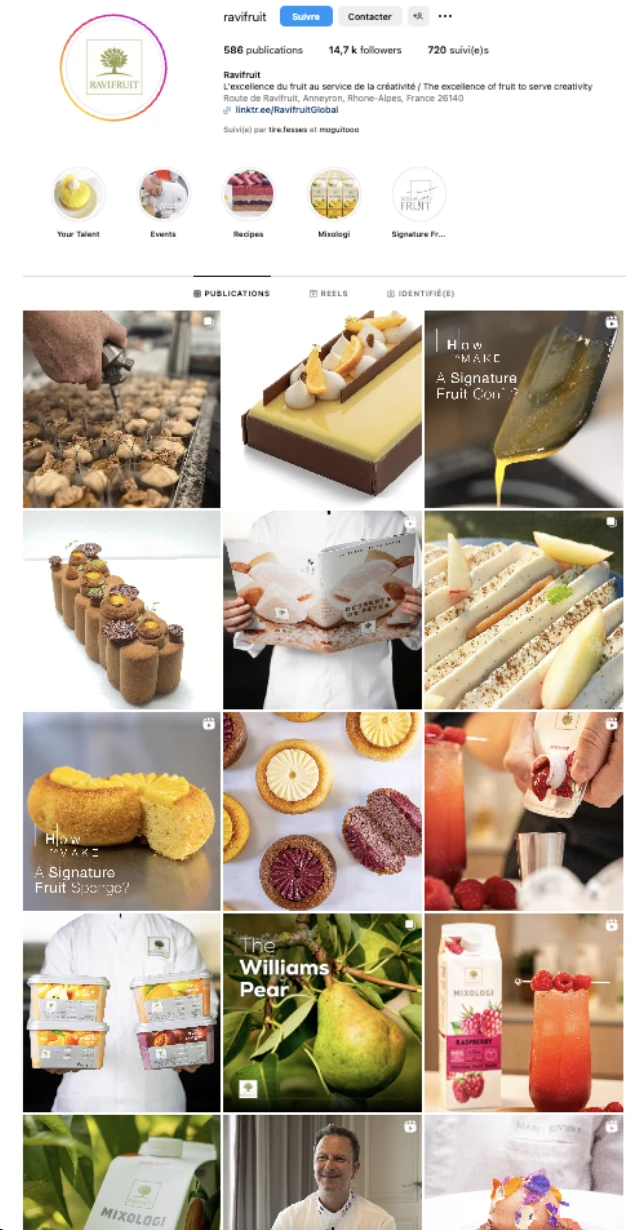
This is the strategy of Ravifruit, a premium brand of fruit purées, which relies on its brand ambassador chefs to create engaging content. A live masterclass with a mixologist can demonstrate how to incorporate their purées into signature cocktails. This interactive format strengthens the brand's expertise and drives engagement.
But to be effective, content must meet market expectations. Analyzing sales feedback is essential to refine the digital strategy and adjust content to the needs of professionals.
3. Returning to the field and being authentic
Authenticity is essential: you need to understand restaurateurs, interact with them, listen to their needs, and integrate them into your communication through customer testimonials. Rather than a purely commercial approach, you must reconnect with the field and put human connection before the brand. This is how you will build relationships and turn your clients into ambassadors.
Prospecting in OOH: take action
In a sector as competitive as out-of-home catering (OOH), prospecting relies on two key levers: direct contact and efficiency. Unlike inbound marketing, which aims to attract prospects through content, outbound marketing requires a proactive approach. You have to seek out clients, capture their attention, and convince them step by step. This is often what makes the difference in developing a strong commercial network.
But you still need to know who to address. Too often, sales teams rely on obsolete databases, making it difficult to identify the right contacts. A structured and up-to-date CRM is essential to qualify contacts, avoid targeting errors, and optimize efforts right from the start.
At Sidely, this issue is tackled head-on through the integration of Google Maps into the CRM interface, which provides an updated view of points of sale. This allows you to spot relevant establishments at a glance and better target your sales actions. But targeting well is only the first step. Because in the field, every minute counts. Efficiency also depends on optimal route management. By organizing their trips better, sales reps can visit up to 15 establishments per day. Sidely allows them to map out their routes smoothly, avoid downtime, and increase the number of qualified appointments.
However, prospecting does not stop with the first visit. Nurturing the relationship with restaurateurs, kiosks, cinemas, or other OOH establishments is essential. It is not just about persuading, but about making it last. For example, as the summer season approaches, good client follow-up secures reorders and preserves market share against competitors.
To support this dynamic follow-up, Sidely offers a powerful field management tool. Thanks to the mapping of points of sale, every visited establishment is recorded in real time using a customized form. This data is then analyzed to track active clients, identify friction points, and adjust the sales strategy. This approach helps improve the quality of follow-ups, increase the conversion rate, and build long-term relationships.
Qualifying a point of sale: determining potential and maximizing impact
Qualifying a point of sale is an essential step to ensure that an establishment meets the brand's criteria. Without this analysis, prospecting is likely to be inefficient and time-consuming. The stake is simple: quickly determine if the opportunity is viable.
It all starts with a precise evaluation of the potential of the point of sale. In the beer sector, for example, it involves analyzing the volume of sales in hectoliters to measure the capacity to absorb a new brand. In pastry, the question relates to the kitchen setup: can the team produce desserts? Does the offer already exist? Rigorous qualification avoids low-profit opportunities and focuses efforts on high-potential establishments.
Qualification does not stop with this initial analysis. It is also essential to determine the right timing and method for effective follow-up. Identifying the ideal period to re-prospect, knowing the distribution channels, and understanding how they work makes it easier to anticipate upcoming commercial actions.
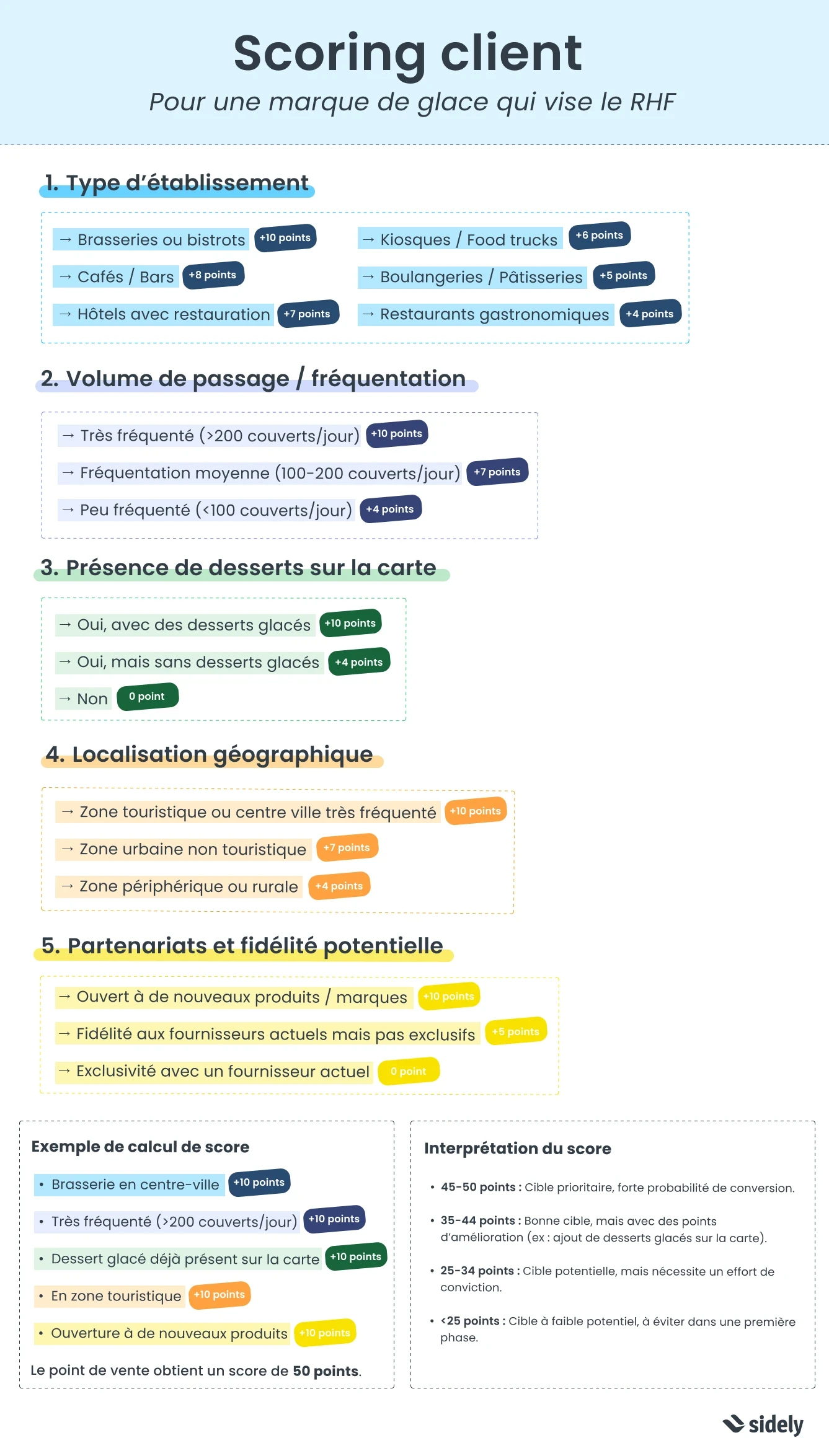
A lever that is still underutilized in this process is lead scoring. Though underused, it allows you to prioritize leads by assigning a score to prospects based on their conversion and loyalty potential. Rather than prospecting at random, this method directs efforts towards the establishments offering the highest return on investment.
Effective qualification saves time and optimizes prospecting. By better targeting points of sale, customer acquisition is more efficient and the brand's placement is more sustainable.
Retaining your clients: transforming a signature into a long-term commitment
Signing a client is a first step, but the real challenge is to keep them. Loyalty relies on several strategic levers, including market support and exclusivity contracts. Offering conditional advantages, such as a retrocommission on a reached sales volume, or securing commitment through an exclusive contract, helps strengthen the relationship in the long term.
Also, an administrative delay can jeopardize an agreement if the client changes their mind before the contract is signed. Sidely eliminates this risk by allowing users to instantly generate and sign a contract on the app. This responsiveness reduces churn (client loss rate) and frees sales reps from administrative tasks, allowing them to focus on selling.
The frequency of visits must therefore be adapted to each phase of the relationship. During activation, a regular presence helps the restaurateur integrate the brand. In the retention phase, a balance must be found: a prolonged absence can cause the client to forget the brand, while an excessive presence can seem intrusive. It all comes down to the right timing and assessing churn risk.
Beyond physical visits, social networks play a key role. A visible and engaging brand on digital platforms stays top-of-mind for restaurateurs when they place orders. This influence must begin early, by addressing young talents in hospitality schools and creating content adapted to their expectations.
Retaining a client means nurturing a relationship by adapting to their needs. A strategy adjusted to the client lifecycle, a presence at the right time, and a strong brand image turn a simple collaboration into a solid and lasting partnership.
See also

Artificial intelligence and field professions: what our 2026 studies reveal
Adoption, barriers, use cases: discover what our three studies reveal about the role of AI among sector managers, sales representatives, and foodservice sales reps.

CHR and RHF Sales Representatives: portrait of a relationship-driven profession in the era of data
Equipment, productivity, AI: discover the major trends for the HORECA and food service sales profession in 2026 through our field study.

Pharmaceutical Sales Representative in France: Portrait of a Field Job Under Pressure
Compensation, aspirations, AI usage: discover the major trends in the pharmaceutical sales representative profession in 2026 through our field study.

Area Sales Managers in France: who are they and how is the profession evolving in 2026?
Compensation, aspirations, AI usage: discover the major trends in the field sales representative profession in 2026 through our field study.
The area manager professions in 2026
Discover the trends, the challenges, and the key figures.