

How to use sales feedback to adapt your social media content?
Discover how to use feedback from your sales reps in the field to adapt your social media content.

In short
10 min read
Establish a structured feedback routine to ensure regular and constructive communication between marketing and sales teams.
Define clear objectives and prioritize gathered information to avoid overwhelming field teams while remaining relevant.
Centralize feedback via a CRM to make field data easily actionable for the marketing team.
Foster spontaneous communication using adapted tools, such as WhatsApp for real-time exchanges.
Analyze and categorize feedback to identify trends and prioritize high-stakes strategic actions.
Involve sales representatives by sharing the results achieved through their insights to maintain a positive feedback loop.
Use methods such as A/B testing to measure the effectiveness of content created from field feedback and optimize future campaigns.
In a world where social media plays a key role in brands' marketing strategies, creating relevant and engaging content is a constant challenge. But have you thought about leveraging your sales teams to enrich your approach? On the ground every day, your sales reps are a valuable source of information regarding customer expectations, emerging trends, and competitor actions.
By integrating their feedback into your content strategy, you can boost the impact of your social media posts. We have partnered with Tire-Fesses to bring you an article on how to implement an efficient feedback collection system, analyze these returns, and transform them into concrete actions to attract your audience while strengthening synergy between your marketing and sales teams.
Tire-Fesses is the social media agency for food industry brands that want to ramp up their presence on social media. As the first agency to integrate chefs into its staff, Tire-Fesses manages the networks of over 50 clients daily and produces more than 600 pieces of content per month.
Implementing an Efficient Feedback Collection System
Establishing a Feedback Routine
Knowing how to (correctly) gather feedback from sales reps is the essential first step if you want to improve the efficiency of marketing teams. To do this, you must set up the right tools and, above all, truly listen to their feedback. Your sales reps are eager to share their field feedback, provided it is constructive and followed by action. According to our study on area managers, 8.1% of sales reps feel that their job is poorly understood by headquarters teams, leading to overly ambitious targets and significant pressure. 12.7% of them wish to improve headquarters-field relations.
They are therefore ready to support marketing teams, particularly on a product offering better aligned with customer needs (11.1%), and an increased merchandising presence (11.1%).
However, certain rules must be followed so that the feedback process does not become time-consuming or useless.
Define Clear Objectives
For relevant feedback collection, it is essential to set precise objectives. Not everything can be reported. Therefore, information must be prioritized. Focus on specific criteria such as market trends, recurring customer reactions, or competitor communication at points of sale. This allows prioritizing data without overloading sales reps.
Organize Regular Exchanges
Organizing regular meetings between marketing and sales teams ensures efficient feedback reporting. These meetings, whether monthly or quarterly, provide a dedicated space to discuss field feedback in a structured way. They also allow addressing common issues and avoiding leaving frequent and/or important feedback unanswered.
Encourage Spontaneous Communication
In addition to scheduled meetings, it is important to encourage spontaneous exchanges.
Keep in mind that depending on age and years of experience, sales reps on the same team do not communicate in the same way. Depending on the departments, the channels used to communicate are also not the same.
Using WhatsApp can facilitate real-time communication. It is both a B2C and B2B channel. Your marketing team can therefore have a single professional number for the entire team. It is also accessible on computers. Sales reps can send photos, voice notes, or text messages from their phones. The marketing team receives the info on their computer and can use it as inspiration for their communication and social content.
Remember to properly warn, train, and familiarize everyone with the chosen channel. Brief everyone from the start. It is often useful to be rigid at the beginning to establish habits.
Choosing the Right Tools
Centralize Information via a CRM
It is essential to use a CRM to centralize sales feedback and make this data easily usable by all teams. By giving access to marketing teams, even in read-only mode, they can access customer feedback and integrate it into their content strategy.
A CRM like Sidely allows organizing field information in one place. You can filter feedback by region or retailer, which helps personalize marketing content, especially for targeted campaigns or ads adapted to each audience. Teams also have access to photos taken in the field and competitor tracking, which can help them better understand the market and final customer needs.
Standardize Data Collection
Sales reps, who are often very busy and on the move all day, can benefit from systems that allow them to report information without wasting time. It is therefore recommended to use standardized forms to ensure consistent feedback collection. These forms should be simple to fill out, with clear and precise questions. By standardizing the process, you make the sales reps' job easier while ensuring you receive comparable and actionable information.
For example, at the end of your visit sheet, you can add a question asking sales reps if they have information to pass on to marketing. Make it easy for them by choosing a CRM that allows voice notes, even offline. This way, after a store visit, they can record their feedback while leaving the point of sale, limiting the risk of losing or forgetting important information. This allows for immediate and efficient feedback without increasing the sales reps' workload.
Optimize Information Flow
Simplicity is key to an efficient feedback process. It is important to stay flexible and iterate regularly on this system to ensure it works well for everyone. Regularly ask sales reps and marketing teams if they find the process useful and easy to use. The goal is to make collection as fluid as possible to guarantee a constant sharing of field insights.
Analyzing and Categorizing Sales Rep Feedback
Analyzing and categorizing sales rep feedback are crucial steps to effectively transform feedback into actionable and relevant content. Here is how to proceed effectively:
Identify Recurring Trends and Needs
To spot frequently discussed topics and check their relevance, we advise you to segment them. You can categorize feedback according to many criteria. Among them:
The type of product concerned
The geographic area
Or the nature of the feedback (suggestion, competitor's new release, etc.)
This structured approach will allow you to identify patterns and areas for improvement more easily. You will then be able to determine the most relevant actions to take (if any) for each type of feedback and act more quickly.
Prioritize the Most Relevant Information
Once the data is analyzed, it is crucial to prioritize the information to guide your content strategy effectively. To do this:
Evaluate the potential impact of each feedback:
How frequent is this feedback?
Does it impact the brand image? How?
What is the potential impact on sales or customer satisfaction?
Align insights with your marketing objectives:
Does this feedback correspond to your priority targets?
Can it help strengthen your market positioning?
Does it offer an opportunity for differentiation from the competition?
To prioritize, we advise you to create a matrix intersecting potential impact and strategic alignment. Focus first on feedback that has a high impact and is highly aligned with your objectives.
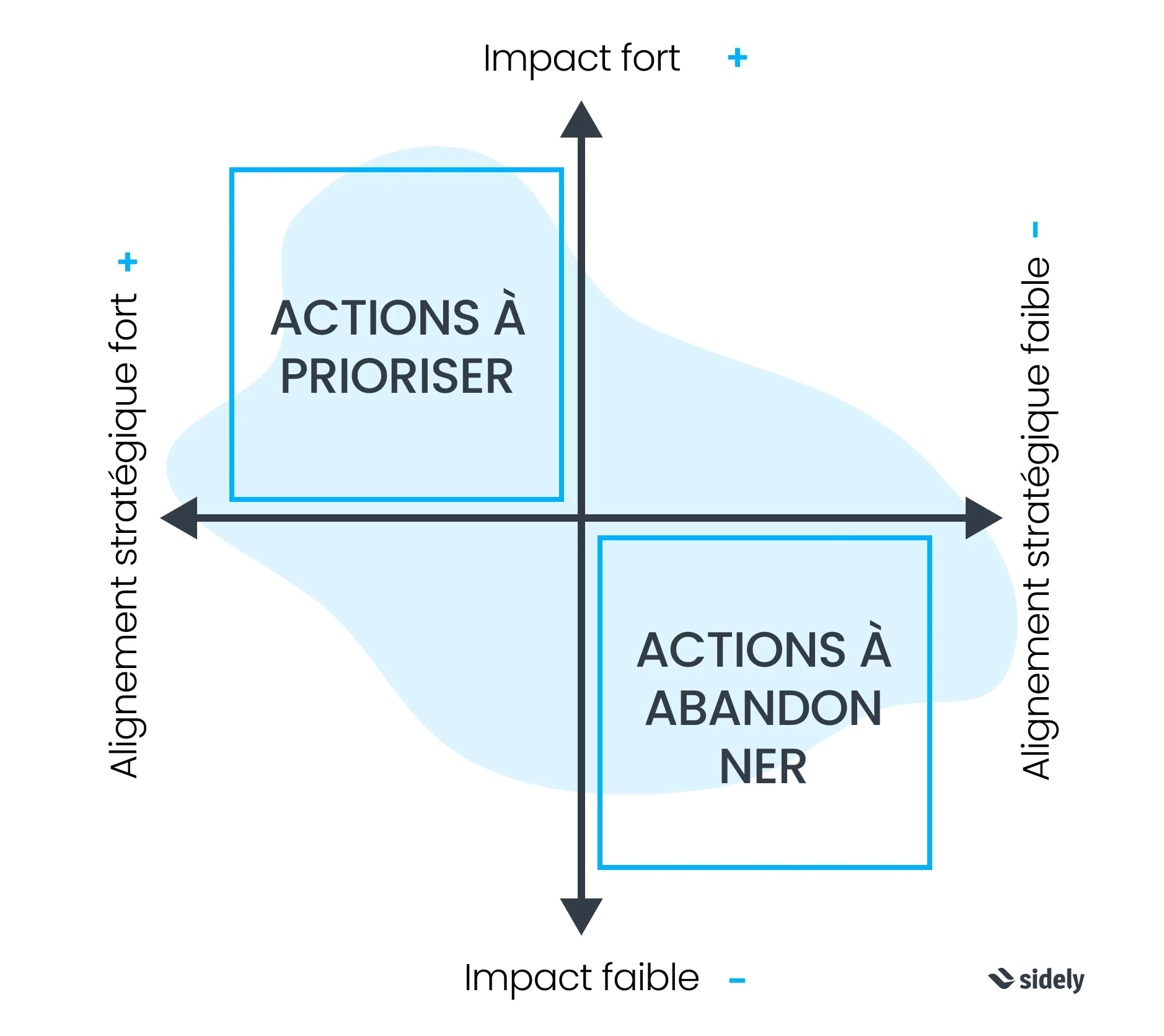
This way, you can quickly include the most impactful feedback into your current editorial calendar, and include feedback that requires changes or more in-depth work at a later stage.
By following this method, you ensure that your content meets the real needs of your audience while serving your business objectives.
Adapting Content Strategy to Field Insights
Feedback from sales reps is valuable for refining your social media content strategy. By wisely leveraging this data, you can create more relevant and impactful content for your audience.
Exploiting Intelligence Information
Sales reps are your eyes and ears in the field. Their observations on product positioning, competitor actions, and in-store trends are valuable for adjusting your digital strategy.
Track competitor campaigns: If your sales reps report a major campaign from a competitor, use specific hashtags to track and analyze this campaign on social media. This will allow you to react quickly and stand out.
Analyze key messages: Decode slogans, promises, and selling points used by your competitors on their packaging and POS displays. Use these field observations to create a unique message that sets you apart.
Adapt your visual identity: When sales reps report changes in competitors' colors or packaging, it's an opportunity to strengthen your own visual identity on social media. Highlight your distinctive colors in your posts to make store recognition of your brand easier.
Identify gaps: Spot unmet needs or blind spots in your competitors' communication. For example, if all of them highlight taste, perhaps there is an opportunity to differentiate on nutritional aspects or ingredient sourcing.
Optimizing Content Based on Store Context
Sales reps' insights into the placement and presentation of your products on shelves can directly influence your content strategy.
Guide consumers: Integrate specific directions into your content, such as "Find us in the fresh food aisle" or "Discover our new product in the snacking aisle". This practical information facilitates the purchasing act.
Enhance memorability: Use your packaging features, as reported by your sales reps, in your social media content. If your product stands out due to its unique shape or bright color, highlight these elements in your visuals to create consistency between the online and in-store experience.
Injecting Humor and Creativity
Humor can be an excellent way to stand out, especially when it is based on relevant field observations.
Create fun content: Use anecdotes reported by your sales reps to create humorous posts. For example, if one of your products is not yet widely listed, you could create a series of "ask your store" posts, asking your final customers for a little help in listing this new product.
React to trends: If your sales reps spot a local or seasonal trend, integrate it quickly into your content to show your responsiveness and connection with the field.
By regularly integrating your sales reps' feedback into your content strategy, you create a strong link between the in-store experience and your digital presence. This approach not only improves the relevance of your communications but also strengthens the synergy between your marketing and sales teams, creating a significant competitive advantage in the food sector.
Measuring Impact and Continuously Optimizing
Marketing campaigns have launched, congratulations! It is now crucial to understand if they performed better by integrating field sales feedback, and if so, to identify the reasons for this success.
Tracking Performance Indicators
To evaluate the success of a social media campaign, it is essential to track key performance indicators (KPIs). In an article on the Tire-Fesses blog, we detailed how to measure the impact of recycled social media content in-store, explaining the main KPIs to monitor.
Each social network and each goal require specific indicators. That is why you must adapt your analysis based on the type of campaign:
Is it a B2C awareness campaign?
Is it a B2B lead generation campaign? (For example, to sign up new foodservice points of sale)
Is it a contest aimed at encouraging consumers to visit stores?
…
Do your objectives vary between virality, follower growth, or communication around a launch? In any case, some common KPIs will allow you to evaluate content effectiveness:
Number of likes,
Number of comments,
Number of shares,
Number of reposts,
Brand mentions or tags,
Number of followers gained.
h4 id="101">Using Analytical Tools to Measure Engagement
Once content is created based on sales feedback, it is essential to measure its impact with suitable analytical tools. Here are some effective tools to track key engagement indicators:
Google Analytics: To track traffic sent from social networks to your website.
Facebook Insights: Provides data on likes, shares, and comments on your Facebook posts.
Instagram Insights: Tracking impressions, comments, interactions, and reach of your Instagram posts.
Hootsuite Analytics: Centralizes performance across multiple platforms (Facebook, X (formerly Twitter), Instagram, TikTok…)
TikTok Insights: Measures performance of your TikTok account and videos.
Sprout Social: Generates detailed reports on engagement and audience growth.
Buffer Analytics: Measures publication effectiveness and optimizes posting times.
If you use a CRM like HubSpot or Plezi (most often used by marketing teams), you can also track your campaign results from this tool. Although less detailed than dedicated platforms, they allow you to centralize your performance reports in one place.
Comparing Results Before and After Integrating Feedback
To measure if your content is more effective after integrating feedback, it is relevant to use A/B Testing. This involves comparing two versions of the same content by changing only one element based on the feedback received. For example, if your sales reps report that "products are not shown in real-life settings" in your visuals, you can replace a packaging image with a photo of the cooked product or add an additional visual. You then compare the performance of the two versions on your social networks to identify which one captures the audience better. If one of the contents created from these suggestions shows a significant increase in engagement or conversions, it confirms the positive impact of field feedback. This comparison will help you adjust your future campaigns based on the most effective feedback.
And this is essential! If the goal was to improve brand awareness, focus on social engagement campaigns. If the goal was commercial, analyzing campaign-receptive segments will help you target your future actions better.
It is important to precisely date the start of your campaigns to understand observed changes. Some campaigns, particularly those designed to promote a new product using videos on TikTok or Instagram, may take longer to show results. Your potential customers may need to see the content multiple times before making a purchase.
Establishing a Feedback Loop
Sharing Results with the Sales Team
It is essential to value the contribution of sales teams by sharing the results achieved thanks to their feedback. This makes them feel useful and recognized, while proving that their feedback is genuinely taken into account. Seeing the tangible impact of their suggestions will motivate them to provide even more precise and detailed feedback (better regularity, more feedback volume, more photos…).
These exchanges can take place during follow-up meetings or through regular reports showing key metrics and performance of content based on their insights. This strengthens cooperation and synergy between marketing and sales teams for increasingly effective campaigns.
Regularly Asking for Their Opinion
For the feedback process to be effective, it must be continuous.
Regularly ask sales reps for their opinion on content created from their feedback and the impact of the latter on their field interactions. This information will allow you to refine your content strategy even further and boost team engagement in this process.
Margot has been working in Tech and SaaS for 8 years, with a multi-product experience that has given her a unique understanding of business challenges. On a daily basis, she analyzes, relentlessly tests, and relies on facts to shed light on market trends and help sales teams move forward.
See also

Artificial intelligence and field professions: what our 2026 studies reveal
Adoption, barriers, use cases: discover what our three studies reveal about the role of AI among sector managers, sales representatives, and foodservice sales reps.

CHR and RHF Sales Representatives: portrait of a relationship-driven profession in the era of data
Equipment, productivity, AI: discover the major trends for the HORECA and food service sales profession in 2026 through our field study.

Pharmaceutical Sales Representative in France: Portrait of a Field Job Under Pressure
Compensation, aspirations, AI usage: discover the major trends in the pharmaceutical sales representative profession in 2026 through our field study.

Area Sales Managers in France: who are they and how is the profession evolving in 2026?
Compensation, aspirations, AI usage: discover the major trends in the field sales representative profession in 2026 through our field study.
The area manager professions in 2026
Discover the trends, the challenges, and the key figures.