

How to succeed in your point-of-sale competitor analysis
How to succeed in your FMCG competitive analysis without spending hours on it? Method, tools, and key indicators to monitor the competition on the shelves.

In short
6 min read
Select a limited number of competitors (around three) to avoid spreading yourself too thin during your analysis.
Distinguish direct competitors (similar products on the shelf) from indirect competitors (addressing the same customer need).
Monitor new entrants and competitors of various sizes to identify potential innovations.
Automate data collection using digital tools to free up time for strategic actions.
Use structured frameworks like 'battle cards' and SWOT analysis to effectively compare products, prices, and merchandising.
Take systematic photos in the field to better observe the visual evolution of your competitors' strategies.
Analyze key indicators such as price gap, share of shelf, product rotation, and POS display presence to adjust your own strategy.
Knowing your competitors is crucial to understanding your business. But how do you manage this requirement when there is so much to do for your own business? Here are a few answers.
Why conduct a competitor analysis?
Knowing what your competitors are doing will allow you to stand out and remain competitive. In-store competitor analysis will help you monitor your competitors' strategies in your retail outlets.
Competitor monitoring helps you understand current market trends and identify specific customer needs. By defining a strategic positioning based on the collected data, you can optimize pricing and improve your product offering.
Observing competitors' practices can also inspire innovations in products or marketing. Your competitors have good ideas, just like you do. Sometimes, there is no need to reinvent the wheel, but be careful not to copy! Your customers are not fooled. The latest example to date: Krokola and Lindt.
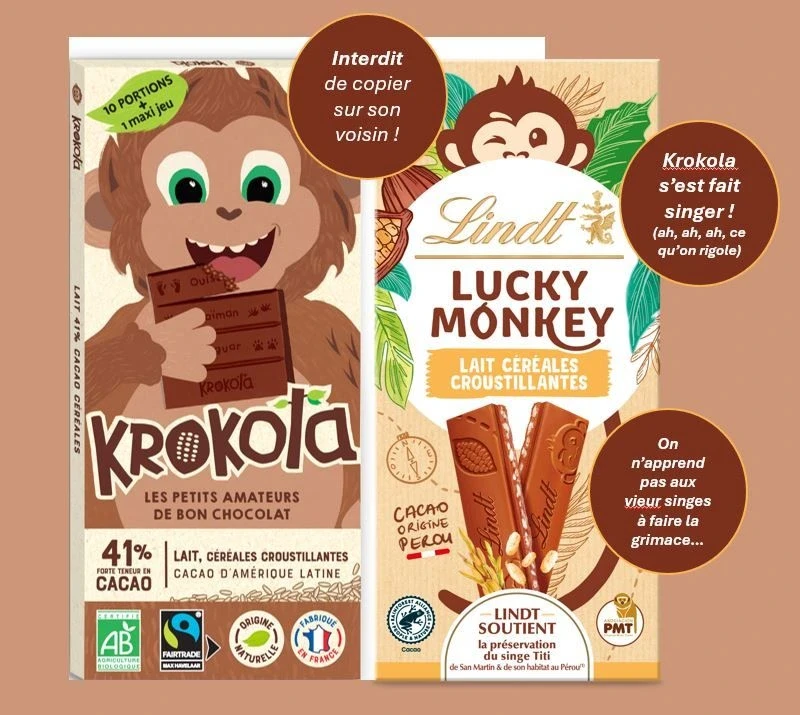
Source: Teddy Le Maout
I don't think I need to explain it to you, Teddy Le Maout's image speaks for itself.
So yes, take inspiration from your competitors and the market, as Krokola did by launching its spread, but don't mindlessly copy. That would be counterproductive.
How to assess the competition?
To properly assess the competition, here are some best practices:
Choosing the right competitors to follow
Choosing which competitor to analyze is a key strategic step to maximize the effectiveness of your competitor analysis. To start, I advise you to select a small number of competitors (around three) so you don't scatter your efforts. For example, in the chocolate sector in France, where 115 companies were operating in 2024, it would be inefficient to follow them all. The analysis would be quite time-consuming if you followed all of them.
But then, how do you choose which ones to follow?
Direct vs. indirect competitors
Direct competitors are those who offer products similar to yours and target the same customer segment. They often represent the most immediate and direct threat to your business since they satisfy the same customer demand as you do. For example, Yoplait and Siggi’s are direct competitors in the Skyr market, or Coca-Cola and Pepsi in the cola market. Therefore, you are head-to-head competitors on price, quality, distribution, and marketing. In supermarkets, you will compete for the same shelf space and will often be side-by-side on the planogram. For you, "the battle" is played out on the shelf, through promotions, and product rotation in the same aisle.
Indirect competitors do not sell the exact same product but meet similar needs of your customers. They offer a different product that performs the same function for the customer. For example, Siggi’s and Danone are indirect competitors in plain yogurts, or Coca-Cola and Lipton Ice Tea in sodas. The competition then rests on the customer's preference among several possible options.
It is also possible that your indirect competitors are not in the same aisle as you. Let's take chocolate biscuits as an example. Chocolate cookies like BN and Mikado are direct competitors. They are sold in the same aisle. An indirect competitor here could be chocolate bars, like Mars, which serve the same pleasure/snack function but are positioned in the confectionery-chocolate aisle. Breakfast cereals can also replace biscuits in the snack or breakfast ritual. Here, the "battle" is more subtle. You have to capture the customer's attention before they turn to another category for the same usage.
Depending on the size of your market (whether you are in a niche product category or not) and consumer trends, tracking one or two indirect competitors can be worthwhile. For example, even though in 2024 the yogurt market in France is largely dominated by cow's milk yogurts, plant-based yogurts—especially those made from soy milk—are gaining popularity (+15% market share). If you sell cow's milk chocolate yogurts, it might be relevant to track a competitor selling plant-based chocolate yogurts, especially if they sell both.
New entrants
It is crucial to monitor new entrants in the market. Although they may not yet have a large market share, they can represent a potential threat if they offer innovations or more attractive prices. New brands often bring new propositions that have not yet been addressed by existing brands. Some succeed in establishing themselves permanently.
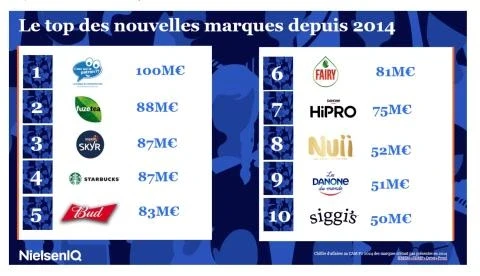
Size and market share
Analyzing competitors of different sizes can offer varied perspectives. Large companies often have more resources for marketing campaigns and innovation, while smaller companies can be more agile and innovative.
Initially, it is wise to monitor those who resemble you the most. However, keeping a larger competitor in mind is never a bad sign. It can give you a goal to strive for.
Online competitors
With the rise of e-commerce, it is essential to also monitor competitors present on the internet. Online sales platforms can capture a significant portion of your customer base. In addition, they often have more freedom in their marketing and innovation, which can inspire you.
Using the right tools to evaluate the competition
Battle cards: to understand better
Battle cards are comparative reference sheets that help your sales teams evaluate and compare products with those of competitors.
To make them effective, focus on 3 to 5 major competitors. Key information to include is:
Product features.
Pros and cons.
Pricing.
Key differentiators.
Customer feedback and/or sales figures.
HubSpot offers good examples of battle cards that you can adapt to your industry.
SWOT Analysis: to identify strengths and weaknesses
A SWOT analysis is a strategic tool that identifies a company's Strengths, Weaknesses, Opportunities, and Threats. This tool allows for the evaluation of internal and external aspects that influence performance and competitiveness.
Strengths: Internal assets that help achieve objectives (e.g., strong brand, advanced technology).
Weaknesses: Internal limitations that can hinder performance (e.g., poor management, limited resources).
Opportunities: External factors that can be exploited for advantage (e.g., new market trends, favorable regulatory changes).
Threats: External factors that pose challenges or risks (e.g., intense competition, unfavorable economic changes).
If we take an example of a well-known yogurt brand, its SWOT analysis might look like this:
Strengths
Recognized brand: Danone is a well-established global brand with strong consumer recognition and trust.
Diversified portfolio: Wide range of products including dairy products, mineral waters, and baby food.
Innovation: Strong capacity for innovation, particularly in plant-based and probiotic products.
Global presence: Well-established global distribution network.
Weaknesses
Dependence on developed markets: A significant portion of revenue comes from developed markets, making the company vulnerable to economic fluctuations in these regions.
Health controversies: Debates and controversies surrounding the health benefits of dairy products.
Supply chain complexity: Managing a complex and costly global supply chain.
Opportunities
Growth in plant-based products: Rising demand for plant-based dairy alternatives.
Expansion in emerging markets: Growing middle class in emerging markets offering new consumption opportunities.
Support for health and wellness trends: Increasing demand for healthy and nutritional products.
Digital technologies: Utilizing e-commerce and digital technologies to strengthen customer relationships and sales.
Threats
Intense competition: Increased competition from other major food industry players and new innovative brands.
Strict regulations: Changes in food and safety regulations that could affect production and distribution.
Sensitivity to raw materials: Price volatility of raw materials such as milk and plant-based ingredients.
Environmental concerns: Rising pressure to adopt more sustainable practices and reduce carbon footprint.
Store audits: to collect information in-store
In an ideal world, you would have dedicated teams for competitor monitoring. They would go to stores, list products, collect relevant product and retailer information, and distribute this data to the entire team.
In reality, this can be inefficient and time-consuming. Information can get lost or arrive too late to be useful. This can discourage your sales force, who will question the value of spending so much time monitoring the competition.
To avoid this, a good competitor analysis should automate the process. Let technology take over low-value tasks. Centralize data in a dedicated mobile app and create customized competitor store audits. Your sales reps in the field can then monitor your competitors' activities and strategies—such as their presence, number of items, prices, display types, and promotions—in just a few clicks.
Automating these tasks will free up time for more strategic actions and maximize the efficiency of your competitive monitoring.
How to compare competitors?
For a competitor analysis to be truly useful, it is essential to compare your competitors in a structured and thorough manner. You have gathered data; that's good. Now, you need to use it.
Identify the comparison criteria
Before starting the comparison, determine the key criteria on which you will evaluate your competitors. These criteria may include:
Products and services: Range, quality, price, distinctive features.
Marketing and communication strategies: Channels used, key messaging, promotions, advertising campaigns.
Market positioning: Targeted customer segment, brand perception.
Financial performance: Revenue, market share, profit margins.
Customer service: Service quality, support channels, return policy.
Online presence: Website, SEO, social media, customer reviews.
Innovation: Ability to innovate, new product launches.
Distribution: Distribution network, logistics, partnerships.
Select a few relevant criteria and stick to them. Create a survey template for all your sales representatives. Regardless of the competitor, the survey will be the same and therefore the criteria too. To start, use the same tracking criteria regardless of the competitor and the retailer. Once the process is running smoothly, differentiate your surveys according to retailers if that is of interest to you. Otherwise, there is no need to add extra work.
Adapting based on store sizes and formats can also be valuable if you want a more micro-level analysis of your competitors.
Leverage photos
Go into paparazzi mode. Photos will always speak volumes to everyone.
It is interesting to be able to visually analyze what your competitors are doing, and to do so over time. See how their messaging, packaging, and POS displays have evolved. This also helps understand their commercial strategies, their relationships with your distributors, and their visual impact.
Have up-to-date data
You don't compare your results with those of competitors from last year. That will not yield any reliable analysis.
Using store surveys will also allow you to make informed decisions based on data collected in real time.
Using a CRM to complete audits allows data to be updated with each visit: your area managers only have to modify the existing entries. This means they don't have to start from scratch. If the mobile apps are well-designed, you can also complete your product review in a single click.
What insights can be gained from in-store competitor monitoring?
I won't list them all, as the analysis you can draw also depends on the criteria in your surveys. However, here are some interesting analyses you can perform:
Price gap compared to the competition: Measure the difference between your prices and those of direct competitors for each product.
Average price per product: Compare the average prices of your products with those of competitors to evaluate your price positioning.
Share of shelf/offer: Determine the proportion of your available products vs. those of your competitors. Compare your presence with theirs and adjust your strategy accordingly.
Market Share (MS): In volume and value. Compare the quantity of products sold against the competition. By integrating checkout data, analyze the revenue generated compared to competitors.
Product innovation: Monitor new products introduced by competitors and analyze their acceptance and sales.
Product placement and POS materials: Compare the placement of your products and those of competitors (endcaps, promotional islands, etc.). Evaluate their use of POS displays.
Merchandising: Observe product layouts on shelves, promotional placements, and highlighted product categories. Examine merchandising strategies, types of in-store promotions (such as free tastings, product demonstrations), and the advertising materials used.
It is interesting to note that all audit data can be isolated (by brand, aisle, sales rep, etc.) to get a more detailed view and implement appropriate sales actions.
The contribution of technology to analyzing your competitors is a real asset. The task is both essential and time-consuming... You therefore need to put all the chances on your side by automating what takes too much time to do. This way, you recover valuable working hours to dedicate to improving your sales!
If you had to take away just one piece of advice for carrying out your competitive intelligence, it would be this: choose your applications carefully. You must demand unrivaled user-friendliness and intuitive operation, all accessible anywhere and without a connection!
For the past five years, Corentin has supported more than 200 sales teams, making him one of the longest-serving members of the company. He has seen the product evolve alongside the industries he supports, giving him a deep understanding of actual use cases. Between onboarding calls and training sessions, he has built up rare, hands-on expertise: knowing exactly what saves teams time.
See also

Artificial intelligence and field professions: what our 2026 studies reveal
Adoption, barriers, use cases: discover what our three studies reveal about the role of AI among sector managers, sales representatives, and foodservice sales reps.

CHR and RHF Sales Representatives: portrait of a relationship-driven profession in the era of data
Equipment, productivity, AI: discover the major trends for the HORECA and food service sales profession in 2026 through our field study.

Pharmaceutical Sales Representative in France: Portrait of a Field Job Under Pressure
Compensation, aspirations, AI usage: discover the major trends in the pharmaceutical sales representative profession in 2026 through our field study.

Area Sales Managers in France: who are they and how is the profession evolving in 2026?
Compensation, aspirations, AI usage: discover the major trends in the field sales representative profession in 2026 through our field study.
The area manager professions in 2026
Discover the trends, the challenges, and the key figures.