
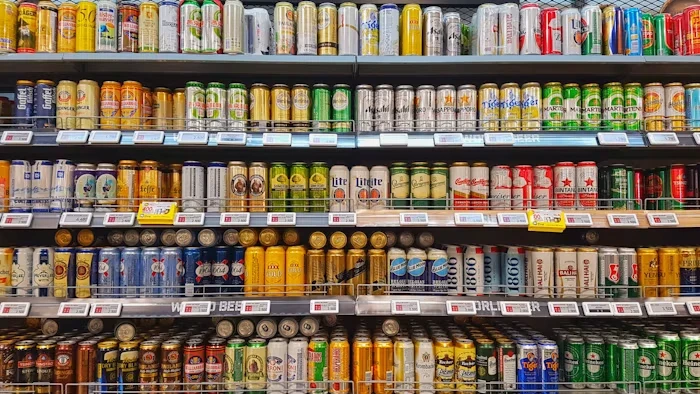
The Beer Market
Dive into the analysis of the beer market. Explore current trends, the rise of microbreweries, and consumer preferences.

In short
10 min read
The global beer market is colossal, estimated at nearly 300 billion dollars.
Distribution relies on two major pillars: Large-scale Retail (supermarkets/GMS) and the Horeca sector (Cafés, Hotels, Restaurants).
Although historic leaders dominate, craft and local beers are gaining ground in supermarket retail, driven by a demand for diversity.
Packaging formats are evolving, with a marked increase in aluminum cans at the expense of glass bottle volume.
Alcohol-free beer is experiencing explosive growth (+16.4% in one year), pushing brewers and distributors to innovate in terms of product offering and packaging.
The Horeca sector remains fragmented, offering opportunities to capture market share for brands that know how to effectively prospect establishments operating outside of exclusivity contracts.
Beer is one of the most popular beverages in the world, with a global market estimated at nearly 300 billion dollars.
Lager, white, amber (red ale), or dark, the beer market can be divided into four main categories:
Non-alcoholic beers, which are under 1.2% ABV (legal standard).
Bock or table beers, which range between 2% and 3.9% ABV.
So-called 'luxury' beers, which range between 4.4% and 5.5% ABV. These include Jade, Briarde, or Hoegaarden, for example.
Specialty or special beers, which are over 5.5% ABV, such as Leffe, Abbaye Alveringem, or Affligem.
French consumers have changed their habits in recent years, and new categories of beer are growing, such as flavored beers, which are between 3% and 5.5% ABV, or craft beers.
And all these beers are distributed through two main distribution channels: mass retail (supermarkets, hypermarkets, convenience stores...) and On-Premise/Horeca (cafes, hotels, restaurants).
In this article, we will focus on these two main distribution channels. Together, let's explore current trends in the French market in retail, both in the mass retail sector and in cafes, hotels, and restaurants (On-Premise), as well as the potential consequences on your beer sales.
Table of contents:
The beer market in France
The French consume an average of 33 liters of beer per person per year. A recent study by NielsenIQ reveals that over 80% of French people regularly enjoy a good beer, which represents more than four out of five French people.
The beer market in France "is ultra-mature with a penetration rate of over 80%," according to LSA. Nevertheless, after 5 years of constant growth, with +4% per year in volume, beer is stagnating in 2024. Its sales in value increased by 3.6%, mainly driven by inflation: +4.5% over 1 year to reach an average price per liter of €3.17.
Among preferences, lager style dominates with 23 million consumers, closely followed by white beer and its 8 million enthusiasts.
This love of beer particularly benefits French craft beers. Notably, 70% of the beers consumed in France are produced locally. And this is reflected in market share: specialty beers account for 57% of the market share in value. Specialty beers or special beers group very diverse products under a similar commercial name. Their common point lies in specific highlighted characteristics, whether ingredients, the brewing process, the alcohol proof, or the final taste, aiming to classify them as special beers, reputed to be stronger, tastier, etc. They are most often produced by microbreweries. Special lagers come in second with 31% of market share, followed by non-alcoholic beers with a 5.6% market share. Dropping off the podium and in sharp decline (-7.5%), premium lagers now have 5.5% of market share. The term "luxe" is also an administrative designation distinguishing beers with a qualifying legal tax classification. This refers to the gravity of the wort before fermentation of alcoholic beverages.
France also stands out on the international brewing scene: it is the eighth-largest beer producer in Europe and ranks first in both malting barley production and global malt exports. The brewing sector is an important economic pillar, representing 64,000 jobs and 28% of exports, mainly to Europe. This dynamism highlights the importance and liveliness of beer culture in France.
Beer, a beverage for sharing
It is the ultimate social drink; the vast majority of French people (55%) consume beer during moments of relaxation and sharing with family or friends. Moreover, it is during summer that beer is highly favored (23%), only surpassed by rosé wine (25%), making them the favorite drinks of the French as the warm weather arrives.
The explosion of microbreweries
The increase in beer consumption has naturally led to an expansion of the offer, with an average of one new brewery or microbrewery opening its doors every day. In fact, the French brewing landscape has experienced spectacular growth: while in 2006, France had only 246 brewers, this number rose to 1,600 in 2018 and reached 2,300 in 2023, more than quadrupling in just twelve years. Meanwhile, the number of microbreweries also tripled.
This upward trend has created a new product range in a market that was previously dominated by a few major brands with globally standardized products. Indeed, French breweries offer more than 10,000 different beer references.
The revival of craft beers
For a long time, the beer sold in the On-Premise and mass retail sectors was mainly industrial. The change in French consumption habits has boosted craft beers. They refer to beers with higher alcohol content produced by microbreweries or for special occasions (such as Christmas beer, for example). They also stand out for their taste and aroma profiles, characterized by local herbs, fruits, and grains.
Today, specialty or craft beers represent 7% of the beer market. Industrial or 'standard' beers account for only 20% of sales volume (compared to 70% 50 years ago), declining by 6 to 8 points per year.
So, is craft beer the new star of sales? Not so sure.
Selling beer in mass retail
The vast majority of beers are sold in mass retail, accounting for three-quarters of total sales. In comparison, cafes, hotels, and restaurants (On-Premise) only account for about 20% of sales. This difference is mainly explained by price: indeed, the price per liter is on average 3 times cheaper in mass retail than in On-Premise.
This situation is further highlighted by inflation. In 2023, mass retail beer sector revenue increased by +6.1%. However, this financial growth did not translate into an increase in sales volume, which on the contrary declined by -4.5%, according to NielsenIQ data. A trend confirmed by e-commerce and convenience stores, whose volumes dropped by -2.5% to -3%, also according to NielsenIQ.
The best-selling beers in mass retail
In supermarkets, new beers are making an entrance, such as crafts or artisanal beers, previously reserved for bottle shops. Higher priced and often sold in single bottles rather than multi-packs, they diversify the selection. Yet, they account for a minimal share of sales. Thebeerlantern wonders in one of its articles if craft beer in supermarkets is solely a loss leader?
This doubt is reinforced by the rankings of the best-selling beer brands in mass retail in 2023.
According to IRI, the top 10 beer brands sold in hypermarkets and supermarkets are:
Heineken with 2368 Khl (14.1% market share);
Leffe with 1842 Khl (11% market share);
1664 with 1614 Khl (9.6% market share);
Desperados with 1494 Khl (8.9% market share);
Kronenbourg with 1207 Khl (7.2% market share);
Grimbergen with 754 Khl (4.5% market share);
Tourtel Twist with 425 Khl (2.5% market share);
Affligem with 383 Khl (2.3% market share);
Pelforth with 354 Khl (2.1% market share);
Bud with 270 Khl (1.6% market share).
In supermarkets, most brands focus on specialty or special beers because they are the most profitable. The ranking above speaks for itself: only Corona and Hoegaarden are not specialty beers.
A particularly telling case of this trend is the growing success of Goudale, which sees its market share increase year after year, with an impressive growth of 10% in 2023. A success largely due to the variety of formats (75 cl bottle, 50 cl can, 6 x 25 cl and 12 x 25 cl packs, etc.), which seems to meet market demand for more flexible consumption options.
Beer formats are indeed important: glass bottles (25cl, 33cl, and 75cl) account for 74% of sales in value across all beer categories, growing by 2.5% in value but declining by 2.7% in volume, to the detriment of aluminum cans. A new trend or simply more convenience? They grew by 8.7% in value and 5.5% in volume in 2024, bringing their market share to 23% in value. Thus, 1 out of 4 beers is sold in a can. A statistic that brewers have understood well: Leffe, 3 Monts, Kronenbourg, AB InBev... they are all investing in this format.
Independent breweries are riding high
Goudale, 3 Monts, Duvel Moortgat... show strong performances in 2024, with +14.7%, +9.4%, and +4.6% in sales volume respectively, according to Circana. For Jean-François Guisnel, Sales Director at Goudale, the leading independent brewery with a 6.4% market share, this is explained by "the right quality-price ratio that makes a difference when consumers make choices. It should be noted that the average retail price of beers, which had increased by 10% in 2023, is still, in 2024, 7% to 8% higher than in 2022." And it is not the only brewery offering prices aligned with consumer expectations: 3 Monts offers its specialty blonde ale at around €3 for 75cl.
It remains important to note that the three leaders, Heineken, Kronenbourg, and AB InBev, still represent 70% of the market, with 16.13 million hectoliters sold during the year.
Non-alcoholic beers are gaining market share
Another striking trend in the beer aisle is the growing interest in low-alcohol or non-alcoholic options, with a notable sales increase of +16.4% in one year, according to NielsenIQ.
Non-alcoholic beers (below 1.2% ABV) are particularly difficult to produce, so they remain mostly in the hands of major industrial players: Asahi, 1664, Leffe, Jupiler... even if some great breweries, like BapBap or La terre de bières, manage to stand out in this sector. In 2023, Tourtel Twist, Leffe Blonde 0.0 %, and the like represented 5.3% of total volume out of the beer category, or 83 million liters.
Faced with this demand, craft breweries are competing by offering light beers, like Ninkasi with its 4% ABV offering.
And private labels have clearly understood this success. Major retailers such as Intermarché, Système U, and E.Leclerc have not only launched their own ranges of non-alcoholic beers, but they have also invested in new packaging designs to make these products even more appealing.
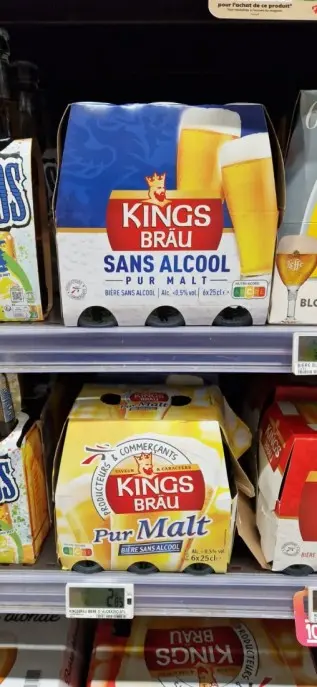
After / before Intermarché redesign. Source: Rayon-boissons.com
National brands are taking advantage of "Dry January" to ride the wave and launch their lines. For example, the Asahi group launched its non-alcoholic campaign called « Super Dry January » in January.
Trade promotions for beer
Beer has no reason to envy wine. In 2023, according to IRI data, beer revenue in hypermarkets surpassed that of wine for the first time, as wine sales declined in both volume and value. Beer accounted for over 50% of alcohol sales in mass retail, compared to only 30% for wine.
To respond to this trend, retailers and brewing brands are putting in place increasingly significant promotional events, notably through the organization of beer festivals. These events mainly aim to boost sales of local and craft beers, which are experiencing growing success, but whose market potential remains largely untapped.
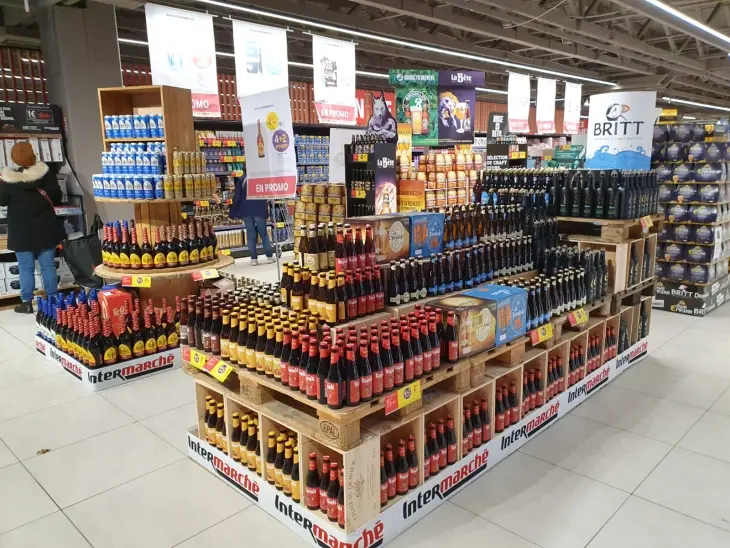
Intermarché Beer Festival - Source: rayon-boissons.com
Other supermarkets and retail chains are choosing to focus on sustainability and innovation. For example, in La Madeleine, a recently opened Super U celebrates beer culture by inaugurating a dedicated cellar. Strategically positioned at the end of the main aisle, this cellar offers an impressive collection of 400 beer SKU's, all available as individual bottles, offering a unique experience for beer lovers.
The restructuring of beer cellars is a real opportunity for brands: "the offering had become bloated in recent years, making beer cellars particularly congested with an obvious lack of space, especially for slow-moving products gathering dust on the shelves, i.e., those with average weekly sales below two units", explained Julien Demulier, Deputy Managing Director of The Beers Family, to LSA editorial team.
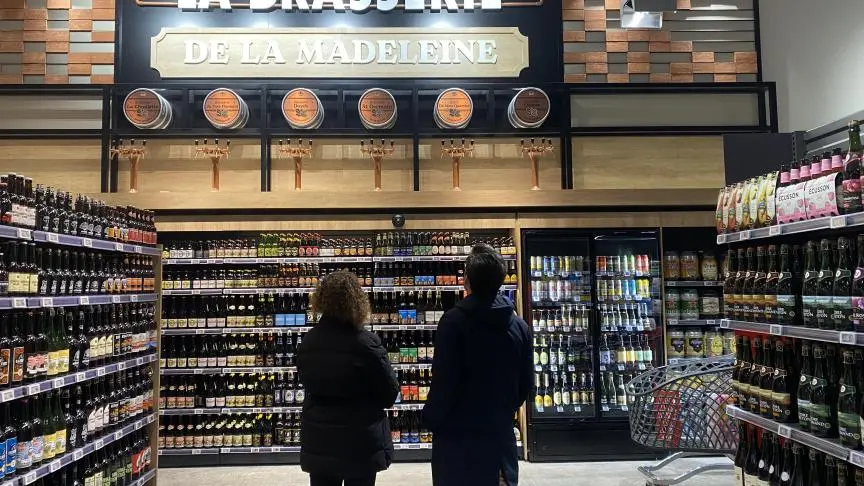
Beer cellar at the Super U in La Madeleine
Beyond trade promotions, packaging is also adapting. Following Heineken's adoption of football colors during the World Cup and European Championship, Kronenbourg launched a special edition of 33 cl Tourtel Twist cans adorned with the Olympic and Paralympic Games logo. Available in retail stores four months before the official opening of the Games, these cans are offered in packs of six or individually. A winning strategy, since in 2023, 1 in 5 households purchased Tourtel.
Local beers in the spotlight
Consuming local doesn't stop at the entrance of the alcohol aisle. According to NielsenIQ, 60% of French people express a preference for local beers, while 51% opt for imported beers and 46% for craft beers. This trend has not escaped store managers and retailers when defining and optimizing their assortment.
For example, in Alsace, Auchan highlights Meteor, famous for its IPA and pilsner recipes, featuring them on their catalog covers. In Lorraine, the choice goes to La Délicatesse brewery. In Île-de-France, four breweries are particularly promoted: Rabourdin in Seine-et-Marne, Artemus and BAPBAP in southeastern Paris, and Petite Couronne in northwestern Paris.
This strategy of highlighting local products is proving successful, attracting the attention of major industrial players. A striking example is Heineken, which took a majority stake in the Gallia brewery in 2021, featuring a production of 15,000 hectoliters.
This pivot toward local is proving to be more attractive than organic for consumers: organic products represent less than 2% of sales, and some major industry names, such as Fischer, are scaling back on it.
How to (better) sell your beer in mass retail?
Annual trade negotiations, which now stretch until the end of January, are a complex and strategic period. If this topic interests you, we wrote a complete article to help you negotiate with mass retail. But here, let's focus on another key aspect: how to improve the presence and shelf visibility of your beers.
For this, your sales representatives and merchandisers play an essential role. They are your eyes and ears on the ground, verifying that retailers respect the hard-earned agreements. They also maintain a direct relationship with the points of sale, a valuable connection to protect your brand image and market share.
Prioritize your store visits for maximum efficiency
It is tempting to try to visit all your stores, but this is often impossible for your teams. To maximize your sales and efficiency, focus on a strategic approach, prioritizing points of sale according to their contribution and immediate needs.
Target your 80/20 stores first
Right after negotiations, focus your efforts on the stores that generate 80% of your revenue with only 20% of your effort. These key accounts must be visited to ensure that agreements are correctly applied and that everything is in place for an optimal start to the year.
Analyze store performance with declining Numeric Distribution (ND)
Once your key stores are stabilized, direct your visits toward stores where Numeric Distribution (ND) is decreasing. Go out in the field to understand why: is it a stock issue, a deteriorated relationship with the department manager, or poor shelf placement? These adjustments can make all the difference.
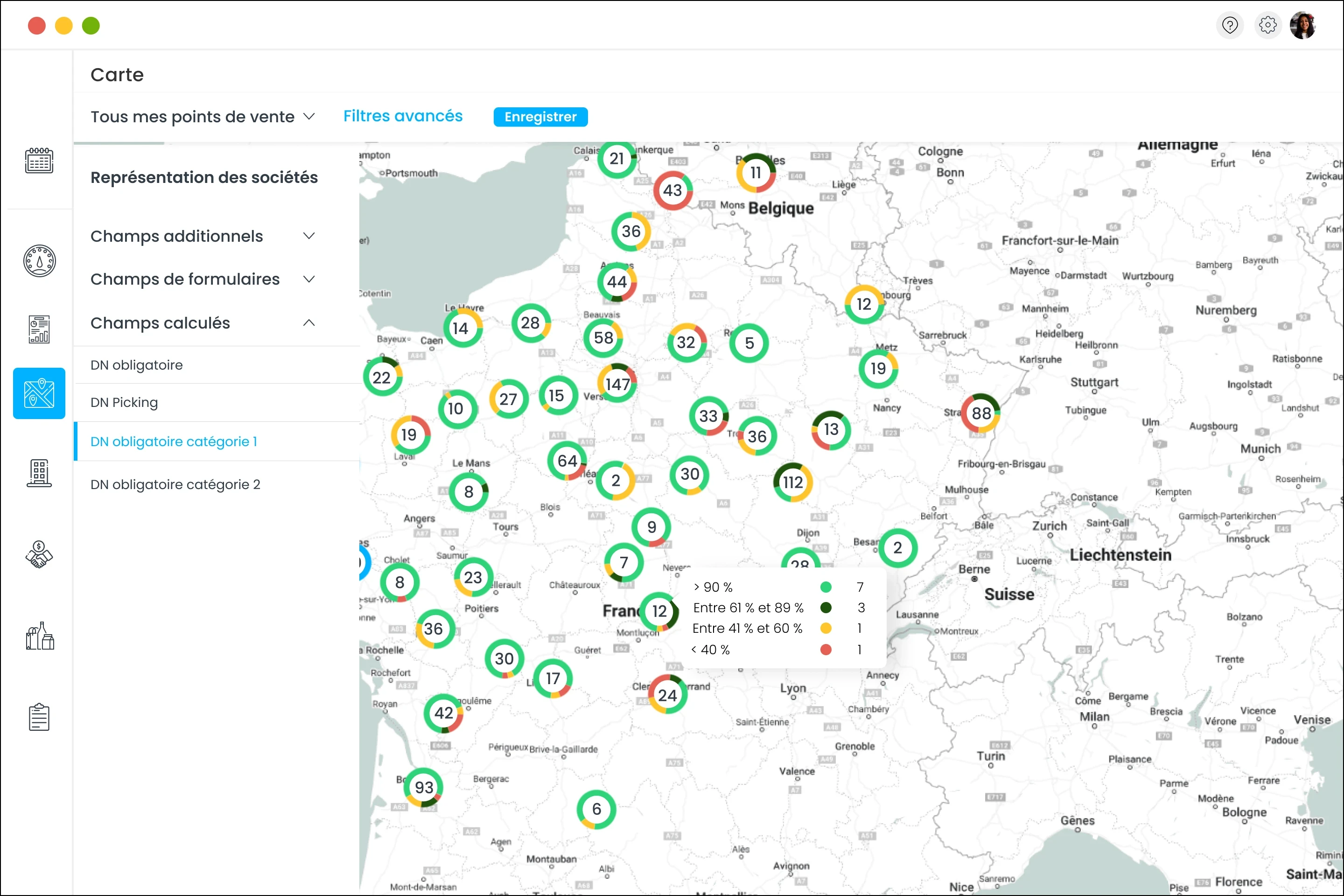
Visualization of points of sale based on ND
Monitor checkout sales to prevent churn
Use checkout data to identify stores where sales are dropping. A proactive visit to these points of sale can prevent a long-term decline. Department managers will appreciate this responsiveness and might grant you advantages, such as an unplanned promotion or a gondola end placement.
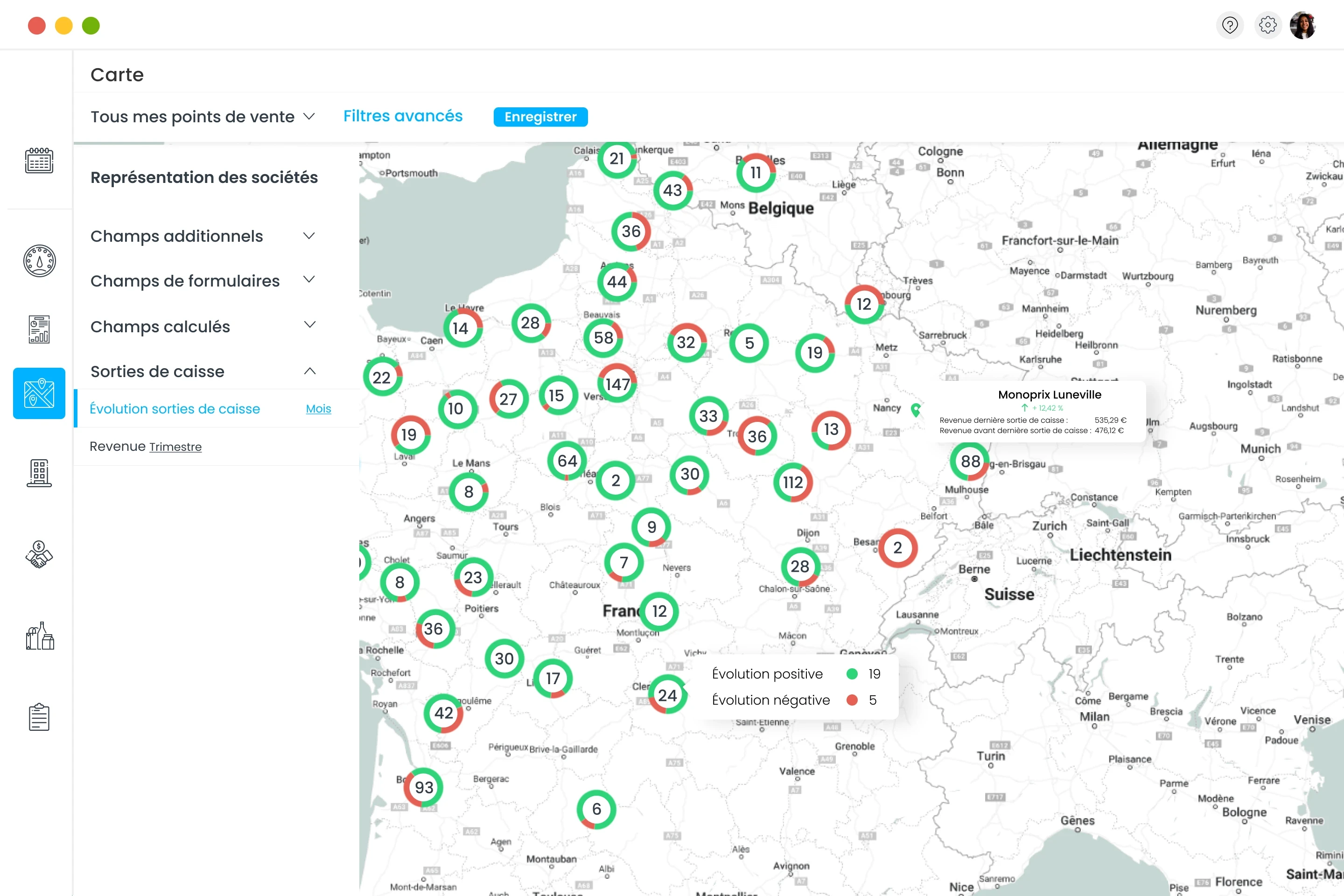
Visualization of points of sale based on checkout sales
Maximize your visits to boost your sell-in
Targeting the right stores is an essential first step, but it is not enough to guarantee an increase in your sell-in and sell-out. Once on-site, it is crucial to take field realities into account, adjust your actions if necessary, and monitor competitor activity. Remember: you are the ambassador of your brand, not the department managers or store directors. Their priority is to satisfy their customers and ensure they return by offering the right products. If your beers do not appeal, if your POS displays are poorly set up, or if your stock is not delivered on time, it can quickly lead to safe-de-listing.
Ensuring an optimal store presence is a long-term process. It requires time, observation, and the ability to react quickly to unexpected situations. However, these efforts always pay off in the long run. By taking the time to resolve issues, verify product shelf placement, and cultivate a good relationship with department managers, you build a solid foundation for your brand.
Simplify the daily life of sales representatives
At Sidely, we are dedicated to facilitating the work of your field teams. Our solution optimizes the time spent on store visits through customized field surveys, adapted to your brand and objectives. With Sidely, your sales reps can complete mass retail visits quickly and efficiently, without needing an internet connection. The mobile and tablet application automatically synchronizes data once the connection is restored.
No more admin reports after the workday: once out of the store, your teams have nothing more to manage. This allows them to focus on what matters most: strengthening your retail shelf presence and ensuring flawless execution of your strategy.
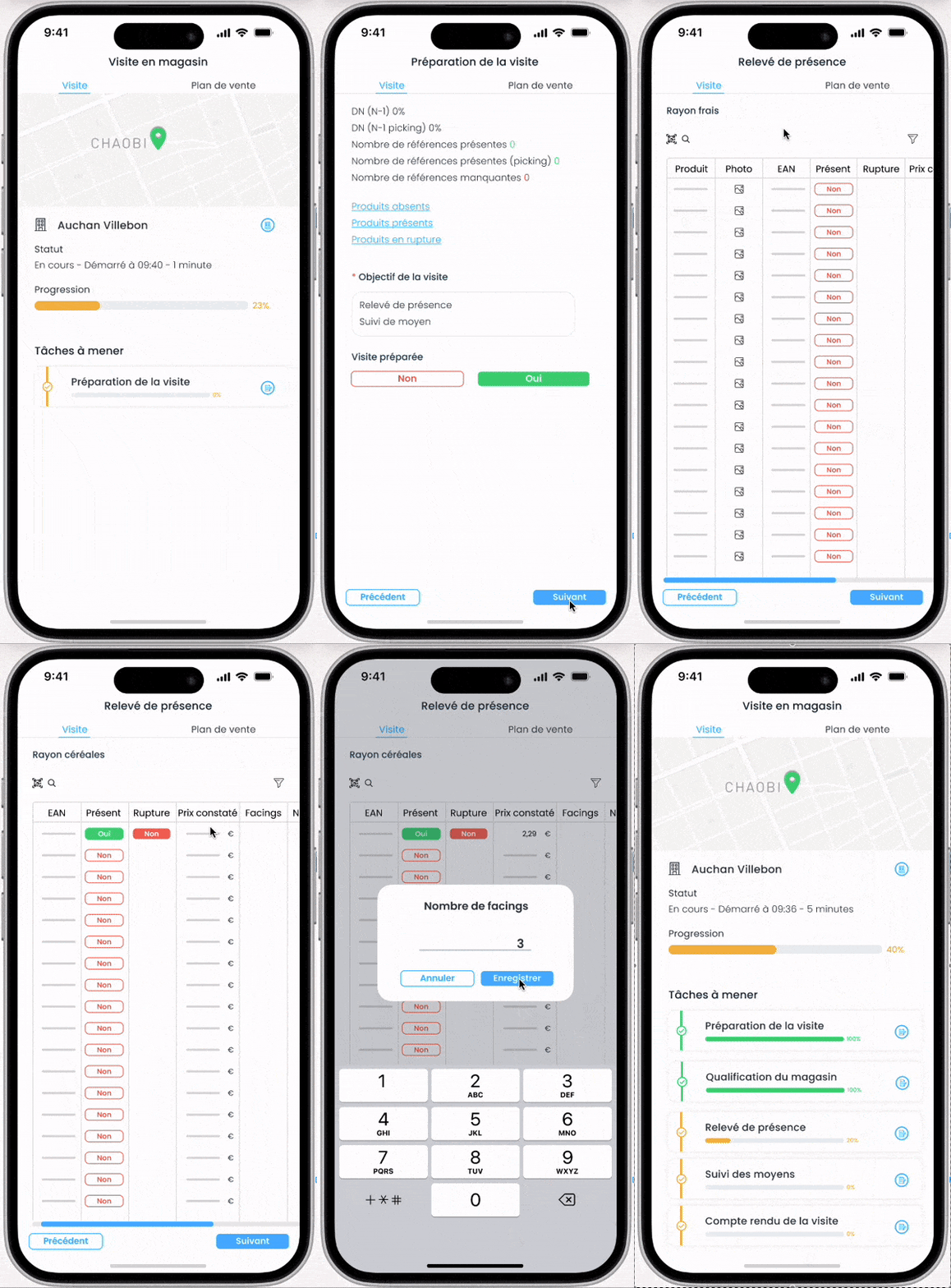
Simplified example of starting a mass retail visit with Sidely
Selling beer in the On-Premise sector
1/4 of total beer sales in France are in the On-Premise sector. Yet, beer sales represent more than a third of the overall beverage revenue for cafes, hotels, and restaurants, according to the National Beverage Federation (FNB). The sales dynamics and social impacts differ significantly from those in mass retail. While we see a decline in sales volume in grocery retail (-3.8%), nightclubs, day bars, and night bars all recorded an increase in their sales volumes in the first quarter.
This finding must be balanced because bar-restaurants have lost volume. This situation could be attributed to the COVID-19 pandemic and periods of lockdown, which led to temporary closures in the On-Premise sector, eliminating 35% of the market. Although they played a part, inflation has also impacted out-of-home consumption. According to snacking.fr, 32% of French people plan to reduce their spending on food leisure, including outings to bars and restaurants.
However, optimism remains high for 2024, marked by two major sporting events: the Euro in Germany and, especially, the Olympic Games in Paris. According to a study from Le Parisien, “we should expect an explosion in certain 'treat products' which rank among the great classics of sporting matches”, including... beer! In London, in 2012, average consumption grew by 6% thanks to international tourists.
And as explained by Hervé Marziou, independent beer expert: “Today, probably more than before, establishment owners need help from their suppliers. It is also important for On-Premise venues to train their staff and build customer loyalty. Moreover, we are witnessing the revival of beer bars in two ways.” This is why we advise you to carry out coordinated field tours between your distributors and brand ambassadors. And this is what we will see in the next section.
How to (better) distribute your beer in the On-Premise sector?
The cafe, hotel, and restaurant sector is fragmented, with about 10% of establishments opening and closing each year. Competition is fierce, with many points of sale being mostly independent. This is why the majority of sales are done directly.
Nevertheless, as in every market, major industrial players are active. Large brewers and large distributors share the territory: they can offer lower prices, as well as a wider assortment. Added to this are tap contracts, offering them exclusivity for up to 10 years. According to Happybeertime, 80% of Cafes – Hotels – Restaurants in France are under exclusive contracts with Heineken or Kronenbourg and can only tap those beers.
But once again, let's not give in to negativity. Why?
First of all, because 20% of Cafes – Hotels – Restaurants in France, representing around 47,000 establishments, are NOT under contract: a vast potential market for newcomers.
The growing popularity of local and craft beers has revitalized the bottled beer market, which is generally not subject to these exclusivity agreements. These beers, often perceived as higher quality, sell for higher prices.
How to activate new venues?

Example of using Google Maps integration
Prospect: send your sales reps to prospect in the field.
With Sidely, take advantage of the integration with Google Maps to easily enrich your database. When a sales rep passes an unknown venue, they simply open the Sidely app and add the point of sale to their database. All information available on Google Maps, such as the address, phone number, website, or opening hours, is automatically recorded in your CRM.
Sidely also allows you to update the information of existing establishments in your database. This ensures your On-Premise database remains up-to-date and reliable.
Qualify your points of sale: qualify each establishment and understand their true sales potential. To do this, we advise you to frame the qualification visit. For example, give a ready-to-fill evaluation to your sales reps:
What type of establishment is it? Bar, dance club, restaurant, cafe, hotel, nightclub...
What type of clientele? Standard, student, trendy, affluent, worker, passing through, or regulars...
What is the retail price of a half-pint (25 cl)?
What is the retail price of a pint (50 cl)?
What is the price of the three best-selling bottles in the establishment?
Do they sell draft beer? Yes / No
Do they sell bottled beer? Yes / No
How many beer taps do they have?
What beer styles are available?
What beer styles are on tap?
Who is the distributor?
Could they consider another distributor?
Do they have a specific exclusive commitment?
Are they open to other beers?
How many kegs do they consume per week?
How many hl do they consume per week?
etc...
Qualify your contacts: understand whom your sales reps are speaking with during their sales and qualification visits. To do this, we advise you to frame the qualification visit. For example, give a ready-to-fill evaluation to your sales reps:
Who did you meet? General manager, bartender, store manager, beer head...
What is their decision-making power in choosing new beers?
Are they open to bringing in new beers?
What are the visibility elements? Door decal, tap handle...
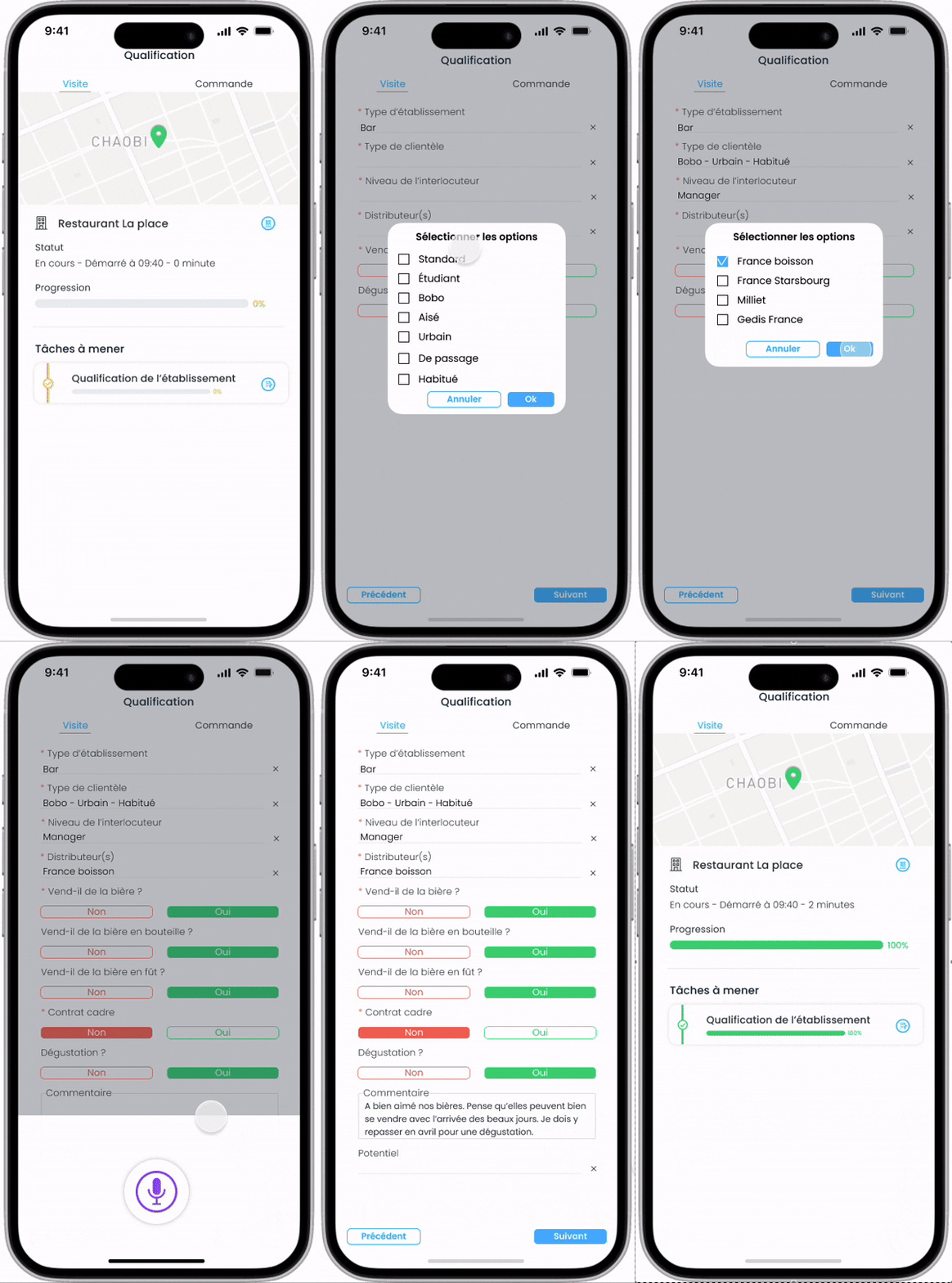
Example of venue qualification
Determine the right assortment: thanks to qualification, you will be able to determine a target assortment to offer.
Run tastings: brand ambassadors play a key role in the marketing and sales of products. By conducting joint field tours with your distributors, they can organize tastings, present product innovations... and highlight the features and benefits of each SKU, as well as your brand. Once the prospects are won over, you can hand over to your distributor for order taking.
Work jointly with your distributors: note which establishment works with which distributor. Then filter the points of sale by distributor, and create prospecting route plans by distributor. This way, your sales reps can specifically target establishments that work with your distributors but do not yet offer your products. This approach allows you to tailor your pitch and improve chances of convincing these venues to start stocking your products.
Take the first order: convert your prospects into customers by taking their first order: products x price x quantity. List all the beer variants you sell, and associate them with price grids (including potential discounts and promotional schemes). Once the order form is signed, send it to your contact, as well as to your distributor and customer service. The easiest way is to integrate your ERP with your CRM for automatic synchronization of information.
For the past five years, Corentin has supported more than 200 sales teams, making him one of the longest-serving members of the company. He has seen the product evolve alongside the industries he supports, giving him a deep understanding of actual use cases. Between onboarding calls and training sessions, he has built up rare, hands-on expertise: knowing exactly what saves teams time.
See also

Artificial intelligence and field professions: what our 2026 studies reveal
Adoption, barriers, use cases: discover what our three studies reveal about the role of AI among sector managers, sales representatives, and foodservice sales reps.

CHR and RHF Sales Representatives: portrait of a relationship-driven profession in the era of data
Equipment, productivity, AI: discover the major trends for the HORECA and food service sales profession in 2026 through our field study.

Pharmaceutical Sales Representative in France: Portrait of a Field Job Under Pressure
Compensation, aspirations, AI usage: discover the major trends in the pharmaceutical sales representative profession in 2026 through our field study.

Area Sales Managers in France: who are they and how is the profession evolving in 2026?
Compensation, aspirations, AI usage: discover the major trends in the field sales representative profession in 2026 through our field study.
The area manager professions in 2026
Discover the trends, the challenges, and the key figures.