

Endcaps: negotiation, placement, performance (Guide)
What is an endcap, how do you negotiate it with retailers, and how do you maximize its impact on sales? A complete guide for brands in supermarkets.

In short
7 min read
The endcap is a strategic location at the end of an aisle, ideal for boosting sales, promoting special offers, and drawing attention to new products.
Its success relies on a rigorous selection of products aligned with commercial strategy and category management.
The design must harmonize branding, sensory marketing, and clear information (POS/POI) to offer a unique experience to the consumer.
The setup requires strict discipline: compliance with the planogram, regular stock rotation, and maintaining the mass effect feel.
Performance tracking (sell-out, ROI, turnover rate) is essential to measure the real impact and optimize future negotiations.
Negotiation with distributors requires solid, data-driven arguments regarding generated revenue, extension of the customer journey, and increase in the average basket size.
No matter what industry you operate in, product highlighting is fundamental, both to boost your special offers and to improve the performance of your overall assortment.
For both brands and points of sale, the endcap represents the best asset to achieve these commercial objectives.
But you still need to master its codes!
Today, Sidely takes a complete look at the subject:
Why the endcap is so strategic;
How to successfully set up your endcap displays;
How to negotiate them with your distributors.
Let's go!
An endcap display is a display placed at the end of an aisle, facing the main pathways of a point of sale. Located in the path of almost all customers, it is used to highlight promotions, new products, and seasonal items.
Endcaps: definition and challenges for brands
In retail, a gondola refers to a shelving unit used to display products in stores. It is generally composed of several shelves and is arranged in aisles to optimize the sales area.
There are three main types of gondolas:
the central gondola, placed in the middle of the store;
the wall gondola, backed against a wall;
the endcap, positioned at the end of an aisle, facing the main pathways.
It is this last one, the most strategic, that interests us here.
Comparative table of gondola types
Type of gondola | Location | Primary use | Visibility |
|---|---|---|---|
Central gondola (single-sided/double-sided gondola) | In the middle of the store, accessible from both sides (single or double-sided) | Display of the current assortment | Medium |
Wall gondola | Backed against a wall | Maximize vertical presentation | Medium |
Endcap | Display placed at the end of an aisle, facing the main pathways | Attract customer attention by highlighting promotions, new products, seasonality, special offers | Very high |
💡 What does the expression "being in the spotlight / front and center" mean in retail?
Figuratively, "being at the endcap" (being in the spotlight) refers to being highlighted, exposed in the foreground (a product, a person, or an idea that one is trying to make visible). The expression comes directly from merchandising: the endcap being the most visible location in the store.
Common synonyms: highlighting, premium location, end-of-aisle display, endcap.
Whether placed in an aisle, a central zone, or near the checkouts, the endcap benefits from increased visibility within the point of sale, and its particularly high traffic rate makes it a prime location for merchandising.
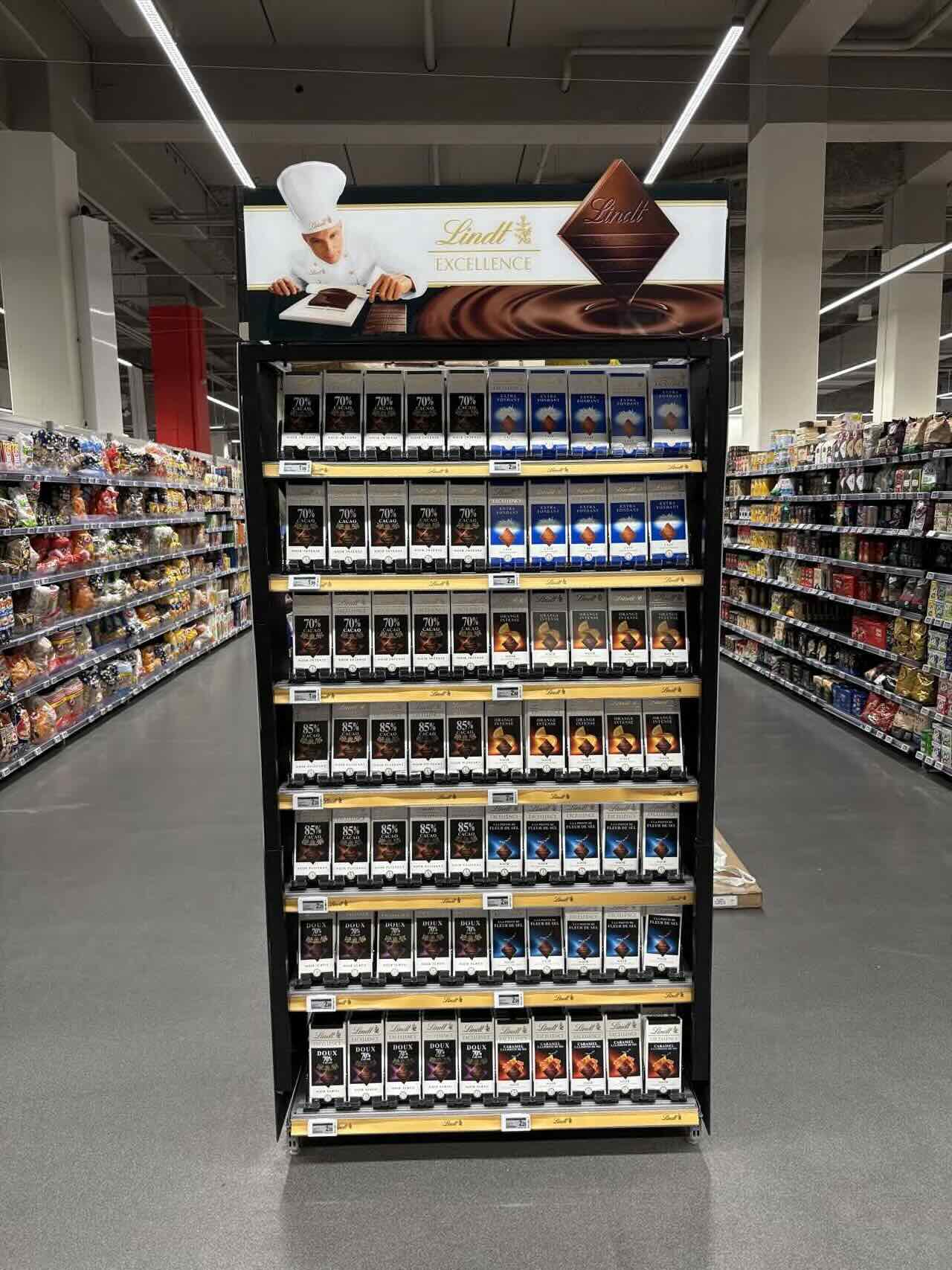
Generally mobile and independent, the endcap includes a distinct special structure separate from the rest of the shelving, such as an elevated platform, advertising panels, promotional posters, or special displays.
The endcap side panel (or wing) is a POS display element that fits on the sides of the endcap, optimizing product visibility and influencing purchasing decisions. It increases merchandising impact without requiring more linear space.
In certain retail sectors (grocery stores, pharmacies, toy stores), the endcap is used to display bulk products in order to stimulate impulse buying and boost promotions.
💰Key Figures
Placing products on endcaps generates up to 25% more revenue on an equivalent range. Some brands even manage to increase their sales by 35% by positioning "best-sellers" as well as new items there.
All industries and distribution networks are affected: from luxury to mass retail, including grocery stores and drugstores! In grocery stores, the rotation rate is often short: some supermarkets do not hesitate to change products every 15 days to meet the need for novelty of regular customers.
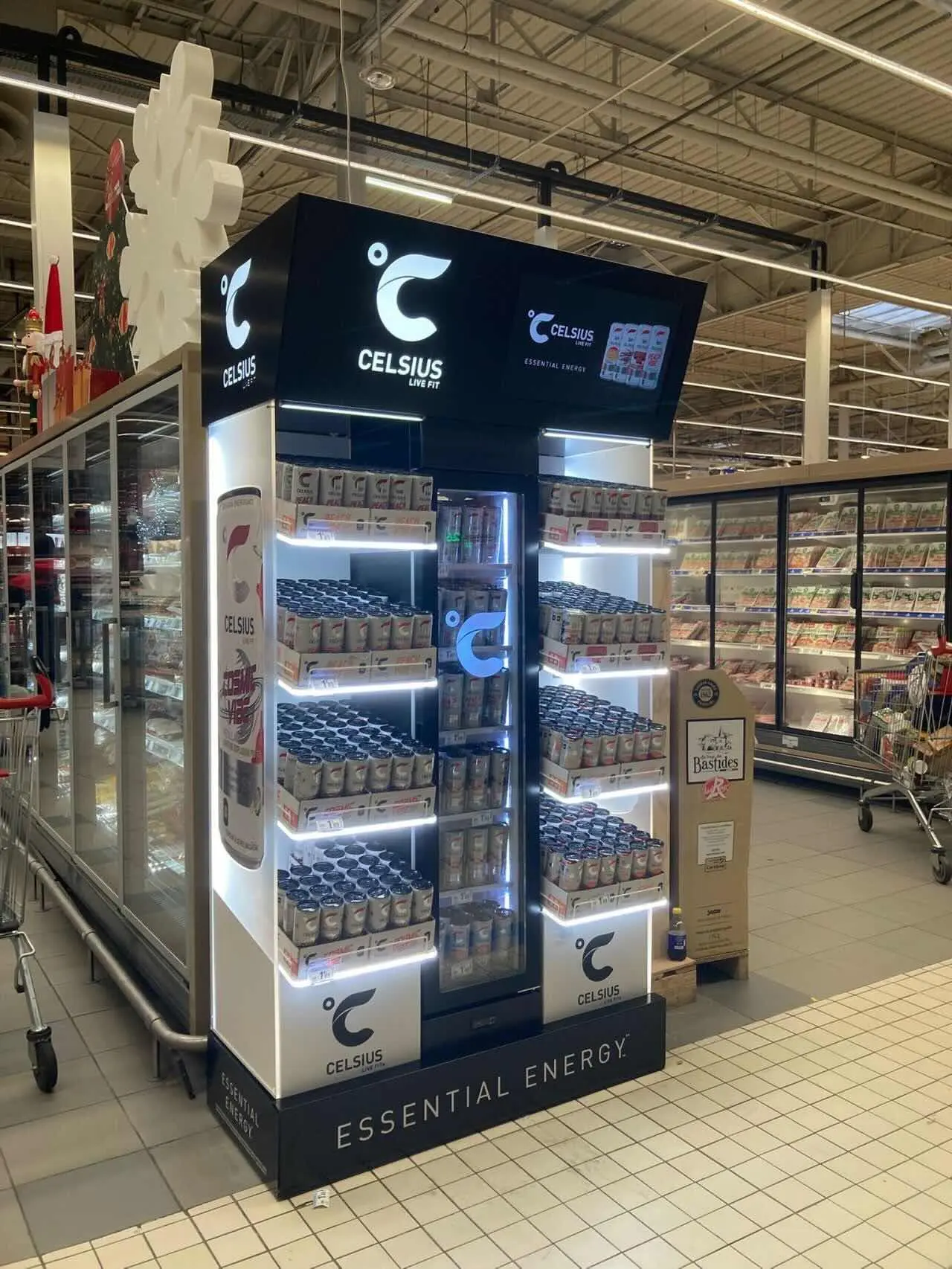
The benefits of the endcap
Manufacturers and retailers have many strategic reasons to leverage endcaps:
Launch and promotion: increase the visibility of new products and special offers;
Seasonality: boost sales during key events and showcase flagship products;
Complementary products: encourage bundled purchases;
Margin on private labels: highlight highly profitable private label brands;
Inventory clearance and price testing: accelerate product rotation and assess price elasticity;
Customer journey optimization: target strategic locations to capture attention;
Introduction of new lines: facilitate the adoption of new items;
Showcasing best-sellers: reinforce the success of top-selling products;
Commercial operations: increase the impact of in-store promotional offers.
Success with your endcaps: Sidely's tips
Let's now look at how to set up an endcap.
To succeed with your endcaps, you will need to proceed in four stages:
Select the products: choose references consistent with your commercial strategy, not just promotions.
Design the endcap: carefully craft the presentation to make it a true brand showcase.
Install and restock: place the endcap in the right spot and keep it always full and attractive.
Track performance: measure results in-store to manage the return on investment.
Now, let's detail each of these steps.
1. Alignment of the assortment with commercial objectives
The endcap has a driving role for manufacturers; in addition to driving sales of one or more products highlighted on the display, it also propels the brand into the spotlight, and can increase sales of your products present in other aisles of the store. This is called the mere-exposure effect.
Beyond boosting your brand's performance, the endcap has the power to draw traffic into adjacent areas, and therefore energize an adjoining category or aisle. This is often the argument to put forward in discussions with points of sale, as we will see below.
For the brand, the choice of products to place on the endcap is therefore linked to the assortment strategy, and the implementation plan must be aligned with the commercial strategy. This makes it a key topic for category management, because the entire profitability of the assortment is at stake.
The exercise is therefore complex; it is far from the standard approach of simply pushing promotions or popular products.
Finally, when it comes to cross-merchandising, some brands partner with other players offering complementary products, a flagship technique to increase sales within a packaged offer. This is known as cross-promotions.
2. Design and brand experience
The endcap is also a vehicle for branding and visual identity. By creating a strong universe, you make the brand's culture and values shine. Design therefore takes on full significance in this stylistic exercise!
If your distributors accept a custom design, you can maximize the effect of your in-store displays, and thus play on sensory marketing. An exceptional endcap is always synonymous with a unique experience for the consumer.
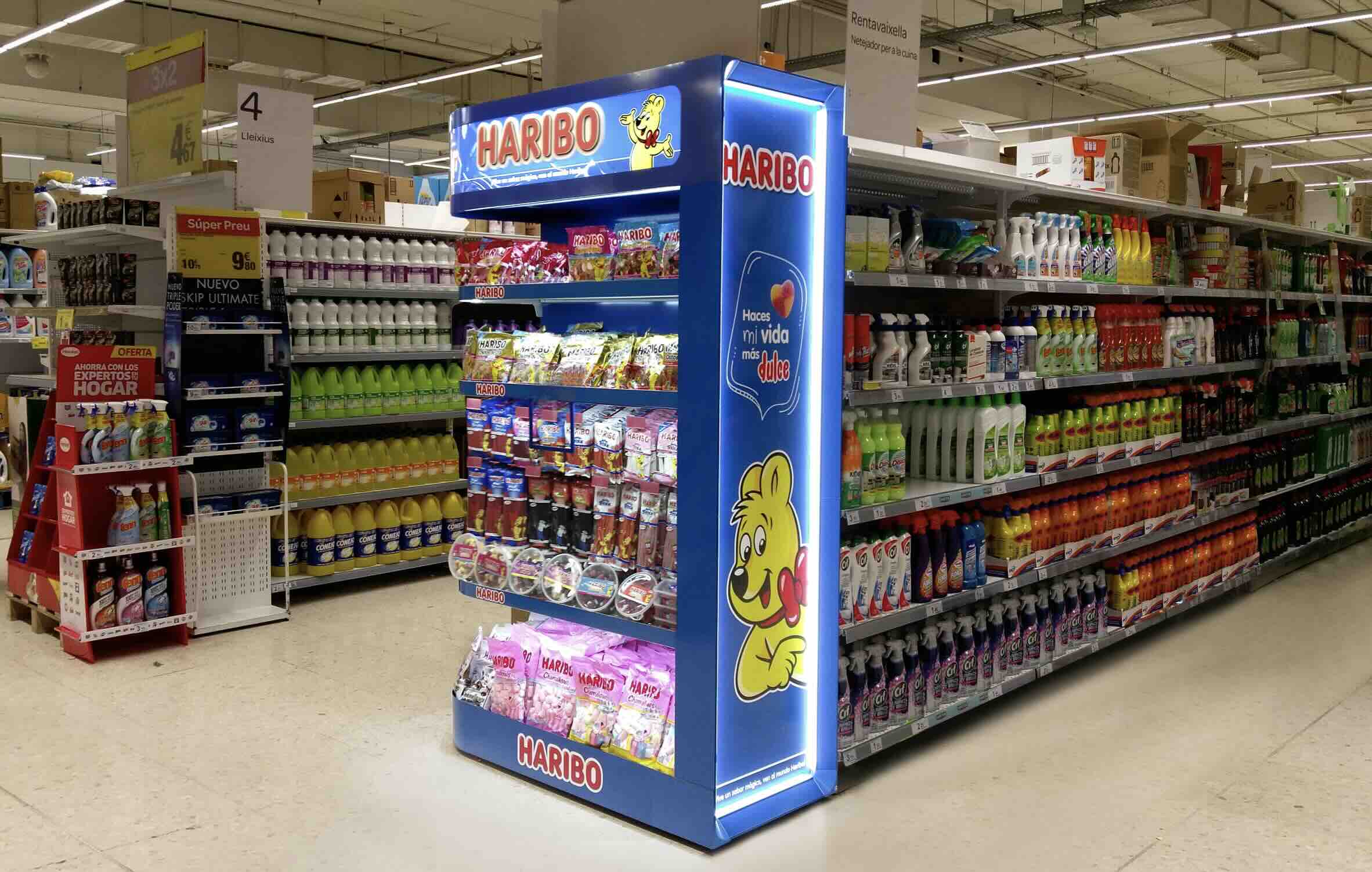
However, be careful not to systematically overload the endcap. Sometimes, it is better to keep an airy display, with a pyramid effect that boosts the sales of a leading product. A structured presentation is also preferred, with the largest items at the bottom and the smallest at the top.
The clarity of signage and POS elements are key: use posters or tags to attract the eye, with information about the promotion or the product's specificity. Bright, contrasting colors can help capture attention, especially for promotions.
Finally, incorporating interactivity and digital elements is very trendy: adding digital screens or QR codes can provide information in an innovative and fun way!
3. Setup and restocking
The organization of your endcap obeys well-known rules in the world of merchandising:
Products at eye level are the most visible and naturally attract attention;
Ideally, place the endcap near the entrance or in high-traffic areas;
Ensure the area is well-lit and clear for optimal visibility;
Depth of field can also have a significant impact. In the end, the dimensions and the mass effect will depend on the area in which the endcap is located.
To improve your merchandising knowledge, we also suggest these resources:
It is crucial to ensure the compliance of the endcap with the brand's merchandising plan.
To this end, write guides for field teams (sales reps, department managers) to ensure the proper setup of endcaps, including:
The obligations of each party: shelving, storage, etc.;
The aesthetic aspect, lighting;
The organization of products on different levels, and the number of facings;
A planogram showing the final layout;
Merchandising: display plan, specific POS materials;
Positive facing: if possible, face customers in the direction of traffic flow;
Etc.
Restocking the endcap must be regular. Make sure to keep inventory up to date and constantly renew the endcap to maintain the mass effect.
The rotation of products can also be considered: for example, if several items are on promotion, try rotating them to maintain the endcap's appeal over time.
4. Tracking the performance of your endcaps in-store
During field visits, your sales reps perform shelf and merchandising audits. The exercise also applies to endcaps. And when profitability is at stake, there's no room for guesswork!
Here are 3 exclusive benefits of Sidely CRM for brands present in retail:
Merch Auditing: facilitate and secure the feedback of information from the shelves, thanks to forms perfectly adapted to your business challenges. Our mobile app makes shelf auditing almost instantaneous, with or without a connection. You only have to pick from our library and use the audit templates and conditional surveys adapted to your network (grocery, specialty retail, and food service) or your industry (parapharmacy, food and beverage, spirits, etc.);
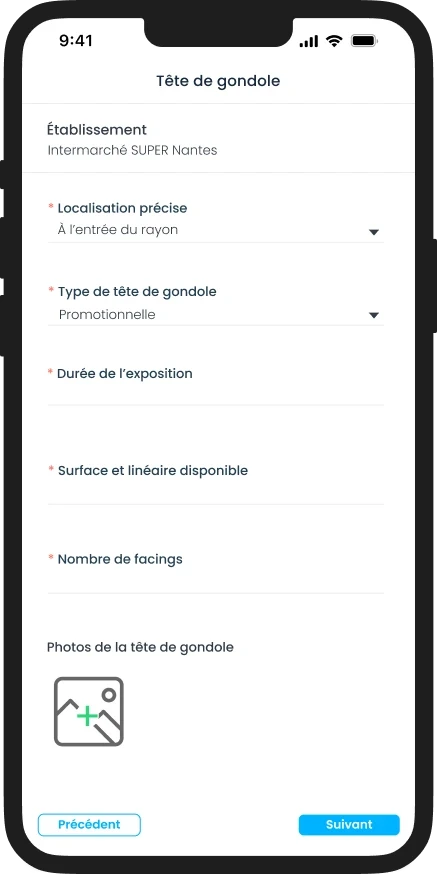
Endcap form on the Sidely mobile app
Financial analysis: locate merchandising displays to track and analyze investments and produce reports by point of sale;
Merch cost: calculate the weight of investments in endcaps and other POS materials for each product, product category, but also store, retailer, or even sales rep.
To complete these analyses, we finally recommend measuring the return on investment (ROI) of your endcaps using sell-out data (cash register sales) by comparing revenue before / after. Performance analysis will serve during future negotiation phases.
Negotiating endcaps with distributors
Whatever your distribution network (grocery, food service, pharmacy, etc.), it is crucial to establish a commercial strategy for acquiring endcaps.
And for your distributors to grant you these strategic locations, you must list the arguments that will convince them. For retailers, endcaps are often synonymous with reduced margins on promotional products. However, an impactful in-store display - or an aggressive commercial offer - can boost the entire surrounding area.
You can therefore argue based on:
An increase in revenue in the area;
An extension of the customer shopping path;
An increase in the average basket value.
Ideally, leverage your customer data, polls, studies, mystery shopping... All means are good to convince the distributor that your endcap will boost sales.
Furthermore, try to highlight good performances achieved in other points of sale with similar setups. This is the moment to let sell-out data and other reports speak: inventory rotation rates, profit margins, repeat purchase rates, etc.
💡 Inflate your list of demands during negotiations so that endcaps remain despite the elimination of other conditions.
🛒 Negotiations in grocery retail
In large grocery retailers, the allocation of endcaps is generally decided during annual negotiations with the banners, which charge a significant price for them. The rest of the time, trade marketing recommends staying proactive to discuss performance and propose spontaneous in-store operations (out of contract).
However, there is no absolute rule, particularly because the French market has different forms of organizations.
With an integrated network, you will have to build a comprehensive (often national) and centralized strategy at the banner level. But beware, signing the distribution contract is only the first step; next, you must ensure that agreements are respected in the points of sale. Furthermore, always encourage your area managers to collaborate with department managers and store directors throughout the year!
With independents, the commercial strategy can be more customized to individual stores. If your sales resources are limited, determine a sales front to prioritize the most strategic stores to place your endcaps. Use criteria such as tiers (store categories), store revenue, or your performance in revenue or market share (good or, on the contrary, needing improvement).
The endcap in pharmacies and drugstores
Up to this point, we have mostly focused on mass retail. However, pharmacies and drugstores form a network of their own, with its own rules. The reasoning changes as soon as you leave mass retail: the sales space is more restricted, the customer journey centers around the counter, and above all, the pharmacist's advice remains central to the act of purchase. The endcap never replaces pharmacy recommendation there; it extends it.
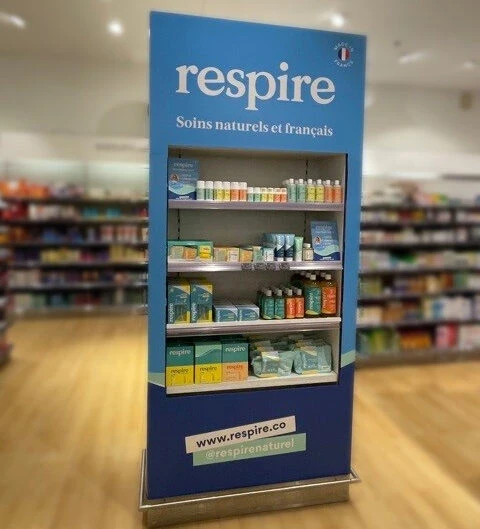
Showcasing the Respire range on an endcap
Source: Mayence
What products to place on the endcap?
The endcap here concentrates on self-service products: dermocosmetics, dietary supplements, hygiene, and seasonal selections. Medicines, however, remain behind the counter, not self-service, a major regulatory difference from mass retail. For the brand, the challenge is therefore to capture attention on a high-margin offer or a new product, with a sober POS display and clear product information, without ever overloading an already constrained space.
Seasonality, your best leverage
This is undoubtedly the strongest specificity of the network. In pharmacies, key periods pace the year and dictate the allocation of locations:
Sunscreens and mosquito repellents in spring and summer;
Vitamins, immunity, and supplements in autumn;
Hygiene and lice treatment at back-to-school time;
Slimming and detox in January.
Offering the right category at the right time is often the argument that unlocks an endcap.
Negotiating an endcap in pharmacies
Unlike mass retail, there is no single central buying office. Allocation is played out at two levels: groups and banners (Giphar, Aprium, Pharmavie…), which frame often national operations, and above all, the pharmacy owner, the final decision-maker in their point of sale. Your strategy must therefore combine an agreement at the group level and a real relationship of proximity with each owner, backed by proof of performance (rotations, sell-out) observed in comparable pharmacies.
In conclusion
You now know the many stakes surrounding the endcap for a manufacturer. After reviewing the definitions, best practices for design and implementation, as well as the best way to negotiate them, all that's left is to convince your distributors to grant you these privileged spaces in their stores!
Need to discuss your retail execution or your sales performance? Contact our teams!
FAQ
What is an endcap?
How does an endcap work in supermarkets?
What is an endcap in a pharmacy or drugstore?
How much does an endcap cost and how do you negotiate it?
What is a synonym for endcap?
Margot has been working in Tech and SaaS for 8 years, with a multi-product experience that has given her a unique understanding of business challenges. On a daily basis, she analyzes, relentlessly tests, and relies on facts to shed light on market trends and help sales teams move forward.
See also

Artificial intelligence and field professions: what our 2026 studies reveal
Adoption, barriers, use cases: discover what our three studies reveal about the role of AI among sector managers, sales representatives, and foodservice sales reps.

CHR and RHF Sales Representatives: portrait of a relationship-driven profession in the era of data
Equipment, productivity, AI: discover the major trends for the HORECA and food service sales profession in 2026 through our field study.

Pharmaceutical Sales Representative in France: Portrait of a Field Job Under Pressure
Compensation, aspirations, AI usage: discover the major trends in the pharmaceutical sales representative profession in 2026 through our field study.

Area Sales Managers in France: who are they and how is the profession evolving in 2026?
Compensation, aspirations, AI usage: discover the major trends in the field sales representative profession in 2026 through our field study.
The area manager professions in 2026
Discover the trends, the challenges, and the key figures.