

Marketing activation: the keys to engaging and retaining your customers
What is marketing activation? Definition, concrete examples, and strategies to engage your customers in-store and online.

In short
5 min read
Marketing activation refers to the set of strategies and tactics aimed at engaging consumers to stimulate their interest in a brand or its products.
Its main objective is to transform engagement into concrete results, such as increased sales, brand awareness, and customer loyalty.
Experential marketing is at the heart of the system, seeking to create memorable and emotional moments to strengthen the lasting bond between the public and the brand.
The deployment of an effective strategy requires total consistency to avoid damaging the brand image, especially during promotional operations or massive campaigns.
Digital technology now complements actions on the ground thanks to powerful segmentation and a tracking capability that amplifies the reach of messages at a lower cost.
In indirect sales, marketing activation must imperatively integrate the distributor dimension while adapting the message to the psychology of in-store shoppers.
Marketing activation plays a crucial role in the strategy of companies seeking to create meaningful interactions with their target audience. By implementing concrete and engaging actions, marketing activation aims to stimulate consumer engagement, strengthen brand awareness, and generate measurable results.
Today, Sidely explores the different dimensions of marketing activation, its benefits for companies, and best practices to maximize its effectiveness in a constantly evolving economy. We will conclude with three historical examples that left an impression and continue to inspire brands worldwide.
Marketing activation: definition and challenges
Marketing activation, also known as brand activation, refers to the tactics and strategies implemented by a company to engage and entice consumers to interact with its brand, products, or services. This generally involves activities aimed at stimulating the interest, recognition, and engagement of potential or existing customers.
Marketing activation techniques can take many forms:
Promotional events;
Sample distribution;
In-store demonstrations;
Organization of contests (physical or digital);
Social media campaigns;
Interactive installations;
Shop in shop;
Opening pop-up stores;
Loyalty programs, etc.
The main goal is to create memorable and positive experiences for consumers in order to strengthen their relationship with the brand and increase sales, brand loyalty, and awareness. For companies positioning themselves in a niche or innovative market, marketing activation also fosters consumer education by offering hands-on experiences that allow them to learn more about the brand's products or services in a fun and interactive way.
Brand activation and brand perception
One of the goals of activation is to align customers' perception of the brand with the brand identity (its mission and goals). In other words, the company seeks to ensure that the way consumers perceive its products and services corresponds to the image and positioning it wishes to project to grow in its market.
This task is generally made complex by competition, but also by the difficulty of deploying a consistent communication strategy and homogeneous field actions. For example, a brand may seek to boost its sales by offering highly attractive price promotions. However, by doing so, it risks damaging its brand image, as consumers associate discounts with "low-end" quality. Therefore, the brand's entire positioning in its market is at stake.
💡 Another typical example: an advertising message whose reception differs completely from its goals. In 2017, a video ad for a Dove body wash caused a global controversy. It showed a Black woman removing her t-shirt to reveal a White woman, then a brown-skinned woman. This sequence was criticized as racist, suggesting the whitening of Black skin. Under the hashtag #BoycottDove, internet users called for a boycott of Dove products. Facing pressure, the brand removed the video and issued an apology. This illustrates how bad buzz can damage a company's reputation despite its initial intentions.
This is why communication agencies are generally involved in activation strategies. They master the art of the brand platform, which guarantees the consistency of the story a company wants to tell through its marketing and communication.
Experiential marketing: emotion at the heart of the mechanism
In order to trigger the endorsement of the target audience and create a lasting connection with the brand, the goal is generally to touch consumers on an emotional level. Once the message is clearly defined, creativity allows it to be translated into operational marketing campaigns. This is referred to as experiential or sensory marketing, because triggering emotion relies on mobilizing all sensory activity in the customer. This also explains why field actions play such an important role in activation. To delve deeper into the subject, discover the best retail animation techniques.
Digital activation
However, although activation has traditionally focused on field actions, and particularly in retail locations, significant budgets are now allocated to running advertising campaigns on various digital platforms. Indeed, unlike traditional channels such as television, social media provides an extremely powerful segmentation capability that allows brands to target their audience in an ultra-efficient way.
Digital media thus makes it possible to increase the impact of marketing activation at a lower cost, notably through the repetition of advertising messages to engaged users via modern tracking tools. Social media activation has become an integral part of brand activation strategies, helping them achieve their goals in terms of reach (reaching consumers) and engagement (interactions on social networks).
Difference between marketing activation and brand activation
These two terms are very close, and their corresponding actions are often interchangeable. However, a distinction can be made in terms of timing. Indeed, marketing activation focuses on short-term consumer engagement, while brand activation aims to strengthen the long-term relationship and perception between the brand and its target audience.
Marketing activation | Brand activation | |
|---|---|---|
Impact / time | Engagement / Short term | Loyalty / Long term |
Main objectives | Introduce the brand or product, generate sales | Guide / improve brand image / Foster loyalty = build a lasting relationship with the target audience |
Main actions | Ad campaigns / Promotional events / Contests and games / Promotional offers / Influencer marketing | Brand experiences / Strategic partnerships / Memorable events / Brand content creation / Value-based communication |
Activation marketing and consumer packaged goods (CPG)
Succeeding in a supermarket activation campaign requires mastering all dimensions of the marketing mix: product, positioning, distribution policy, communication, and performance tracking... while taking into account market specificities and consumer expectations!
But that’s not all; knowing the impact of activation campaigns on sales is often complicated. For example, brands may find it difficult to correlate the impact of downtown sampling tests for a new chocolate bar with sales performance in stores.
In these cases, it is sensible to send sales representatives to representative stores to evaluate stock and shelf space, ideally conducting a before/after comparison of the marketing activation. Much like promotions, an upward difference in sales suggests that the operation was successful.
💡 To monitor the effectiveness of your in-store activation campaigns and allow your sales representatives to report all information from their store checks in just a few clicks, discover our supermarket field reporting app.
Point of sale activation and trade marketing
In retail, point of sale activation is also used to refer to the entire setup planned by a brand to boost its performance at a store level. This includes merchandising actions, in-store demonstrations, and promotional campaigns.
While store activation is primarily intended to boost or revive sales, it also helps stimulate distributors by showing proactivity in the business relationship. The collaboration then fits perfectly into the logic of trade marketing.
This is indeed a specific feature of indirect sales; activation cannot be defined solely as a relationship between the brand and its target audience, but involves a third party: the retailer. Marketing must therefore take this parameter into account and design its campaigns keeping in mind that the retail outlet itself can carry brand image weight. In other words, when customers choose to shop at a particular store, their experience is largely shaped by the retailer's strategy (price, quality, range available, etc.).
Imagine, for example, that your food brand is distributed across two chains: Monoprix, which works mostly exclusively with brands selected for their differentiation, and Intermarché, which “fights against the high cost of living.” You could then adapt your activation campaign to take into account these specificities and their impact on shopper psychology:
Monoprix: a sampling of rare and surprising recipes;
Intermarché: a tasting of delicious treats at low prices.
3 key examples of marketing activation campaigns
Finally, let's look for some inspiration from brands that have marked the history of communication thanks to dazzling activation campaigns.
Red Bull Stratos
In 2012, Red Bull launched the Red Bull Stratos initiative, in which extreme athlete Felix Baumgartner performed a skydive from the stratosphere. This spectacular campaign generated enormous media attention and drove consumer engagement worldwide, thereby reinforcing Red Bull's reputation as a brand associated with boldness and innovation.
Nike+ FuelBand
Nike launched its Nike+ FuelBand campaign in 2012, featuring a smart band that allowed users to track and measure their daily physical activity. This campaign encouraged consumers to adopt an active lifestyle while strengthening engagement with the Nike brand by integrating wearable technology into their daily routine.
Share a Coke
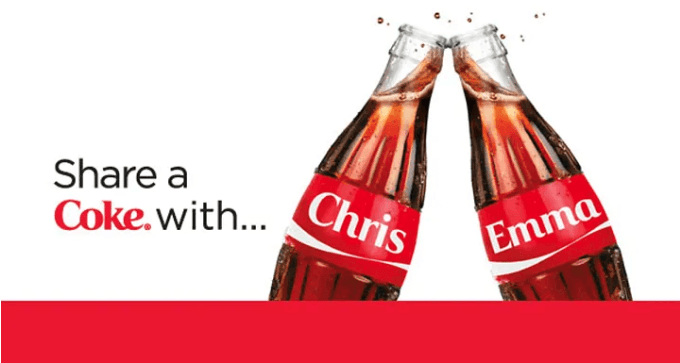
In 2011, Coca-Cola launched its "Share a Coke" campaign, replacing the brand's logo on its bottles with popular first names. This personalization prompted consumers to search for their own name or those of their loved ones, thereby creating a sense of connection and sharing around the Coca-Cola brand. This campaign was a global success, boosting consumer engagement and driving sales.
For the past five years, Corentin has supported more than 200 sales teams, making him one of the longest-serving members of the company. He has seen the product evolve alongside the industries he supports, giving him a deep understanding of actual use cases. Between onboarding calls and training sessions, he has built up rare, hands-on expertise: knowing exactly what saves teams time.
See also

Artificial intelligence and field professions: what our 2026 studies reveal
Adoption, barriers, use cases: discover what our three studies reveal about the role of AI among sector managers, sales representatives, and foodservice sales reps.

CHR and RHF Sales Representatives: portrait of a relationship-driven profession in the era of data
Equipment, productivity, AI: discover the major trends for the HORECA and food service sales profession in 2026 through our field study.

Pharmaceutical Sales Representative in France: Portrait of a Field Job Under Pressure
Compensation, aspirations, AI usage: discover the major trends in the pharmaceutical sales representative profession in 2026 through our field study.

Area Sales Managers in France: who are they and how is the profession evolving in 2026?
Compensation, aspirations, AI usage: discover the major trends in the field sales representative profession in 2026 through our field study.
The area manager professions in 2026
Discover the trends, the challenges, and the key figures.