

In-Store Promotions in Supermarkets: The Keys to Success for Brands
Brands present in supermarkets must master the art of in-store promotions. Discover all the keys to the success of your in-store campaigns.

In short
7 min read
A successful sales promotion relies on the prior definition of SMART objectives in perfect alignment with the overall marketing strategy.
In-depth knowledge of your target audience and the strategic selection of priority points of sale are essential to maximize the chances of success.
Budgeting requires rigorous planning based either on the expected ROI, estimated costs, or existing financial constraints.
The rigorous monitoring of the operation, through performance indicators and field feedback in the CRM, is indispensable for evaluating the effectiveness of the implementation.
Integrating sensory and active experiences helps to strengthen consumer engagement and foster brand recall.
Valuing the human element, through the training of promoters and the involvement of the distributor's sales teams, constitutes a decisive driver for long-term performance.
In-store commercial animation is a wonderful way to promote your product within your distribution network. There is a wide variety of animations, from simple tastings to virtual reality gamification, as well as product tests and contests.
But ensuring the success of your commercial animations requires careful preparation, and above all, knowing the key factors for success.
At Sidely, we decided to look into the matter. On the agenda: the secrets of a successful animation that sparks curiosity and excitement among point-of-sale customers and encourages impulse buying.
Succeeding in Your Commercial Animation: The 4 Preliminary Steps
Before choosing which commercial action to implement, several questions should be asked to guarantee its success.
1) Clearly Define Your Objectives
A commercial animation is always justified by at least one performance objective:
Activation: introducing your new product/service or your new brand;
Highlighting: boosting sales of a product already listed by the distributor but whose sales have dropped, or maintaining sales levels as a typically "slack" period approaches;
Acquisition: expanding your customer base by reaching a new target audience;
Retention: increasing the shopping frequency of your products versus competitor products;
Etc.
Commercial animation is an appropriate response to all these objectives, provided they are clearly defined. Remember that you only deploy the right action when you have the right objective.
In distribution, as in many other areas, a good objective is SMART:
Specific
Measurable
Achievable
Realistic
Time-bound
An objective that meets these criteria is the necessary baseline for effective action. It allows you to determine your target audience, the points of sale to animate, the time of year, and also the format of the animation.
Finally, it is essential that your commercial animation is aligned with the company's marketing strategy and marketing plan. Indeed, these tools have already allowed you beforehand to define the target audiences, communication angles, product positioning, pricing, and communication channels to reach the target.
2) Know Your Target and Their Needs
There are two types of commercial animation in mass retail:
Animations negotiated with purchasing groups;
Pirate animations.
In any case, area managers must convince active stores to host the animation.
This is known as the commitment period. It consists of contacting and negotiating with the points of sale.
And to sell effectively, you must know your target. In supermarkets, several criteria need to be considered:
Is it an active or inactive customer?
Is it a new customer?
Is this store in your top sales?
How long have you been working together?
To maximize the chances of success, it is recommended to prioritize contacting points of sale that recorded the highest sales volumes during previous promotions and animations, or that demonstrate high potential.
3) Plan the Right Budget
To determine the budget for your supermarket commercial animation, you will use 3 main methods:
ROI: by quantifying the gains you are targeting through the operation, you can determine a percentage to allocate to the animation;
Start by quantifying the costs of an animation you have designed and add up quotes and internal costs;
Start with what exists: if you have an annual budget and a portion of it has already been used, or if corporate policy is to set a fixed amount per operation, you will then have to design the animation based on the available budget.
The first scenario represents an ideal situation where money is spent to increase profits.
4) Track Commercial Animation Results
Now, all that's left is to observe and monitor the operation.
Two areas need monitoring:
The sale of the animation;
The results of the animation.
First, it is imperative to evaluate whether the objectives set by the marketing department, which is often behind the commercial animations, align with performance in the field.
Did the sales team sell the animation well? This evaluation involves monitoring commercial activities, such as calls, field visits, or the setup of animations.
Was the animation set up in the right place? This can be assessed through POS and merchandising audits.
Did the animation run for the negotiated duration?
Etc.
During the setup of the animation, the sales representative records findings in their CRM: highlight completed, type of promotion, quantity of products.
Generally, photos are taken by the sales representatives to prove to the sales director that the highlight took place and to send the best ones to the marketing department. If the order ultimately did not arrive, the sales representative negotiates with the store manager to reorder the merchandise originally planned.
Second, it is equally important to analyze the impact of the commercial animation on in-store sales, questioning whether the store truly benefited from this initiative and if it was well received by end consumers.
To do this, the sales representative ensures the smooth running of the animation or promotion in each point of sale: sales (checkout data), unsold items, breakage.
Subsequently, they can verify if the promotion resulted in an increase in recurring sales (Weekly Average Volume, Monthly Average Volume).
The sales representative can then analyze the potential of each point of sale:
The promotion went well and there was enough product quantity during the entire period ⇒ Quantity / point of sale potential ratio achieved;
The promotion went very well, but the quantities were not enough until the end of the period ⇒ Quantity / point of sale potential ratio too low;
The promotion did not go well, and quantities were too high. There are unsold items at the end of the period ⇒ Quantity / point of sale potential ratio too high.
To check if the promotion worked well, it is important to focus on checkout data and compare them to recurring sales (Weekly Average Volume, Monthly Average Volume) during the promotional period. If the promotion was effective, there should be a significant increase in sales. However, if checkout sales were not as high as expected, it may be necessary to review the promotional strategy.
To do this, ensure that objectives and resources are clearly understood by all stakeholders. Each collaborator involved in the commercial animation must know their objectives (performance, budget, reporting, etc.).
For operations spanning several days, establish milestone reviews. The ideal is to get day-to-day insights to measure sales uplift. And naturally, make sure you have the indicators that allow you to perform proper analyses. If you managed to retrieve checkout data from your distributors, volumes should appear clearly. Without this, an increase in sell-in could indicate a trend, but this should be avoided as it is too open to interpretation.
The last option is to have the animators themselves track sales from the shelves. But do you have the store's usual sales figures to compare with?
As you can tell: checkout data is essential to analyze your commercial animation results with precision.
Commercial Animation in Supermarkets: Keys to Success
Now that you have the objectives, target, budget, and tracking method, you might need to adapt to the distributor's constraints: their sales plan, floor space, their own promotional calendar... To convince your distributor to approve your commercial animation, you will need to use the right network animation techniques.
Furthermore, whatever constraints you must adapt to, keep in mind the 3 key dimensions for the success of your animation:
Experience
Human
Performance
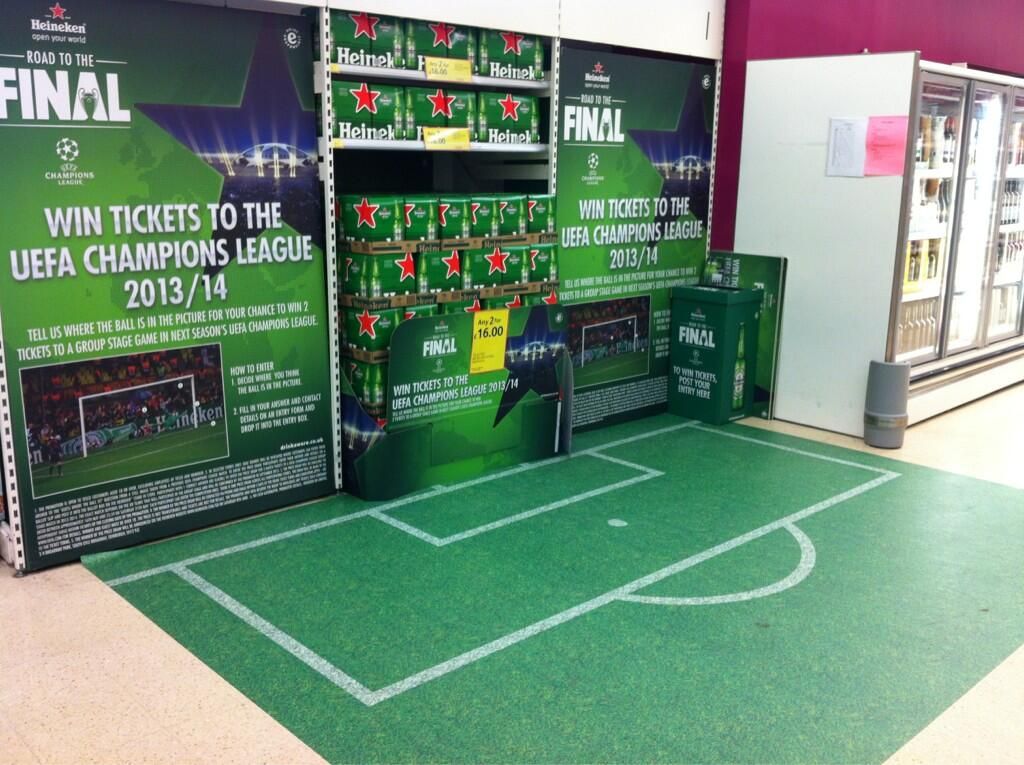
Sensory and Active Experience
It is hard to discuss commercial animation without mentioning sensory marketing! This concept allows you to increase the impact of your animation by engaging the customer's 5 senses. The customer is then more attracted to your animation, stays longer at your stand or with your sales representatives. They are also more likely to yield to the temptation of an impulse buy.
The consumer then enjoys a genuine experience, and this adds significant value to their buying journey! Here are some commonly used ideas:
Create a joyful and playful moment by having them participate in a creative workshop;
Attract customers with games tailored to the target, physically engaging them while creating a challenge, stimulating their competitive spirit like with certain contests;
Transport consumers out of their daily lives and into the brand's universe using a virtual reality headset;
Offer video games that will anchor your brand identity in the buyer's mind.
Source & credit: Bryan Roberts
Beyond simple tastings or product demonstration workshops conducted by a sales representative, these animation formats engage consumers, establishing a sensory and therefore lasting connection with the brand.
The Human Touch at the Center of Commercial Animation
Beliefs and Responsible Purchases
Consumers buy to satisfy one or more needs of varying natures. The more your product and brand address those needs, the more you will attract and retain custom. Highlight all these assets during interactions on the animation site.
Sponsorship and Ambassador Programs
It is also possible to use in-store animations to feature other marketing initiatives inviting consumers to become brand ambassadors. You can, for example, offer them a sponsor role, a reward for leading others to buy the product, or for creating online content and feedback. And why not encourage them to participate in online animations and contests?
In-store animation is therefore also a touchpoint leading to other forms of participation in the product's marketing strategy!
Commercial Performance at the Heart of the Animation
Offer Training and Challenges to Your Sales Force
Train your sales reps on how to handle the brand's product selling points. Indeed, direct contact offers time to convince, but you still need to know your strengths!
But building connections also means turning a simple commercial interaction into a more lasting relationship. Customers who align with the brand’s values or get involved through a sensory and active experience can become brand ambassadors. They will naturally promote it to those around them.
Finally, the goal of an animation is also to break away from the static nature of standard communication. Your animators, in direct contact with consumers, can interact and deploy appropriate commercial persuasion techniques! But this requires technique: using the right tone of voice, being friendly, asking the right questions, and taking an interest in the buyer. Therefore, you must train animators in conversation techniques that build bridges between the brand and its market, whether through values (civic actions, ecology), tastes, or simply price or the offer itself.
We also advise you to motivate your area managers to host your in-store events, by offering a reward - financial or material - to the best sellers.
Involve Your Distributor’s Sales Representatives
As a sales rep or area manager, you have undoubtedly nurtured your relationship with your distributors' sales reps. The objective? For them to keep your product front of mind, know how to guide the customer towards purchase, and participate in highlighting it over the long term.
During an animation, your distributors' sales representatives can therefore be excellent animators. Yet another way to strengthen their bond with your brand and brand consumers, thereby increasing the success of your supermarket commercial animation. Since in-store sales reps have a good knowledge of their customers, this will favor the long-term sales performance of your product.
Margot has been working in Tech and SaaS for 8 years, with a multi-product experience that has given her a unique understanding of business challenges. On a daily basis, she analyzes, relentlessly tests, and relies on facts to shed light on market trends and help sales teams move forward.
See also

Artificial intelligence and field professions: what our 2026 studies reveal
Adoption, barriers, use cases: discover what our three studies reveal about the role of AI among sector managers, sales representatives, and foodservice sales reps.

CHR and RHF Sales Representatives: portrait of a relationship-driven profession in the era of data
Equipment, productivity, AI: discover the major trends for the HORECA and food service sales profession in 2026 through our field study.

Pharmaceutical Sales Representative in France: Portrait of a Field Job Under Pressure
Compensation, aspirations, AI usage: discover the major trends in the pharmaceutical sales representative profession in 2026 through our field study.

Area Sales Managers in France: who are they and how is the profession evolving in 2026?
Compensation, aspirations, AI usage: discover the major trends in the field sales representative profession in 2026 through our field study.
The area manager professions in 2026
Discover the trends, the challenges, and the key figures.