
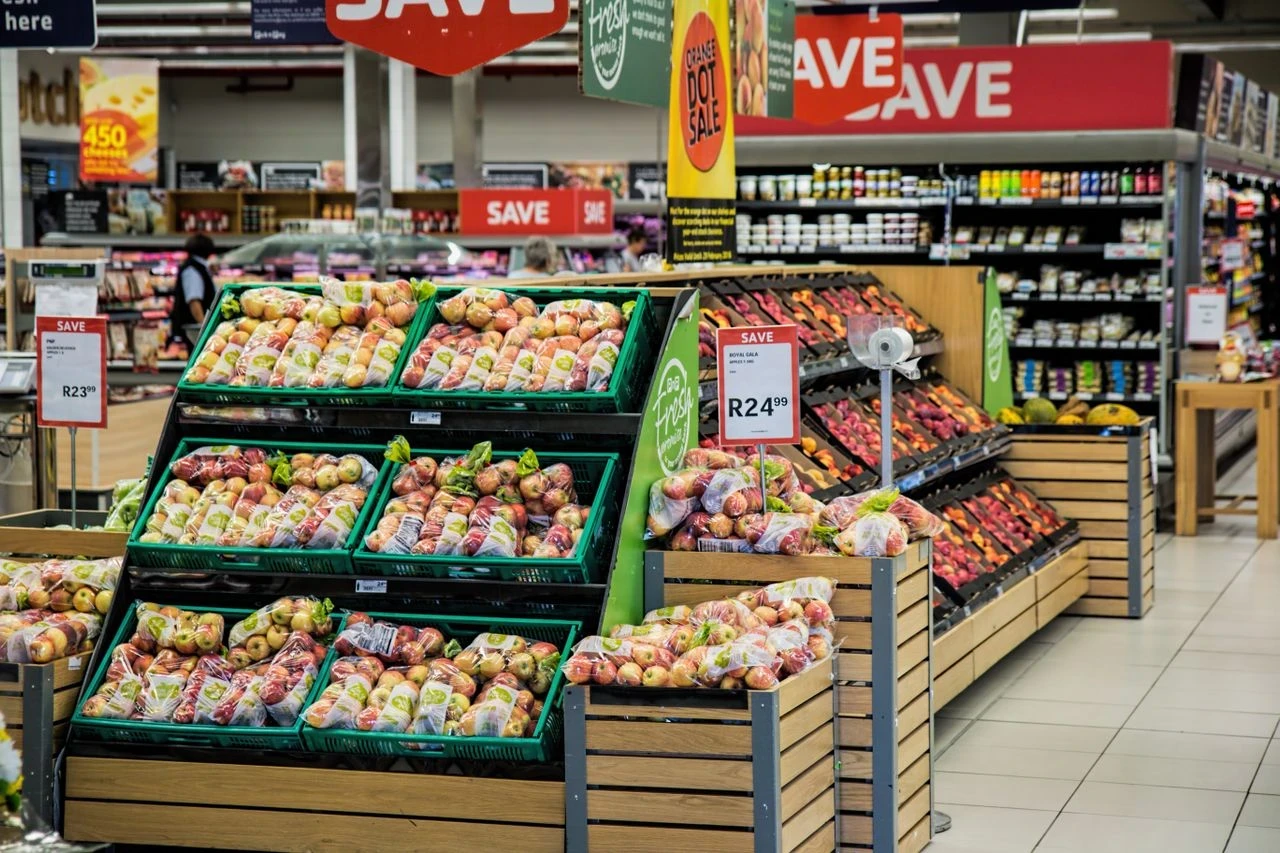
Kakemono: is it still a good investment for your brand in supermarkets?
Is the rollup banner still a good investment for brands in supermarkets? Here is everything you need to know about this POS display item and its impact on your agreements with retailers.

In short
8 min read
A vertical hanging signage tool, ideal for improving visibility from a distance in aisles and structuring retail space.
A proven performance driver, capable of generating between +5% and +15% in incremental sales when positioned correctly.
A versatile solution for brands, used for signage, theatrical promotion of events, or product launches.
A complementary rather than standalone medium: its maximum effectiveness is achieved within an overall display strategy, supporting more transactional initiatives like shelf talkers.
A flexible and economical investment, facilitating the consistent deployment of a brand image thanks to its portability and controlled production costs.
A device facing high visual saturation in supermarkets, requiring high graphic simplicity to stand out among the many in-store stimuli.
In mass-market retail, point-of-sale advertising (POSA) materials are evolving under the influence of several factors: shelf crowding, stricter merchandising rules, increased pressure on performance, and the rise of solutions perceived as more innovative or measurable.
In this context, traditional materials like the kakemono can legitimately be called into question. Long used to improve shelf visibility or highlight a campaign, this vertical, suspended format is now facing growing visual saturation and heightened expectations regarding return on investment.
The question is therefore no longer whether the kakemono is part of existing POS advertising setups, but whether it remains relevant to the current objectives of brands in supermarkets: real visibility, acceptance by retail chains, complementarity with other materials, and effective contribution to brand communication or commercial performance.
This article aims to analyze, in a factual manner, in which cases the kakemono remains useful, how it compares to other POS formats used in mass-market retail, and under what conditions it can still constitute a coherent investment for a brand.
What is a Kakemono? (definition, origin, formats)
Definition of the kakemono in communication and POS advertising
In communication and point-of-sale advertising (POSA), a kakemono refers to a vertical communication medium, most often suspended, designed to convey a simple visual message that is visible from a distance. It is mainly used in environments where floor space is limited, such as trade shows, retail stores, or mass-market shelves.
Unlike other POS materials, the kakemono is characterized by:
a distinct vertical orientation,
a high position (suspended or fixed plumb),
a primary role of signage and wayfinding, rather than product demonstration.
Kakemono ≠ roll-up ≠ shelf-talker
Although often confused, these mediums serve different purposes:
The kakemono is generally suspended or positioned at height. It catches attention from a distance and fits into a logic of overall shelf or brand visibility.
The roll-up is a freestanding floor-based, mobile medium, used more in events or at the entrance of a space.
The shelf-talker (stop-rayon) is integrated directly onto the shelf. It works at very close range and aims to interrupt the purchasing process.
The kakemono POS therefore does not come into play at the same time in the shopper journey: it operates upstream, on direction and visual recognition, whereas the shelf-talker works at the point of choice.
Origin of the kakemono and adoption in France
Kakemono is a term of Japanese origin literally meaning "suspended object," which initially referred to an artistic work such as a painting or calligraphy created on a vertical canvas and weighted at the bottom. It has been used in traditional Japanese art for several centuries.
In France, the word kakemono also designates these essential visual tools in the field of Point of Sale Advertising (POSA) or Point of Sale Information (POSI), which generally use the same vertical canvas format.
The kakemono appeared in France in the late 1990s, in the context of the professionalization of POS advertising, the development of event planning, and the rise of lightweight large-format printed media.
It was first used in trade shows, corporate events, and commercial window displays before arriving on a massive scale in mass distribution in the early 2000s. It was then used as suspended signage for shelf layout and during promotional highlights.
Kakemono: an essential traditional POS format
The word "kakemono" is primarily used in France because it avoids semantic confusion with roll-ups. In neighboring countries, terms like hanging banner, vertical banner, or suspended signage are more common. It quickly established itself as a professional POS, and later marketing, term.
The kakemono is one of the most widely used POS displays in mass distribution because it has proven to be an important driver of commercial support, largely due to the structural constraints inherent to points of sale, as well as the evolution of merchandising practices. A well-placed POS campaign can generate +5% to +15% in incremental sales for the activated brand.
Its adoption is also linked to its versatility of use. The kakemono can serve as shelf signage, temporary theatrical display material, or a visual landmark during a promotional highlight or product launch.
Finally, the kakemono has become popular because it supports the logic of standardizing POS materials. Usable across multiple points of sale with minimal adaptations, it allows brands to deploy a consistent message across a network while controlling production and deployment costs. We will detail these advantages later in the article.
The formats of kakemonos used in stores
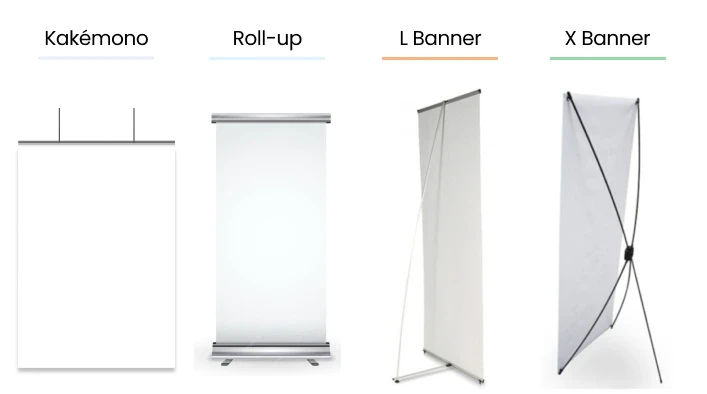
The kakemono family includes:
The traditional kakemono, which is suspended either from the ceiling or on the wall;
The freestanding, ground-supported roll-up, which unrolls vertically. It is more stable because it is sturdier;
The banners: versions that differ in the shape of the support arm holding them from behind: L-shaped for the L-banner, or X-shaped for the X-banner.
Kakemonos on supermarkets shelves: what are the concrete uses?
Marking and wayfinding on crowded shelves
On highly competitive shelves (fresh products, yogurts, desserts), Danone occasionally uses hanging kakemonos to indicate a product category (organic, plant-based, specific nutrition) or to structure shelf navigation.
Benefits for the brand
Reduce shopper cognitive effort
Reinforce brand presence above the shelving, without taking up product space
Here, the kakemono acts as vertical signage, rather than a promotional tool.
Supporting a commercial or promotional campaign
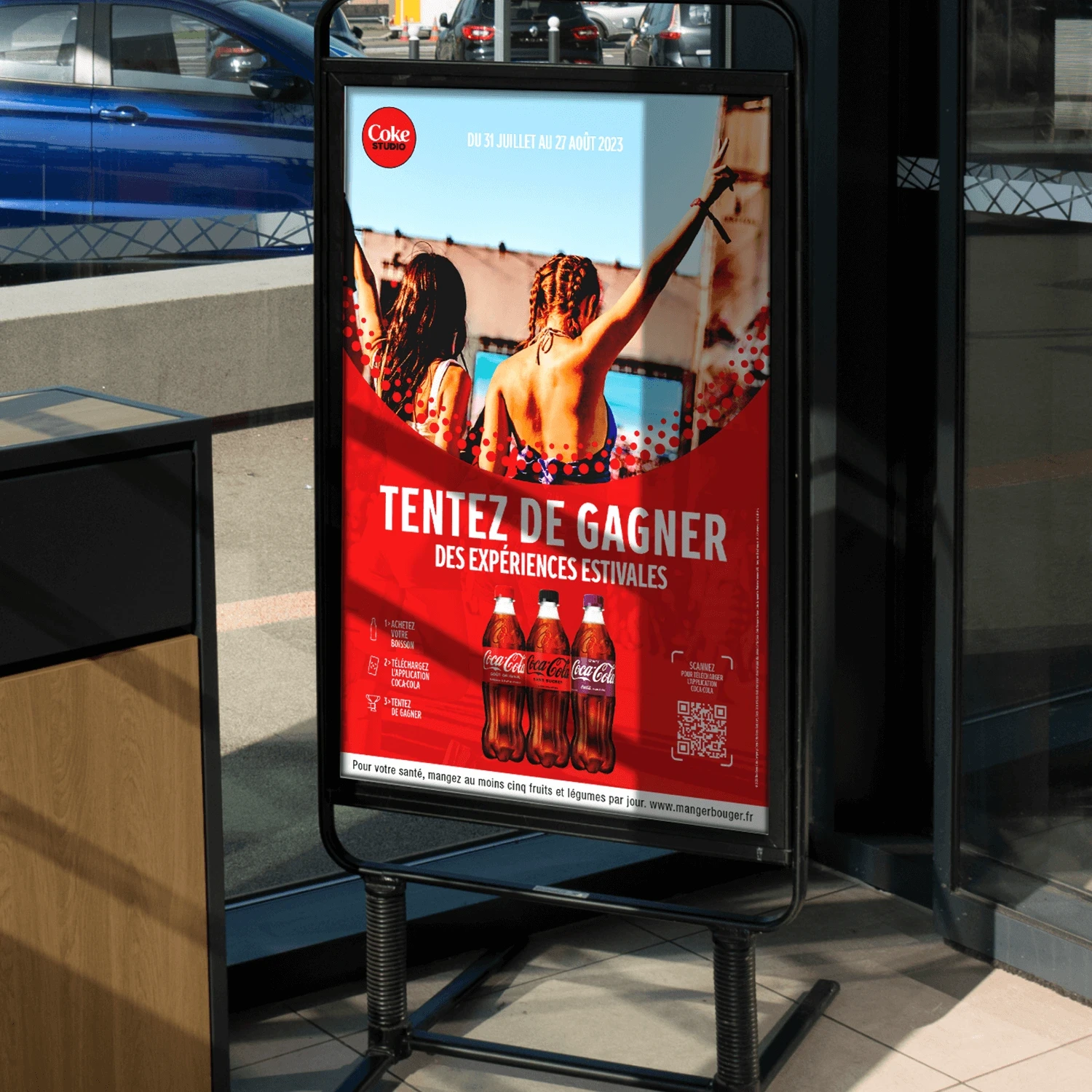
During promotional highlights (summer, sporting events, seasonal campaigns), Coca-Cola deploys kakemonos alongside other POS materials to create in-store theater and boost visibility from a distance.
Benefits for the brand
Provide visual consistency to the campaign
Increase visibility from the entry of the aisle
Support a larger plan (endcaps, shelf-talkers, promotional prices)
The kakemono here acts as a visual amplifier, rarely alone, but useful for reinforcing the overall impact of the campaign.
Brand activation and visual communication
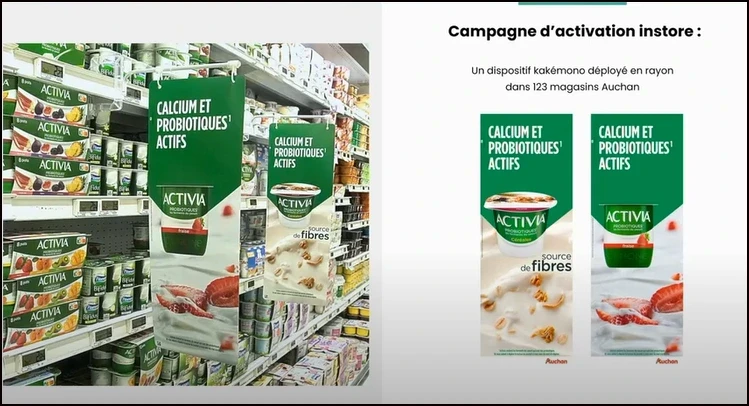
Danone uses the kakemono as a medium for visual brand communication, notably during product launches or to highlight commitments (nutrition, responsibility, innovation).
Source: marketing definition
Benefits for the brand
Establish a consistent visual territory
Reinforce brand recognition along the shopper journey
Convey a simple, clear, and non-transactional message
In this case, the kakemono contributes to the mental presence of the brand, rather than immediate conversion.
Kakemono and visual communication: what impact on the brand?
Visibility and attention in the point of sale
Using kakemonos or roll-ups allows your brand to be visible from afar. Vertical POS materials can generate +20% to +40% spontaneous visibility compared to standard shelf signage.
These displays can be positioned at the entrance of the store or directly in the section where your products are located, making them more visible from a distance. Placing them in strategic locations maximizes exposure, ultimately highlighting specific products or promotions. This is precisely the role of the kakemono in supermarkets, rather than direct conversion: strengthening the brand's positioning.
However, care must be taken: although the kakemono is designed to improve a brand's visibility in stores, its effectiveness in terms of visual attention is neither automatic nor guaranteed, particularly in dense commercial environments like supermarket aisles. Mass-market stores are characterized by a high density of visual stimuli: packaging, promotions, price tags, POSI, other POS displays, and retail chain signage. In this context, the kakemono directly competes with other hanging materials, store-specific graphic elements, or temporary promotional messages. When multiple displays coexist within the same visual field, the kakemono can lose its ability to stand out.
Recall and brand recognition
While some brands may try to appeal through price, promotional offers, or placement (endcaps or otherwise), others will instead try to catch the eye! Building a brand often involves being visually identified, especially for a newly launched brand. The kakemono then constitutes an imposing physical object that helps achieve this goal in stores. Indeed, vertical and suspended displays generate: +20% to +40% spontaneous visibility vs. signage integrated into the shelving. They are recognized as more effective at catching attention from a distance and guiding the gaze in a crowded aisle.
Using a design that reflects your brand guidelines, such as the logo and color palette, contributes to your recognition and differentiation amidst competition. A visible and consistent POS display can generate +10% to +30% advertising recall. This effect is bolstered when the POS is vertical, the message is simple, and the element is visually repeated along the shelf.
Kakemono vs other POS displays in supermarkets: what to choose?
The choice of a POS format in mass-market retail depends above all on the pursued objective: visibility, interaction, brand coverage, or sales support. The kakemono is no exception to this logic and must be evaluated in comparison with other formats commonly used on shelves.
Kakemono vs shelf-talker
Visual reach
The kakemono benefits from superior visual reach, thanks to its high positioning. It is visible from a distance and plays a wayfinding role in the section.
Conversely, the shelf-talker acts right next to the product, in the immediate field of vision of the shopper, but only when they are already facing the shelf.
Function: signage vs interaction
The kakemono serves a signage and wayfinding function. It catches the eye but delivers a short, often non-transactional message.
The shelf-talker is an interactive format: it calls out to the customer, triggers a stop, and highlights a benefit or an offer.
→ The kakemono is relevant for drawing the eyes to an area, while the shelf-talker is used to influence the final choice. One does not replace the other.
Kakemono vs shelf dressing
Brand coverage
Shelf dressing offers a continuous and immersive presence across the entire width of the shelf category. It allows for the installation of a strong and lasting brand territory.
In contrast, the kakemono offers a temporary and localized presence, centered on a visual entry point.
Consistency vs temporary impact
Shelf dressing prioritizes consistency and repetition, at the cost of a heavier and more restrictive roll-out.
The kakemono focuses on rapid impact, often linked to a promotional highlight, with a simpler installation.
→ The kakemono is suitable for targeted and temporary actions, whereas shelf dressing is part of a long-term presence strategy.
Kakemono vs floor POS displays (totem, easel...)
Clutter
Floor displays occupy direct physical space in the point of sale, which can hinder foot traffic or shelf browsing.
The kakemono, suspended or positioned at height, frees up floor space, a major advantage in supermarkets.
In-store acceptance
Floor-based materials are often subject to stricter restrictions (safety, traffic flow, cleaning).
The kakemono generally enjoys better acceptance, provided it respects the retail chain's rules on height, format, and visual consistency.
→ The kakemono is easier to get accepted, but less engaging than a well-positioned floor POS display.
Overall, as you will have understood, the kakemono remains useful when used for long-distance visibility, in constrained environments, and in combination with a more engaging setup. It does not replace other POS formats. The kakemono is worth it if it is used to signal, guide, and make visible, and not to trigger purchases on its own. But then, is it still a good investment in supermarkets? That is what we will determine together in the next section.
Is the kakemono still a good investment in supermarkets?
The main advantages of the kakemono for your brand in supermarkets
Now that the terms are clear, let's get to the most interesting part: why is it still important in this day and age to invest in a traditional POS medium like the kakemono?
Here are 5 good reasons to keep it in your merchandising budget.
Encouraging purchases
By highlighting special offers or discounts, kakemonos can influence consumer purchasing behavior by creating a sense of urgency or opportunity. According to Nielsen, 70% to 80% of purchasing decisions are made in-store: POS advertising remains a major leverage in supermarkets. Vertical or suspended formats like the kakemono help stand out. Indeed, a shopper is exposed to dozens of visual stimuli in each aisle. Lost in the crowd, horizontal formats sometimes have little influence on the purchase act because they simply aren't read anymore.
In addition, kakemono POS displays are also perfect for highlighting a new feature, and customers clearly associate them with the concept of discovery or good deals.
Flexibility and ease of installation
Kakemonos are generally easy to assemble, install, and move, allowing for increased flexibility in their use to adapt to the brand's promotional needs. They also represent a simple and mobile solution in case of changes to your storefront or deployment in new retail chains. We can therefore speak of "portability": practical for a half-day promotional campaign!
The companion to your in-store theater
You can set up promotional kakemonos with the aim of energizing the shopping area, staging your brand universe. In this case, use them as part of your brand store theater. Kakemonos offer space to tell a story around the product or company values, thereby creating an emotional connection with consumers.
Kakemono and multi-channel marketing
The large surface of the kakemono allows for the integration of various communication elements. For example, you can display a QR Code that is easy to scan due to its size, pointing to a website or an application to download. A great way to do multi-channel marketing.
The kakemono: an economical POS choice
By manufacturing your kakemonos with sustainable materials, you guarantee them an extended lifespan, which will justify the investment (generally around €100 for manufacturing in France). This environmental dimension can also be integrated into your brand communication. A sustainable design promotes reuse, making it an economical POS and POSI solution. Moreover, it is possible to keep the kakemono structure and only change the visual sheet, which is more ecological and cost-effective.
In any case, keep in mind that the efficiency-to-cost ratio of the kakemono is tied to its lifespan. Indeed, the initial design and manufacturing cost can represent an investment for small businesses or brands with limited marketing budgets. This is why it is essential to plan for good storage and handling conditions for your kakemonos. Your distributors must be made aware of these best practices, which have an indirect (and sometimes hidden) impact on your budget.
Limits and risks to anticipate
The kakemono is not a miracle communication medium. It is rarely deployed alone over long periods, and its average in-store lifespan is only a few weeks. When you invest in kakemono POS materials, it is important to consider the following 3 risks.
Limited attention in the shopper journey
The shopper's attention in-store is short, fragmented, and focused on the purchase objective. The kakemono, positioned at height, acts mainly upstream in the journey, during orientation in the department.
However:
it is often outside the detailed reading range,
it delivers a message that is perceived in a quick and partial manner,
its impact relies more on recognition than on comprehension.
Thus, the kakemono catches the eye, but rarely holds prolonged attention. In a dense environment, this capture can even become marginal if the shopper is focused on searching for a specific product or subjected to a high information overload.
Risk of diluting the brand message
In a saturated context, the multiplication of marketing materials can lead to a phenomenon of message dilution. A kakemono with too much graphic detail, too close to other displays, or insufficiently differentiated visually may be perceived as just another decorative element with no real impact on brand recall.
Effectiveness heavily dependent on store context
Finally, the visibility and attention generated by a kakemono strongly depend on:
the layout of the point of sale,
the ceiling height,
the retailer's merchandising rules,
and the number of simultaneously authorized displays.
In a dense environment, the kakemono should therefore not be considered an autonomous tool, but rather as one element among others within a global visual communication plan, whose effectiveness relies on consistency, message hierarchy, and graphic sobriety.
In which cases the kakemono remains relevant
In conclusion, when is it interesting to deploy the kakemono? The kakemono remains valuable in mass distribution when used for the objectives to which it is genuinely suited:
When the objective is visibility;
When it is part of a global POS campaign;
During promotional highlights or product launches;
When store constraints limit other POS displays;
When the message is simple and immediately legible.
Now, all that remains is to convince your retailers to adopt it!
For the past five years, Corentin has supported more than 200 sales teams, making him one of the longest-serving members of the company. He has seen the product evolve alongside the industries he supports, giving him a deep understanding of actual use cases. Between onboarding calls and training sessions, he has built up rare, hands-on expertise: knowing exactly what saves teams time.
See also

Artificial intelligence and field professions: what our 2026 studies reveal
Adoption, barriers, use cases: discover what our three studies reveal about the role of AI among sector managers, sales representatives, and foodservice sales reps.

CHR and RHF Sales Representatives: portrait of a relationship-driven profession in the era of data
Equipment, productivity, AI: discover the major trends for the HORECA and food service sales profession in 2026 through our field study.

Pharmaceutical Sales Representative in France: Portrait of a Field Job Under Pressure
Compensation, aspirations, AI usage: discover the major trends in the pharmaceutical sales representative profession in 2026 through our field study.

Area Sales Managers in France: who are they and how is the profession evolving in 2026?
Compensation, aspirations, AI usage: discover the major trends in the field sales representative profession in 2026 through our field study.
The area manager professions in 2026
Discover the trends, the challenges, and the key figures.