
In-Store Merchandising: 7 Techniques to Sell More in Supermarkets
What is in-store retail theater? 7 practical techniques to showcase your products in supermarkets, grab attention, and boost your on-shelf sales.

In short
6 min read
Rely on original and interactive POS advertising to stand out from the competition.
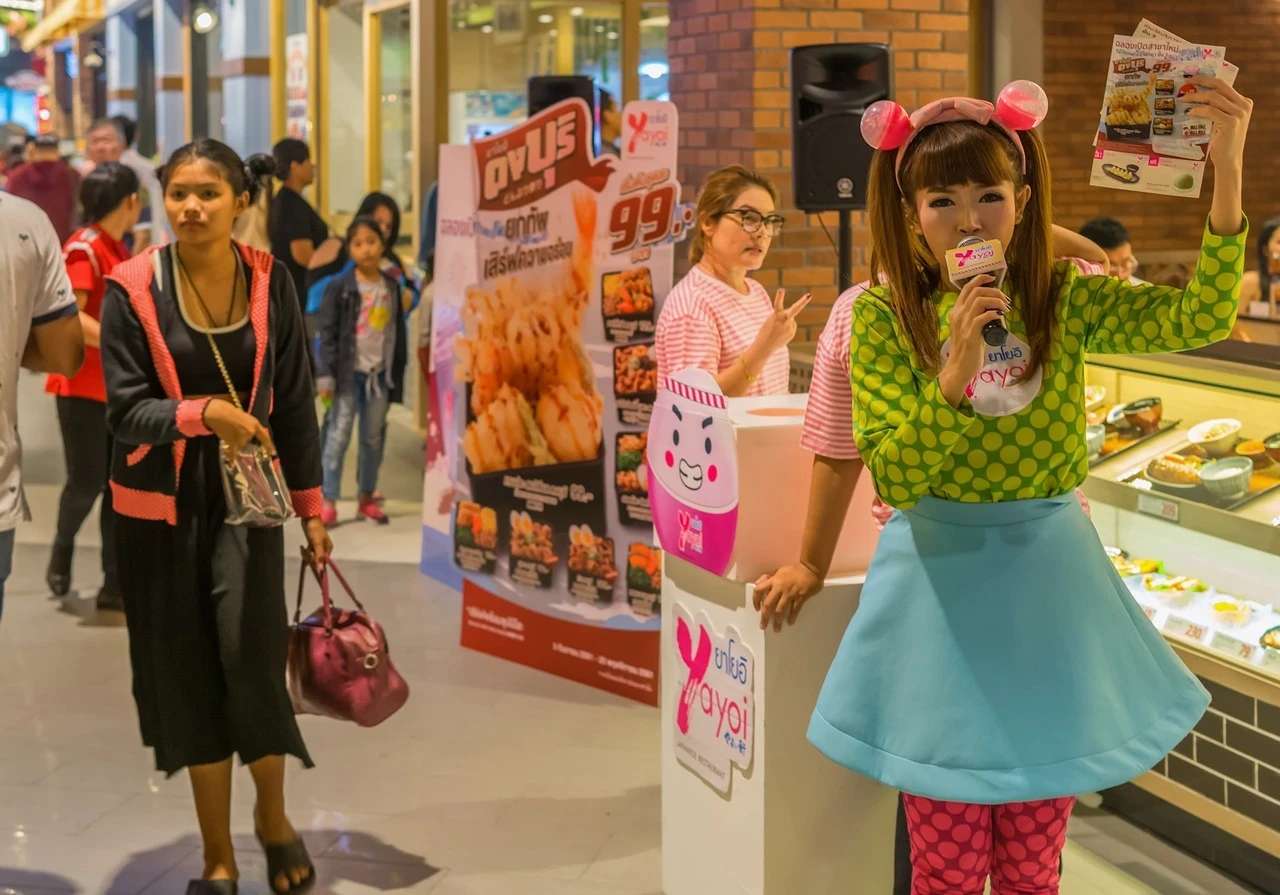
Deploy human sales animations to create an emotional bond and test your products.
Use contests to generate adrenaline and collect qualified customer data.
Set up "Shop-in-shop" spaces to dramatize your offer and create strong storytelling.
Offer product customization to transform the consumer into an actor in their purchase.
Adapt your actions to the highlights of the year to respond to the emotional context of customers.
Boost your sales with attractive promotional offers and long-lasting goodies.
If there is one topic of key interest to all brands distributing in supermarkets and hypermarkets, it is increasing sales! At the heart of this ambition: product dramatization, a method that can bear fruit, provided you master both its theory and practice.
Today, Sidely tells you everything about this essential technique for brand performance in mass retail.
Product dramatization: definition
The dramatization (or theatricalization) of a point of sale is an immersive and sensory marketing technique used to stage the retail space. In the case of brands, it consists of setting up a customer experience in a space allocated by the partner store.
In-store dramatization is a delicate art that, when mastered, creates an emotional connection with the customer, differentiates the brand in a saturated competitive environment, and, ultimately, boosts sales performance.
A fundamental technique of merchandising, dramatization thus relies on your customers' five senses, with the aim of creating a favorable environment for buying. More concretely, dramatization consists of setting up your POS displays, in-store signage, sales promotions... in your partner stores.
The involvement of the five senses in product dramatization
Dramatization involves the use of the five senses. Some are used more than others, such as sight or hearing.
Sight: Sight is stimulated as soon as you enter: product arrangements, promotional displays, advertising messages...
Hearing: On the auditory level, the store's soundtrack—whether it is a carefully chosen ambient melody or a recurring advertising jingle—weaves a background sound that reinforces the appeal of current special offers.
Smell: Smell helps create an immersive experience. Take the evocative example of a bakery: the scent of warm bread spreading through the air is an almost irresistible invitation to enter and discover the products.
Taste: Taste is obviously involved when customers are invited to savor samples, thereby directly validating the quality of what is offered.
Touch: Touch is more closely linked to product packaging, which invites interaction, such as a vodka bottle wrapped in faux fur or covered in leather.
Generally, when a customer enters a supermarket, their purchasing journey will appeal to their five senses, going through several stages. The first stage is often linked to hearing or sight. But dramatization also means atmospheric factors, and that is what we are going to look at now.
Atmospheric factors in mass retail
Atmospheric factors are designed to attract the customer's attention and highlight your products. They thus help improve the consumer's shopping experience, which promotes sales. It is thanks to atmospheric factors that you can create the ambience in the dramatized zone.
Taking atmospheric factors into account is decisive in choosing your POS display:
Design: opt for good materials for your furniture and quality lighting;
Colors: they must be attractive and consistent with your brand;
Product layout: your goal is to showcase them;
Sensory factors: stimulating the senses—sight, hearing, smell, touch, and taste—will touch the consumer emotionally.
These elements allow for a multi-sensory experience. As you can see, the goal is to make a splash, because awe is conducive to buying!
We can now get to the heart of the matter.
7 techniques for successful product dramatization campaigns
Are you wondering which levers to pull to ensure your dramatizations increase your product sales?
Here are 7 techniques that your brand soon won't be able to do without!
1) Opt for original POS displays
If you distribute your products in supermarkets, you know that it is complicated to stand out from the competition! Indeed, consumers are highly targeted by all kinds of offers and advertising when shopping in stores. You must therefore focus on originality, and stand out from the crowd with less common and more playful formats.
For example, if you are selling a new skincare line, you could set up an interactive POS display with sensors that analyze customers' skin types and recommend the most suitable product from your range. This not only attracts attention through its originality but also provides added value to the customer, while putting your products forward in a unique way.
Your customer will be more attracted by seeing an interactive terminal, or an olfactory POS system—displays they are less accustomed to seeing than a basic banner stand.
2) In-store promotions and live events
By setting up a booth with one of your brand ambassadors, you can introduce a new product and create a desire to buy it. Obviously, this also applies to a product you want people to rediscover. Since consumers are often reluctant to change, this guidance will give a great boost to your sales!
Recall that the basis of live promotion is experiential marketing, which triggers your customer's emotions:
Taste: if you want to introduce a new flavor to your product range, have them taste it and gather customer feedback;
Smell: in cosmetics, your brand ambassador can have people test the different scents of your product;
Sight: if you are presenting the new packaging of a well-known product;
Hearing: choose your brand ambassador wisely. Yes, the voice matters! Their attitude must also attract prospects to their stand, with a smiling and persuasive pitch;
Touch: prospects can verify the quality of a product while testing it.
All these points emphasize the presence of a brand ambassador to humanize the relationship between your brand and its consumers.
For example, if you are a wine producer, a wine fair is the perfect opportunity to introduce your winemaker, who can speak passionately and endlessly about your product. By allowing customers to taste the wine, learn more about its history and production, and experience a complete sensory journey, you create a memorable moment that translates not only into immediate sales but also into a long-term connection with the brand. The consumer will no longer buy "just any" wine, but "their" wine.
3) Contests and sweepstakes
It's a classic! Contests allow you to attract new customers or build loyalty with old ones. The hope of winning triggers an adrenaline rush in your customer. They are aware that the more they buy the relevant product, the more chances they have of winning.
Suppose you are a chocolate brand. You could set up a contest where customers who buy a product from your line can enter a draw to win a trip to an exotic destination where cocoa is grown. Not only does this create excitement around your product, but it also gives customers an extra reason to choose your chocolate over a competitor's.
At the same time, this is an excellent way to collect data about your target market: emails, occupation, location, etc. And all that's left for you to do is use it to strengthen your marketing plan!
4) Implementing Shop-in-shops / corner shops
A Shop-in-shop, or store-within-a-store, of setting up a dedicated display area for your brand inside a large retail store.
Designing your dramatized shop-in-shop allows you to set up a scenery, much like in a theater. This builds storytelling around your brand or your product, which will interest—and then persuade—your customer. This dramatization of your offering brings increased visibility to your brand.
Many major specialized retail chains have even tried it, such as Decathlon at Auchan, Hema at Groupe Casino, or Darty at Carrefour.
5) Offering product personalization
Through product personalization, your customer becomes an actor in the staging. This enriches their buying experience. They feel valued and get the impression of owning a unique product. They will also tend to talk about it to others. Finally, the ability to buy a customized object on the spot encourages impulse buying.
Everyone remembers Coca-Cola cans with their name on them, or Nutella jars with a personalized message. On the other hand, some products do not lend themselves to personalization. Who would want a trash bag with their face on it?
6) Key seasons for promotional dramatization
Occasional dramatization is based on the various events that mark the year: Rugby or Soccer World Cup, back-to-school, Valentine's Day, Mother's Day, etc.
Your POS marketing must adapt to these events by responding to the consumer's mindset at that specific time, in order to capture their attention.
For example, Christmas is a prime time to create a positive customer experience. A POS display based on holiday magic and folklore creates a magical and warm atmosphere. Be careful, though—you are not the only ones thinking about this: prepare for intense competition to capture consumers' attention!
7) Launching original promotions
With consumer purchasing power declining, shoppers are always receptive to good deals. The POS display must be eye-catching, featuring special offers such as: "at cost price" (though prohibited on food products under EGalim 3 laws in France), "bundle deals," "gift vouchers," etc.
This can be complemented by promotional giveaways or merchandise. Branded with your company colors, they can become your best ambassadors. And the more original and durable they are, the more people they will reach in the long run!
Measuring the effectiveness of your dramatization campaigns
While your dramatization requires a solid strategy, tracking the resulting performance is vital. Assessing campaigns allows you to correct course if results are not meeting expectations. Furthermore, reporting is used to measure the return on investment of your product dramatization efforts.
Margot has been working in Tech and SaaS for 8 years, with a multi-product experience that has given her a unique understanding of business challenges. On a daily basis, she analyzes, relentlessly tests, and relies on facts to shed light on market trends and help sales teams move forward.
See also

Artificial intelligence and field professions: what our 2026 studies reveal
Adoption, barriers, use cases: discover what our three studies reveal about the role of AI among sector managers, sales representatives, and foodservice sales reps.

CHR and RHF Sales Representatives: portrait of a relationship-driven profession in the era of data
Equipment, productivity, AI: discover the major trends for the HORECA and food service sales profession in 2026 through our field study.

Pharmaceutical Sales Representative in France: Portrait of a Field Job Under Pressure
Compensation, aspirations, AI usage: discover the major trends in the pharmaceutical sales representative profession in 2026 through our field study.

Area Sales Managers in France: who are they and how is the profession evolving in 2026?
Compensation, aspirations, AI usage: discover the major trends in the field sales representative profession in 2026 through our field study.
The area manager professions in 2026
Discover the trends, the challenges, and the key figures.