
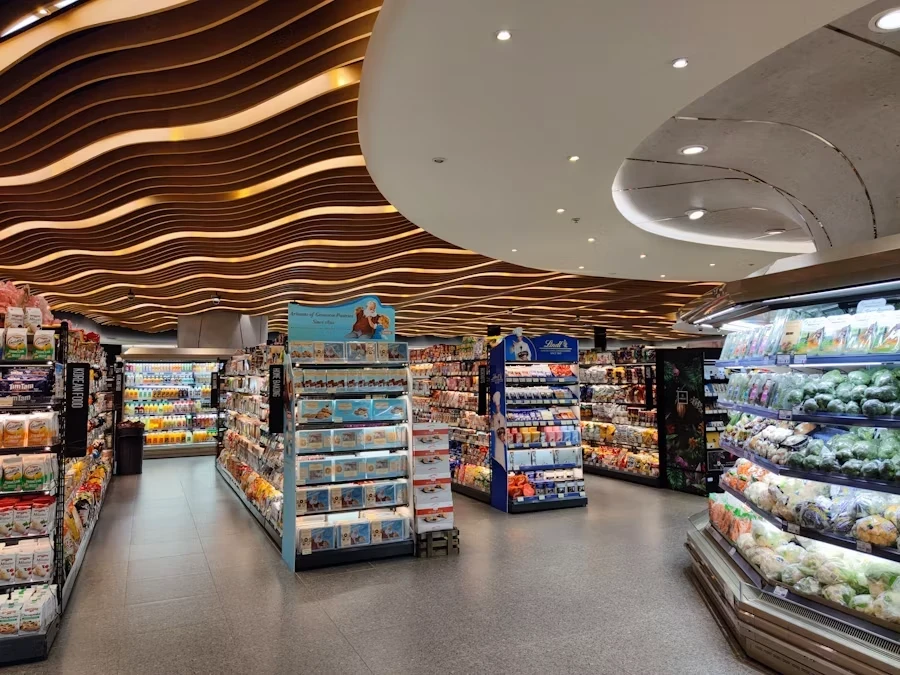
Retailtainment: definition, trends, and evolution
Retailtainment combines commerce and entertainment to create an immersive, engaging, and memorable in-store shopping experience. We explain it all!

In short
7 min read
Retailtainment merges commerce and entertainment to transform the act of buying into an immersive and memorable experience.
The strategy is based on three pillars: offering a unique experience, sparking emotional engagement, and creating an immersive atmosphere.
The concept uses point-of-sale theatricalization, sensory marketing, and sometimes innovative technologies such as virtual or augmented reality.
It serves as a strategic lever for physical stores in the face of the rise of e-commerce by offering interactions that are impossible to replicate online.
Formats like flagships, pop-up stores, and concept stores are ideal vehicles for deploying these playful and experiential setups.
Leisure becomes a loss leader to boost mall foot traffic, transforming retail spaces into holistic destination points.
The days when consumers viewed shopping as a purely utilitarian act are well and truly over; stimulated by brands that are more inventive than ever in creating unique experiences in their stores, shoppers are now looking for entertainment when making their purchases.
Welcome to the era of retailtainment!
Today, Sidely takes you to discover this concept developed in the United States, which has since widely established itself in our stores, shopping malls, and urban spaces.
We will start by defining the general concepts used by brands in their retail marketing. We will then look at the impact of digital on entertainment and retail. Finally, we will focus on the role of major commercial projects in adopting retailtainment.
Retailtainment: Definition and Challenges
Retailtainment is a marketing strategy that combines retail (retail) and entertainment (entertainment) to offer consumers an immersive and memorable shopping experience.
Its goal is to transform a point of sale into a unique place of experience, going beyond the simple act of purchase to create an emotional connection with the customer. Many retailtainment setups aim to put the consum'actor at the heart of the experience, based on interactive marketing.
Echoing classic merchandising techniques, retailtainment can be seen as a large-scale theatricalization, or a global universe whose main objective is to make an impression, and no longer just to sell a product.
Halfway between leisure and shopping, the experience is sometimes referred to as fun shopping. As in the case of pop-up stores, it often involves events or ephemeral setups. But sometimes projects are made permanent because they are victims of their own success!
The term Retailtainment refers to setups installed in a store, ephemeral corners set up in common areas, or even activities and attractions installed near points of sale, as is often the case for shopping malls. In all cases, the goal is to trigger emotions, much like sensory marketing.
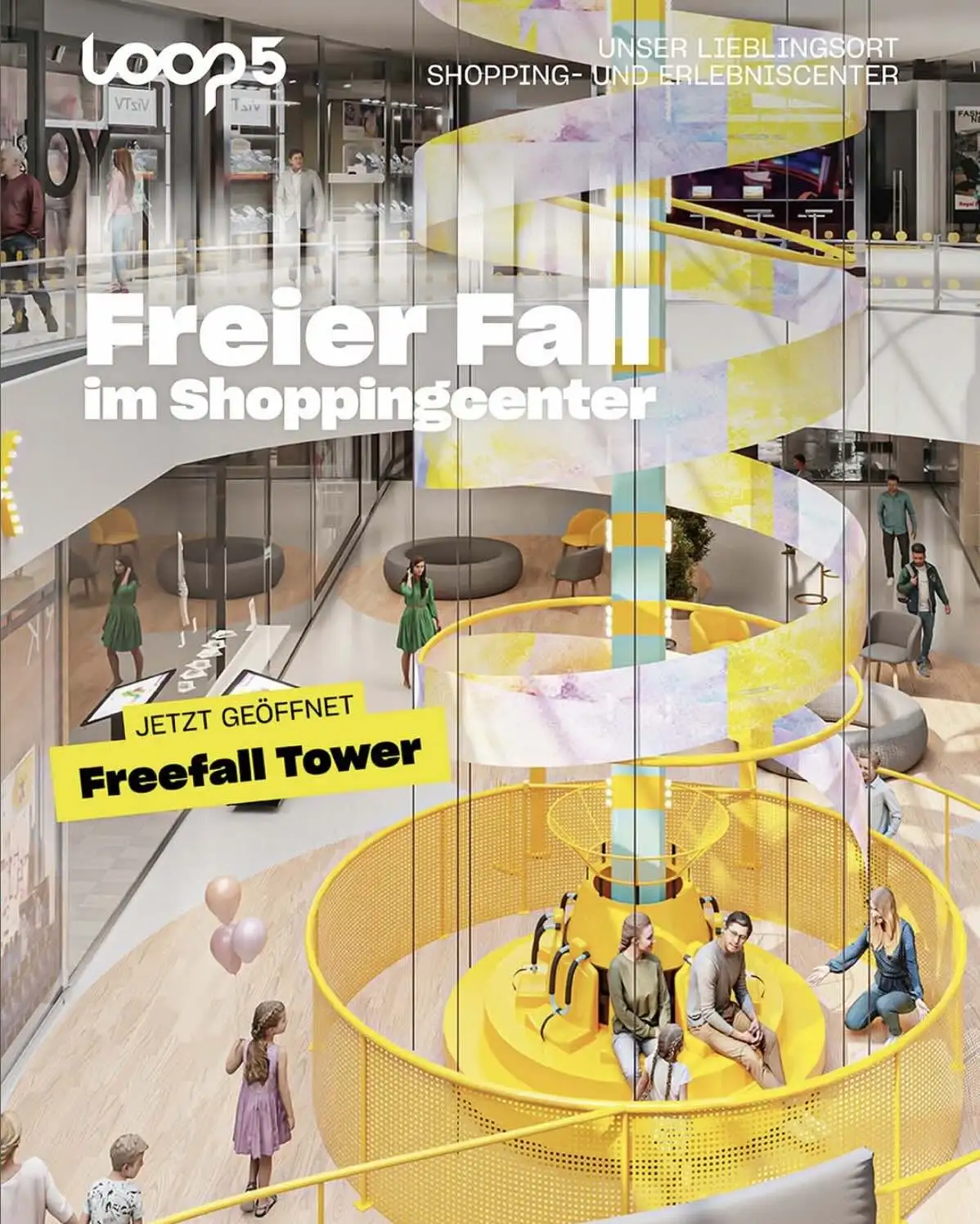
Skytwister attraction in a shopping mall in Germany - loop5_weiterstadt
Retailtainment is based on 3 fundamental pillars:
Unique experience: offering captivating activities, animations, or staging;
Emotional engagement: making the shopping experience enjoyable, fun, and memorable;
Immersive atmosphere: plunging the shopper into a singular and striking universe.
Although not systematic, we can add technological innovation, which prioritizes an experience enhanced by augmented reality, virtual reality, or interactive screens.
💡Entertainment has taken such a prominent place in commerce that many industries are coming up with their own little neologisms: Edutainment for education, Artainment for creative industries, or Eatainment for the food service industry!
Advantages for Retailers and Brands
Retailtainment allows marketing teams to pursue various objectives:
Attract and retain customers longer in the store;
Encourage impulse buying by linking the act of purchase to a positive experience;
Strengthen (or contribute to changing) brand image;
Build customer loyalty through pleasant memories;
Increase engagement and conversion rates;
Amplify the brand's storytelling.
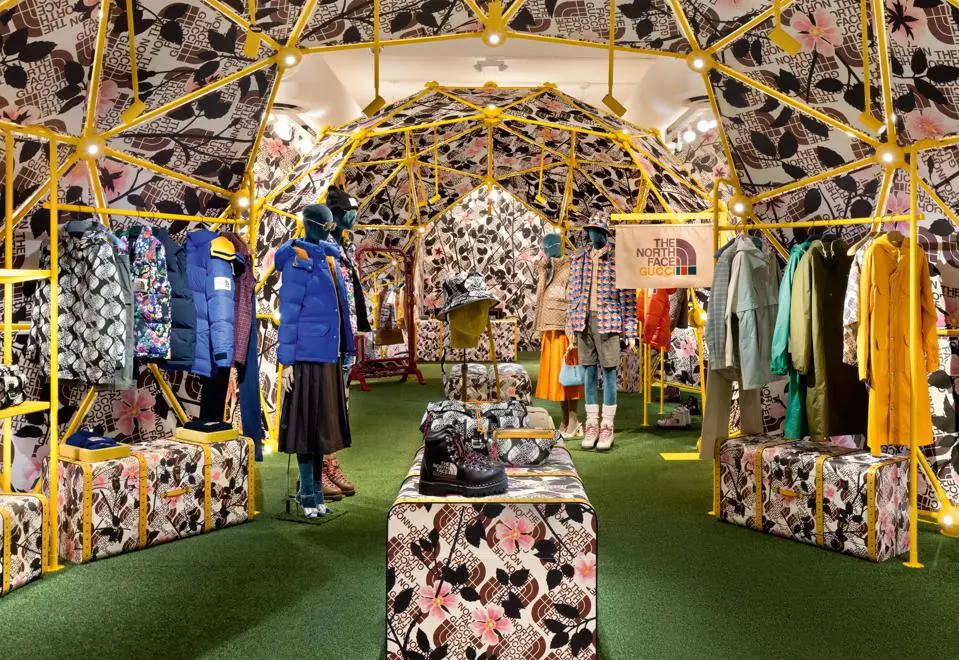
Gucci & The North Face Collaboration
Creative Director Alessandro Michele
Artistic Director Christopher Simmonds
Photo credits © Gucci
Photo of the Gucci Pins Pop Up in Brooklyn © Brian Berkowitz
The impact of retailtainment relies heavily on the strength of its concept, which is sometimes innovative, sometimes bold. Its ability to leave a lasting impression makes it an ideal activation tool for brands.
This key storytelling technique effectively and sustainably impacts the perception of the brand in the minds of consumers.
For retail outlets, creating an amazing experience helps attract new customers and has a significant impact on brand awareness.
History of Retailtainment
Retailtainment was born in the 1990s, with retailers like the Disney Store that started offering interactive experiences to liven up—and make more fun—their retail spaces.
Over time, brands like Apple popularized this approach by transforming their stores into interaction spaces, where customers could test products and participate in workshops.
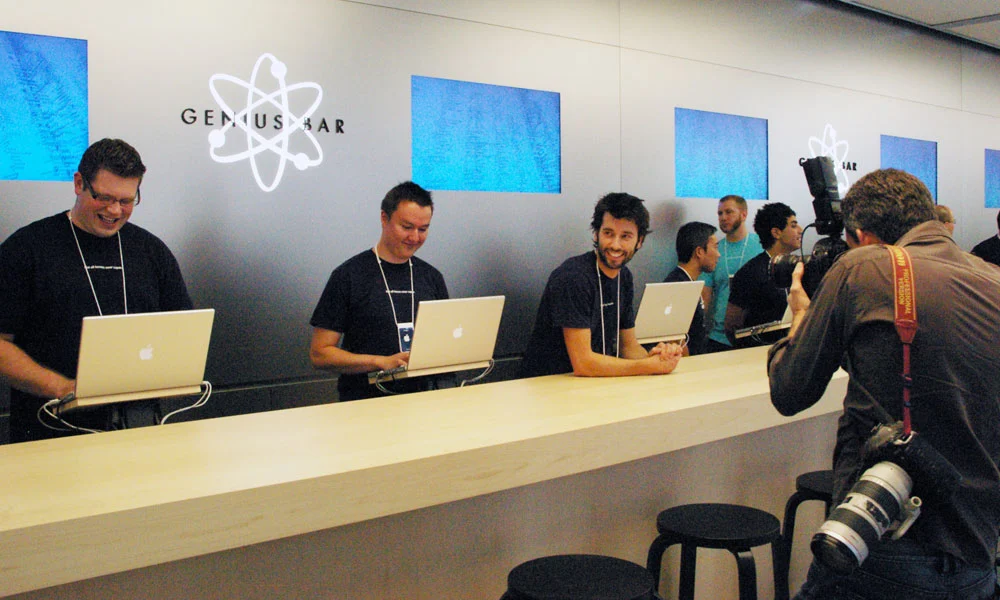
The Genius Bar concept developed by Apple allows customers to benefit from personalized support, while the staging of products and the sensory atmosphere enhance the appeal of its stores. Source: MacPlus
Historically, major commercial projects have also played a significant role in this development, by imagining global spaces that could accommodate dining options as well as bowling, cinemas, or various other sports or cultural activities. Although many projects failed or disappointed, their impulse greatly contributed to changing the perception of commerce and shopping malls by combining them with leisure and entertainment.
Finally, retailtainment has become an important lever to keep the enthusiasm for offline commerce alive in the face of the emergence of online sales. Physical stores thus seek to offer experiences that pure players cannot replicate on their digital platforms.
Today, retailtainment is widely used to offer memorable experiences in-store, and to strengthen customer engagement through events, animations, and demonstrations.
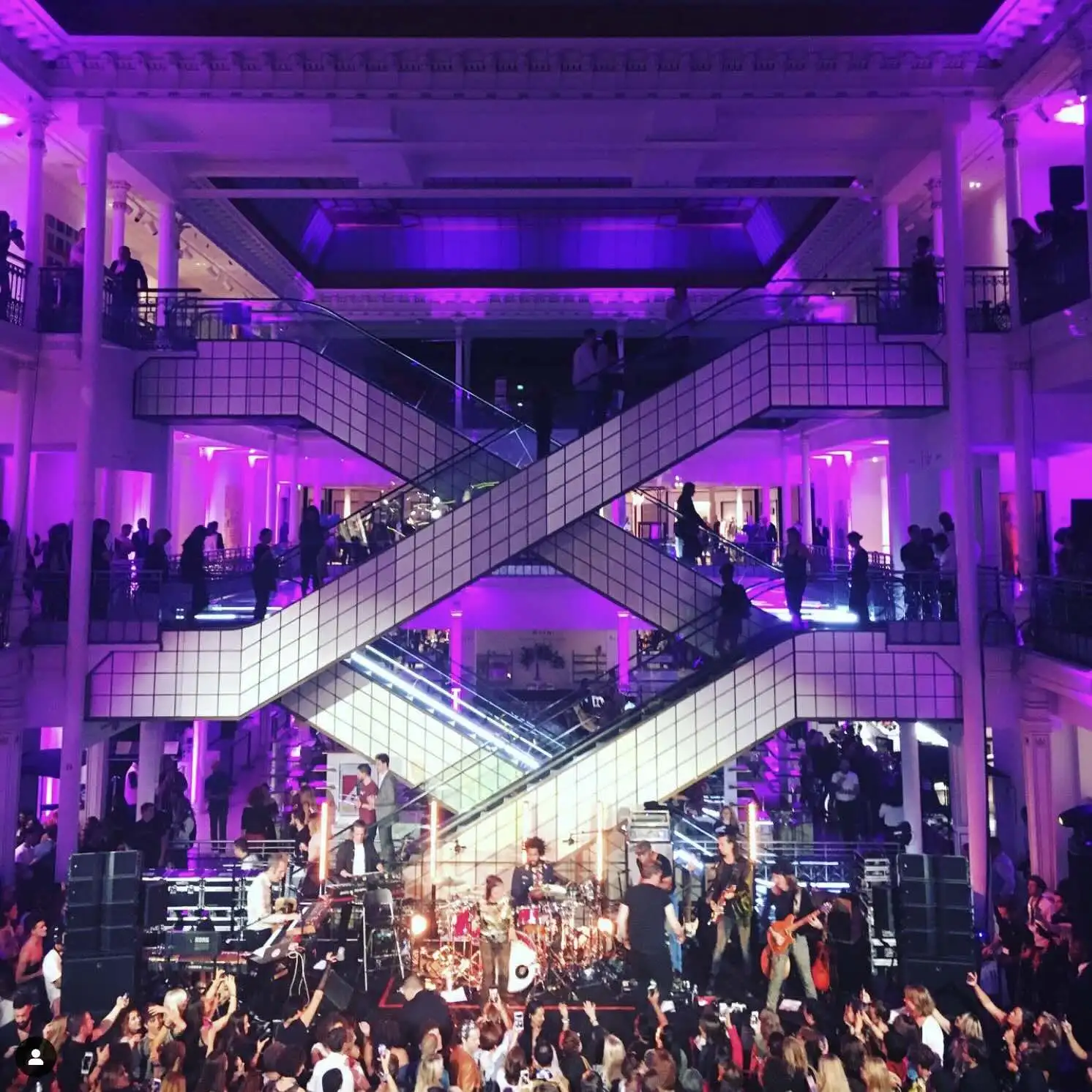
Les Rita Mitsouko concert at Le Bon Marché (Paris) - Source: Jennifer Cuvillier
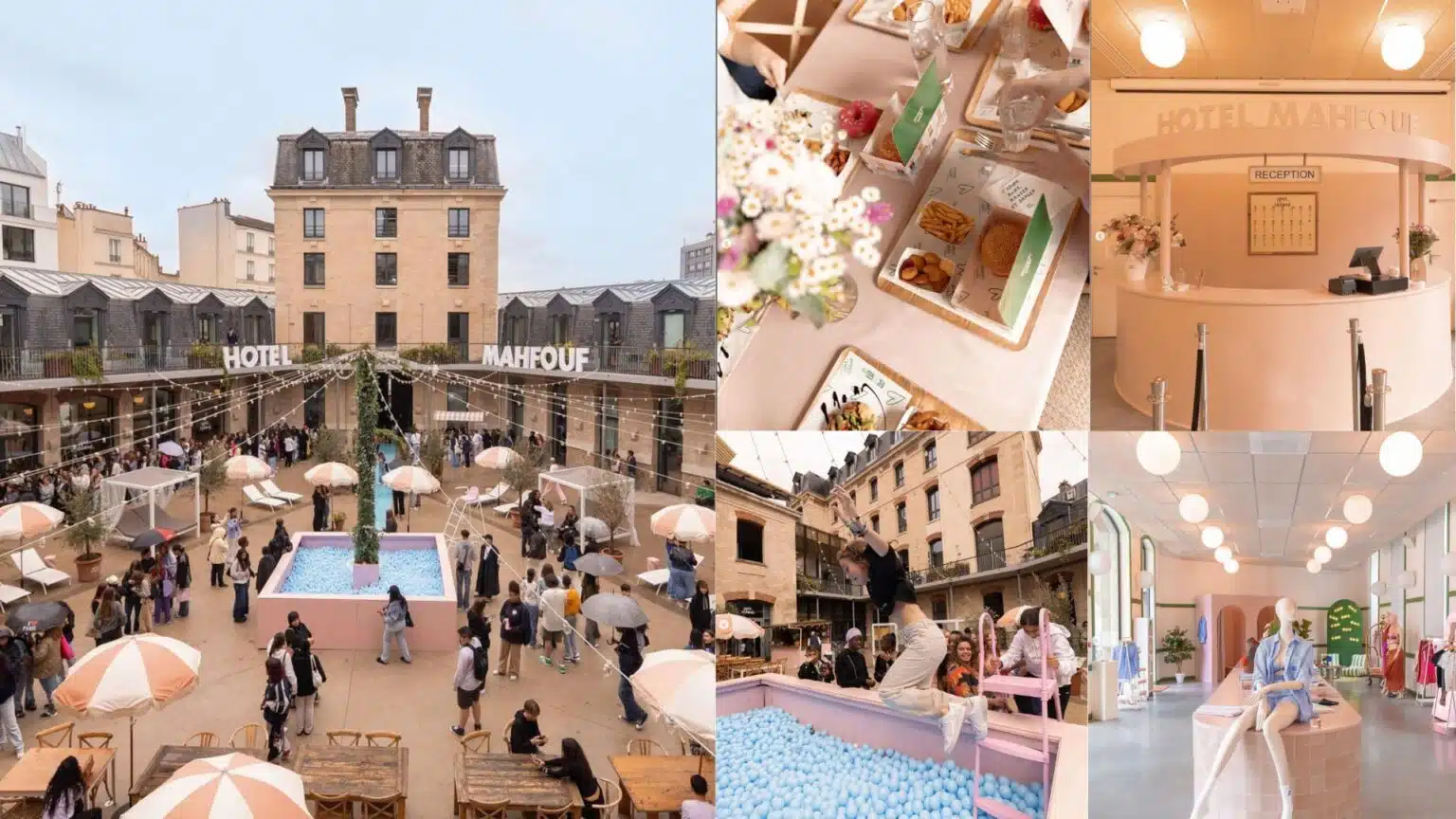
Hotel Mahfouf - Léna Situations Pop-Up Store - Source: MC Factory
The Forms of Commerce That Allow Brands to Entertain
By embracing the concept of retailtainment, brands and retailers have invented new kinds of temporary or permanent stores.
The most widespread are flagships, concept stores, and pop-up stores.
1. Flagship
The flagship (or flagship store) is a brand's leading store, designed to showcase its identity, products, and expertise in an exceptional way. Located in a strategic area, it often offers a unique customer experience thanks to innovative design, exclusive services, and immersive technologies. It serves as an iconic showcase to strengthen brand image and attract a wide audience.
2. Concept store
A concept store is a shop that combines commerce, lifestyle, and customer experience around a specific universe or theme. Unlike traditional shops, it does not limit itself to selling products but offers a curated and eclectic selection (fashion, home decor, accessories, etc.) often linked to a specific vibe or lifestyle. These spaces rely on design, scenography, and originality to create a unique and immersive experience, attracting customers seeking novelty and inspiration.
3. Pop-up store
A pop-up store (or temporary boutique) is a short-term retail space that sets up for a limited duration, often in strategic locations like city centers, shopping malls, or high-traffic areas. These stores are particularly useful for creating a surprise effect and driving engagement. By allowing direct interactions with customers, they often generate buzz on social media.
It is therefore no coincidence that the pop-up store is regularly used to serve brands' various marketing objectives: testing a new product, boosting awareness or positioning storytelling, creating immersive experiences, capitalizing on a particular event, or even offering limited editions or special collections… The pop-up can do it all!
It is logically found in industries like fashion, beauty, food, tech, art, and luxury. Its effective execution helps reach a target audience that might otherwise be hesitant to take the plunge without a little encouragement.
The Digital Impact on Retail and Entertainment
While the rise of retailtainment developed—partly—to counter e-commerce, the opportunities offered by digital technology are now in turn revolutionizing retailtainment. On one hand, entertainment plays an important role on websites and mobile applications. On the other hand, screens are taking up an increasingly important place in physical retail stores.
For example, brands are increasingly relying on immersive experiences with augmented reality (AR) or virtual reality (VR) applications, both in physical stores and on their websites.
When online and offline marketing systems converge, we speak of an omnichannel strategy, or the phygitalisation of retail.
On the distribution side, the theatricalization of retail spaces is digitizing rapidly to create interactive stages. Consumers are then offered a true gamification of shopping. The most daring examples feature robots, holograms, connected objects (IoT), or even golf, surfing, or driving simulators!
Notable methods observed in recent years include:
Immersive technologies: Fashion extensively uses augmented reality to allow customers to try on clothes virtually via their smartphone or interactive kiosks in-store;
Gamified applications: Brands like Nike or Starbucks use mobile apps where users can earn rewards by playing games or completing challenges;
Streaming with interactive content: Many beauty brands use live shopping to offer real-time product demonstrations, with the option to buy directly through embedded links.
Leisure: The New Loss Leader
For shopping malls, retailtainment involves careful calculations, as installing attractions can limit profitability per square meter. However, this strategy is justified by boosting foot traffic to the venue and improving sales figures for the anchor supermarket and the shopping arcade.
Brands generally follow the same reasoning: in terms of investment, an installation often generates less margin than a traditional store. But its impact on brand perception can boost sales in the long run.
Leisure has therefore become a true loss leader. Knowing the purchasing power and socio-professional categories of a trade area then allows for the creation of attractions and leisure activities that can succeed at a given site. Retail spaces and shopping arcades thus become key opportunities to generate entertainment and experience.
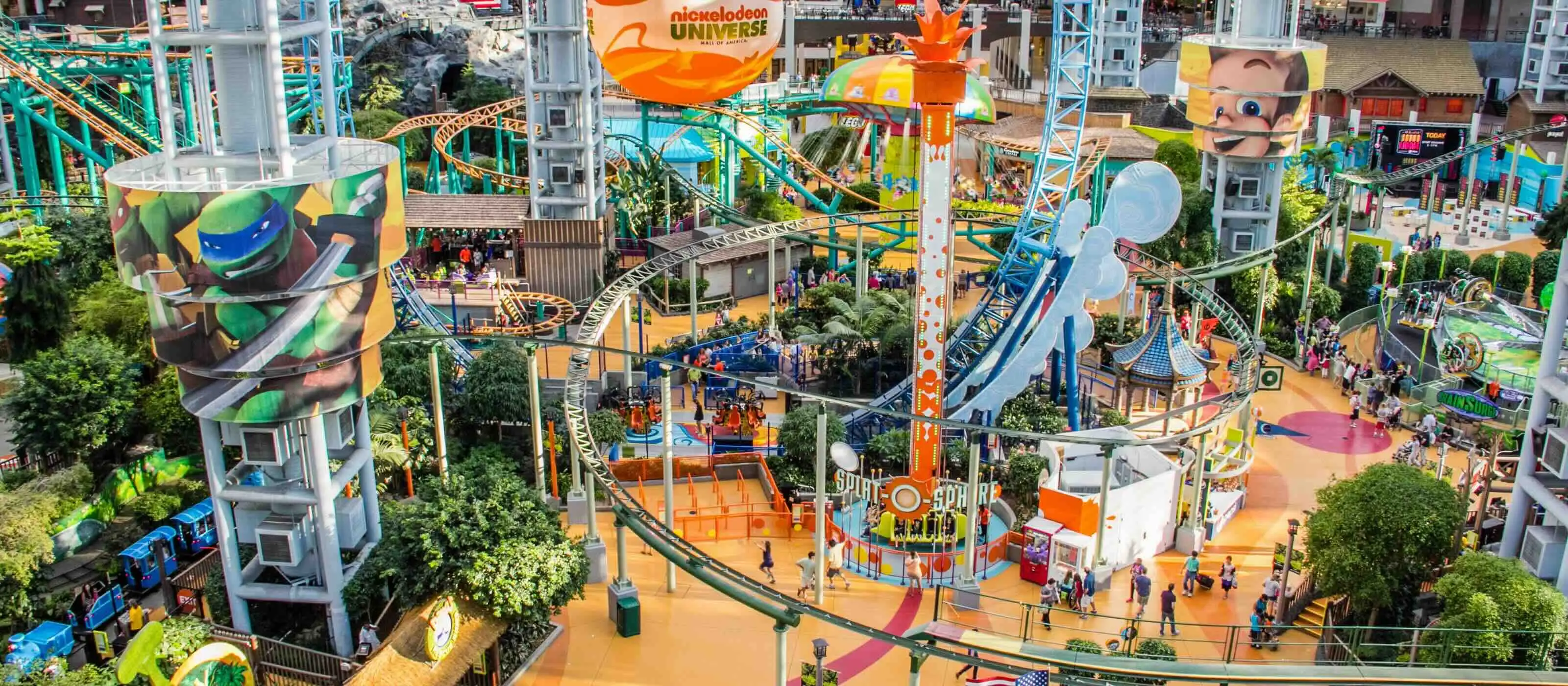
Mall of America - Source: VisitTheUSA.fr
It was by observing the still-fledgling digitalization of sales forces that Arthur envisioned Sidely. A graduate of EM Lyon and Le Wagon, he combines a rare commercial rigor with a true product culture. This dual expertise allows him to decipher the shifts in the profession and build a product that truly speaks to sales teams.
See also

Artificial intelligence and field professions: what our 2026 studies reveal
Adoption, barriers, use cases: discover what our three studies reveal about the role of AI among sector managers, sales representatives, and foodservice sales reps.

CHR and RHF Sales Representatives: portrait of a relationship-driven profession in the era of data
Equipment, productivity, AI: discover the major trends for the HORECA and food service sales profession in 2026 through our field study.

Pharmaceutical Sales Representative in France: Portrait of a Field Job Under Pressure
Compensation, aspirations, AI usage: discover the major trends in the pharmaceutical sales representative profession in 2026 through our field study.

Area Sales Managers in France: who are they and how is the profession evolving in 2026?
Compensation, aspirations, AI usage: discover the major trends in the field sales representative profession in 2026 through our field study.
The area manager professions in 2026
Discover the trends, the challenges, and the key figures.