

Category management: master the fundamentals in 5 minutes
What is category management? Definition, key steps of the process, and the role of the category manager to optimize sales in mass retail.

In short
6 min read
Definition and strategic objectives of category management
Analysis of the structured process for shelf management
Roles and responsibilities of the category manager
Optimization of collaboration between retailers and manufacturers
Performance levers to boost sales in mass retail
The mass retail market is constantly changing. And among the main causes of this phenomenon is the shift in consumer expectations, influenced by structural consumption changes and new trends! Faced with this dynamic, manufacturers distributing in super- and hypermarkets (GMS) must find levers to anticipate, influence, and respond to this perpetually moving demand.
In this article, Sidely reviews the fundamentals of category management, a tactical approach that allows companies to improve their performance in mass retail by adapting their category strategies.
We will begin by reviewing the definition of category management. We will then explore the role of the catman and the main techniques at their disposal. Finally, we will look into the study of key data and see how to analyze the results of your strategy.
In short, if your brand has not yet adopted category management, chances are this mini-guide will stimulate your intellect!
What is category management?
Category management is a strategy aimed at boosting the sales of a product category as well as those of the brand, within the retail sector.
Product categories are then managed as distinct business units.
Category management involves collaboration between supplier and distributor. This method relies on the analysis of sales data and consumer behavior to optimize product assortment, pricing, merchandising, and promotions. Category management, efficient consumer response (ECR), and trade marketing work in synergy to provide a comprehensive approach to improving operational efficiency.
The origins of category management
To understand why mass distribution brands have adopted category management, we must understand why it emerged.
To do this, let's look at the context of historical relations between brands and distributors.
Before the appearance of mass distribution, brands had direct access to the market, but this often meant working on a much more local scale.
Since then, mass distribution has developed, shifting power in favor of retailers. Stores grouped into major chains to centralize purchasing, which drastically increased their bargaining power against brands.
These power dynamics complexified exchanges between brands and retailers, particularly during annual commercial negotiations. However, in the absence of active collaboration, the respective actions of suppliers and retailers lose efficiency.
Moreover, the brands' need for data reinforced the retailers' power, as the retailers own the actual sales data (sell-out). Consequently, intuitive decision-making without data analysis leads many brands to manage their business reactively rather than proactively.
Faced with this accumulation of constraints, retail marketing — Americans, as is often the case... — gave birth to a formidable concept: category management!
The emergence of category management enabled brands to arm themselves against these shifts and rebalance the power dynamic. However, be careful not to think solely in terms of confrontation: category management is above all a more strategic and collaborative approach to retail marketing. Retailers, therefore, also benefit from this strategy.
We are now ready to get to the heart of the matter!
What is a category manager (or catman)?
The role of a category manager is to optimize the development of a product category, with the goal of securing the best return for the brand they represent and increasing client satisfaction.
The category manager analyzes data obtained through tracking sales trends to organize marketing and sales action plans.
Their missions include:
Analyzing shopping baskets and market data;
Optimizing product categories;
Collaborating with retailers;
Optimizing sales;
Managing merchandising.
Be careful not to confuse them with the product manager: the product manager focuses specifically on the development and management of one product, whereas the category manager manages an entire product category.
Key Category Management Techniques
Depending on consumer behavior and category strategy, you will be able to implement merchandising actions relating to shelf presentation, assortment, promotions, and pricing.
This will allow you to execute your category strategy while adapting it to your marketing and sales objectives.
TURF Analysis (Total Unduplicated Reach and Frequency)
TURF analysis is a statistical method used to optimize product assortments, aiming to define the best combinations of items and thus maximize sales.
Total Unduplicated Reach (TUR) refers to the total unduplicated reach of a set of products, services, or advertising messages. The goal is to attract the maximum number of consumers.
Frequency (F) refers to the number of times a consumer or market segment is exposed to the set of offerings. The goal is to maximize this frequency while reaching as many unique individuals as possible.
TURF analysis allows the category manager to measure the total number of unique people reached by at least one product in a given category, and then determine the frequency with which this set of products is purchased by customers, without duplication.
This method thus helps optimize the overall performance of a category by meeting the needs and preferences of customers. It is notably used to address questions like:
Which products should be kept in a range to attract the largest number of customers?
Which combination of advertisements will reach the largest audience segment without duplication?
Which new products should be introduced to the market?
How to optimize the advertising budget? The merchandising budget?
Cross-Selling
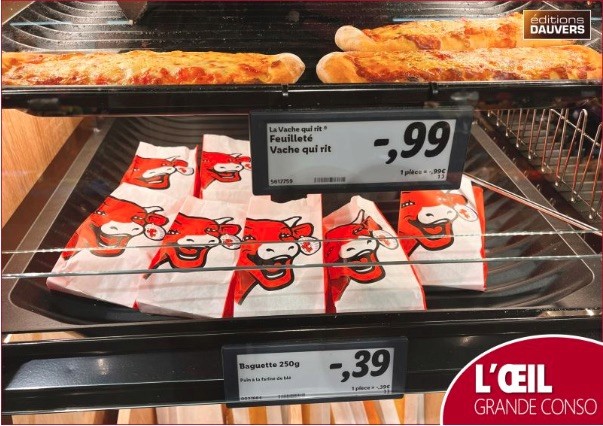
Cross-selling consists of encouraging customers to spend more within the same category or in related categories.
© Olivier Dauvers (source)
For example, by placing chips next to beer packs, consumers will tend to buy them at the same time, even though these products do not originally belong to the same category.
On the same principle, you can create bundles or package deals, including complementary products from different categories. This can boost sales of lower-performing products, thereby improving overall profitability.
Dynamic Product Pricing
Managing product pricing helps optimize category profitability and meet your customers' expectations.
First, you must calculate production and distribution costs to establish the margin you can apply while remaining competitive.
Additionally, it is useful to rely on historical data to evaluate the impact of price changes on demand. The price-volume effect is a relevant method to assess how price changes and sales volume changes contribute to your revenue growth.
Next, studying competitor pricing helps you find a competitive price position. The classic psychological pricing technique continues to influence consumers' minds. For example, when faced with a product tagged at $9.99, the brain will always tend to remember the first digits on the left rather than those on the right. Hence, the customer will feel as though they are buying the product for $9 instead of $10.
To perform well, you must adopt a pricing strategy adjusted to seasons or special events. Indeed, you can adjust your prices to maximize profitability when demand is high. Conversely, using promotions stimulates sales and reduces excess stock.
Data Analysis and Category Management
Different types of data analysis tools can allow you to anticipate future consumer trends to adapt your product categories accordingly:
CRM;
Planograms;
Predictive tools;
Promotion management tools;
Panelist data such as IRI;
Point-of-sale cash register data.
These are generic or specific tools that still present a persistent drawback: in mass retail, it is often the purchasing centers or headquarters that place orders with you and not the individual points of sale. Conclusion: it is difficult for you to obtain figures by point of sale and by product (the famous sell-out data).
To remedy this, two solutions are available to you:
Negotiate point-of-sale data (sell-out);
Market Analysis
Anticipating trends involves analyzing the market to fully understand all the factors that will influence the performance of a product category.
To determine demand, you must examine category sales trends, seasonal variations, and product lifecycles.
Studying market trends will enable you to understand which factors will affect the selected product category.
Distribution Analysis
To effectively support the sale of your products, you should also choose the right actions based on the specific retail chains in which they are sold.
These actions must fit their environment: listing and assortment policies vary from one chain to another, as do your prices or merchandising. Furthermore, some of your competitors will not necessarily choose the same distribution strategy as you: depending on the retail chains and/or stores, their visibility may change (as will yours).
Depending on your distribution strategy, the category manager will utilize different techniques.
Customer Analysis
Understanding your customer base will allow you to develop a consistent and impactful strategy. This analysis helps define the scope of the category.
Your category manager will determine who your typical consumers are within the desired category and study their behavior across different levels:
Purchasing habits;
Shopping frequency;
Motivations;
Needs;
Preferences;
Barriers.
Customer analysis involves creating a consumer decision tree (CDT), which serves to identify the consumer journey, i.e., the buying decisions they make when purchasing a product in this category.
By observing target customers' reactions to your competitors, your category manager can identify best practices and improve what can be improved. This competitive intelligence involves tracking tactics used by competitors: loyalty programs, promotions, advertising campaigns, social media communication, etc. Afterward, you can conduct surveys with their customers to understand their customer experiences.
When should a product be added or removed?
In mass retail, it is vital to keep a close eye on market developments and new trends!
This is why brands adapt their assortments in line with market developments. But this involves choices that can sometimes be complex.
Adding a Product
The analyses mentioned above allow good catmans to constantly anticipate rather than react. Despite this, it is impossible to predict the future, and the market sometimes leads them to seize opportunities that were not foreseeable.
It is therefore essential to react quickly to any newly emerging or growing demand for a given product to capitalize on the opportunity. Of course, ensure the product's potential in terms of sales volume and profit margins.
You can thus develop your category by adding a product, making your offering more attractive to your customers.
Removing a Product
A product's lifecycle consists of 4 stages:
Introduction;
Growth;
Maturity;
Decline.
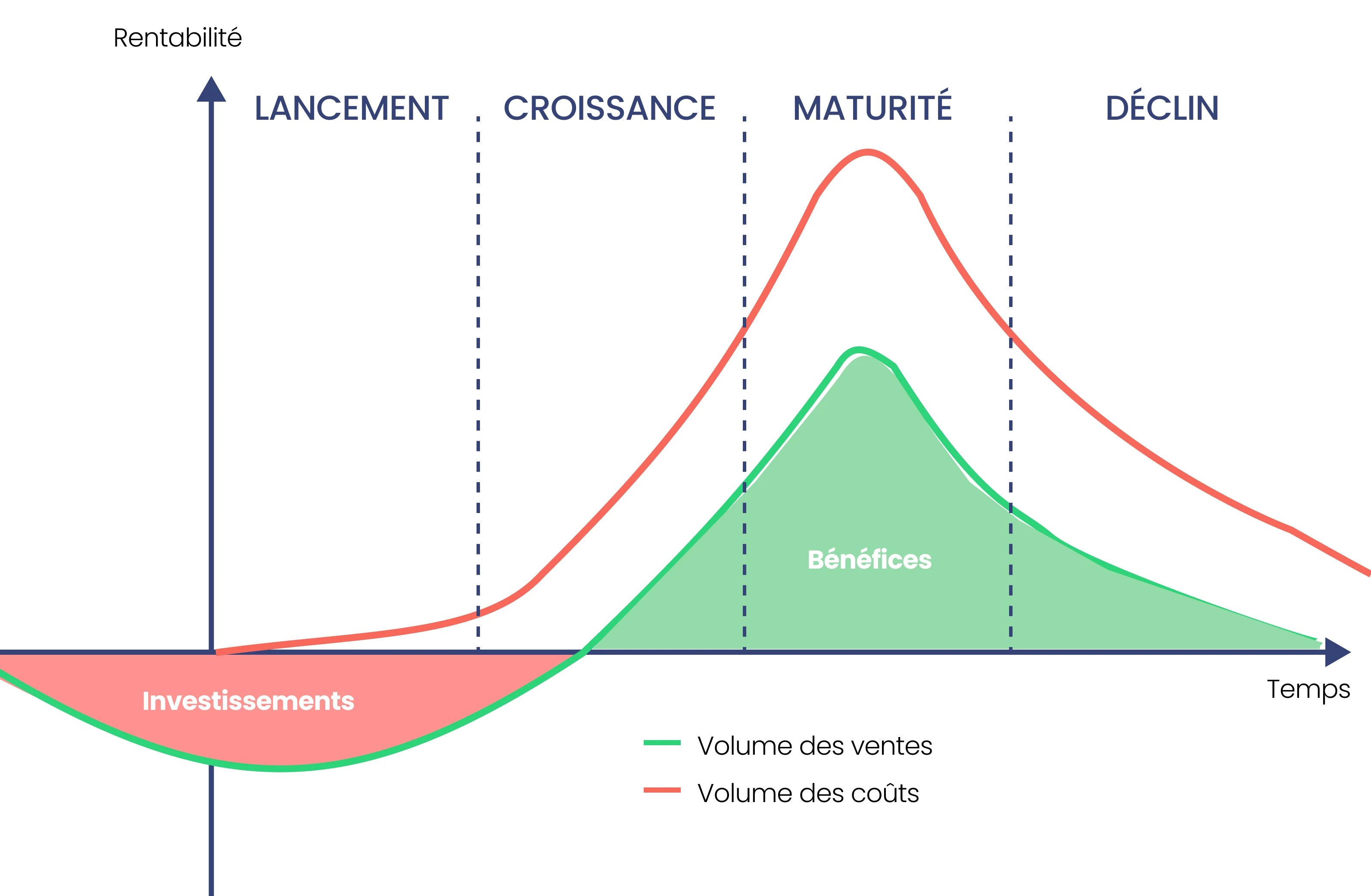
When sales and profits decrease, the product is in its decline phase.
This drop usually follows changes in consumer expectations or the introduction of new products.
It is always possible to think about restoring potential to the product in question by introducing improvements or adjusting its price.
If reviving the product is not possible, it is time to remove it!
Tracking the Results of Your Category Strategy
In order to measure the effectiveness of category management, it is necessary to track key KPIs:
Category Sales Revenue;
Category Gross Margin: assesses the category's profitability taking into account production, distribution, and promotion costs;
Stock Turnover: determines the frequency with which your products are sold;
Market Share: tracks your position within a category compared to competitors;
Average Basket Value: helps determine its composition (identifying if a customer buys multiple products from the same category or a related category during the same visit) and the effectiveness of cross-selling;
Penetration Rate: measures the proportion of consumers who purchased products within a category out of total consumers, or the stores in which your product is distributed;
Promo ROI: evaluates the effectiveness of category-related promotions;
Performance of Each Product in the Category: identifies low-performing products versus bestsellers;
Customer Satisfaction: using satisfaction surveys, reading social media reviews, or tracking product returns;
Global and Store-by-Store Category Performance: helps search for best practices.
Thanks to this performance indicator tracking, you position yourself to make continuous adjustments to your category management strategy.
Indeed, category management is an ongoing process of continuous improvement!
As we have seen throughout this article, this category-based marketing strategy helps anticipate, influence, and better respond to updates in consumer behavior. It heavily relies on data analysis and requires the active involvement of your GMS retail partners.
Thus, by adopting the techniques presented in this guide and staying vigilant in the face of market shifts, you will have the opportunity to grow your market share in the highly competitive mass retail sector while improving collaboration with your retailers.
Alexis co-founded Sidely after several years of service as a sales director. To understand what builds, or breaks, a salesperson's performance, he conducted more than 100 telephone interviews with field sales representatives. At Sidely, he transforms this raw knowledge into concrete support, based on facts rather than assumptions.
See also

Artificial intelligence and field professions: what our 2026 studies reveal
Adoption, barriers, use cases: discover what our three studies reveal about the role of AI among sector managers, sales representatives, and foodservice sales reps.

CHR and RHF Sales Representatives: portrait of a relationship-driven profession in the era of data
Equipment, productivity, AI: discover the major trends for the HORECA and food service sales profession in 2026 through our field study.

Pharmaceutical Sales Representative in France: Portrait of a Field Job Under Pressure
Compensation, aspirations, AI usage: discover the major trends in the pharmaceutical sales representative profession in 2026 through our field study.

Area Sales Managers in France: who are they and how is the profession evolving in 2026?
Compensation, aspirations, AI usage: discover the major trends in the field sales representative profession in 2026 through our field study.
The area manager professions in 2026
Discover the trends, the challenges, and the key figures.