
The Vodka Market
Dive into the analysis of the vodka market. Explore current trends, the evolution of spirits brands, and consumer preferences.

In short
10 min read
The vodka market in France is driven by a strong premiumization trend, with growing demand for craft products and limited editions.
The "Made in France" positioning is a major asset for ultra-premium vodkas, appealing to both the domestic and export markets (United States, United Kingdom, Asia).
The flavored vodka segment is experiencing spectacular growth, driven by consumer appeal for originality and new taste experiences.
Alcohol-free vodkas are emerging as a promising opportunity to meet the younger generations' aspirations for well-being and responsible consumption.
Commercial success relies on a mixed distribution strategy, combining a strong presence in large retail stores with an influential positioning in Horeca (hotels, restaurants, and cafes) establishments.
Some time ago, we focused on the beer market, exploring the opportunities it offered to brewers. Today, we are heading towards another iconic drink: vodka.
Vodka, a colorless and versatile spirit, is the result of the distillation of agricultural raw materials such as potatoes, beets, or grains. This spirit, well established in consumption habits, occupies a prominent place in the spirits market in France and is one of the essential beverages in the world of cocktails.
In this article, we dive into the heart of the vodka market in France, analyzing its performance in supermarkets as well as in Horeca establishments (Cafes, Hotels, Restaurants). From supermarket shelves to bar counters, discover how this beverage, both traditional and modern, continues to reinvent the codes and conquer new market segments.
The vodka market in France
Although the spirits market in France has declined slightly, luxury and premium drinks, such as vodka, continue to stand out. This success is notably explained by the perception of vodka as a "healthier" spirit, due to its purity and its key role in cocktails. In 2024, vodka sales in supermarkets reached nearly 450 million euros, with approximately 22.5 million liters sold.
An evolution marked by premiumization
The vodka market is in the midst of a transformation, marked by the arrival of new trends. Long dominated by brands like Smirnoff and Absolut, it now welcomes premium and artisanal vodkas, such as Nikka and Petrossian, meeting the expectations of consumers looking for quality. This evolution is leading to an upscale shift towards luxury, where prestige and rarity have become essential criteria. This translates into a boom in limited editions and "single casks" found on the shelves of wine merchants or on distributor websites.
"Made in France" in the vodka sector
The vodka market in France continues to be distinguished by a growing passion for Made in France products. Brands such as Grey Goose, produced in Charente, or Tigre Blanc, an ultra-premium vodka, perfectly embody this trend. These brands stand out with their high-end positioning, responding to an increased demand for superior quality spirits. The United States, the United Kingdom, and Asia are among the primary export markets for these French vodkas, which benefit from the image of excellence and artisanal processes valued worldwide.
The flavored and artisanal vodka segment, with players like Citadelle Vodka, is doing well by leveraging the terroir effect and the authenticity of manufacturing processes. In a highly competitive market, taste and quality have become essential criteria for consumers, who now favor premium products while adopting more responsible consumption. This "consuming less but better" trend has paved the way for a multitude of artisanal spirit producers.
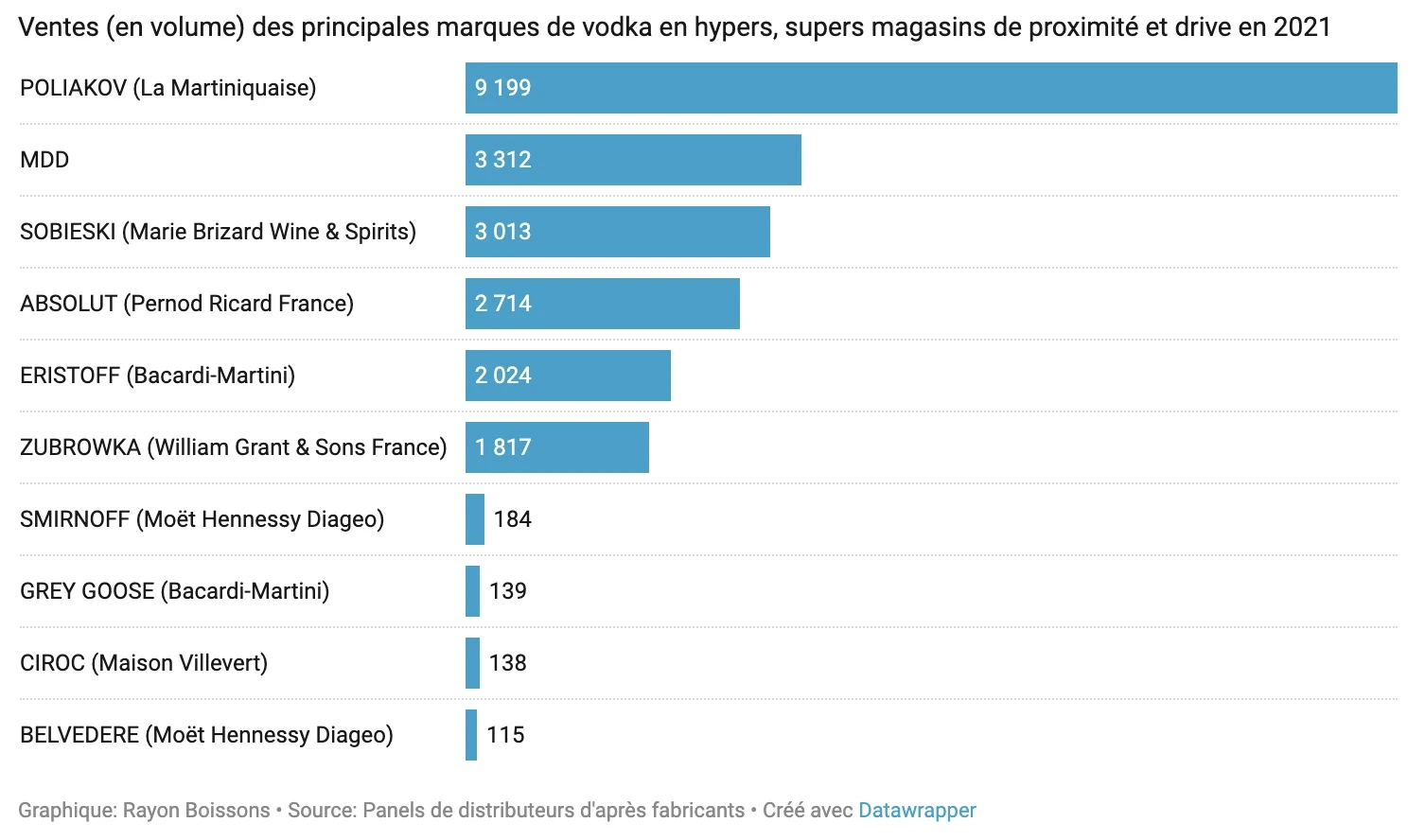
Without breaking the bank, brands like Poliakov, market share leader in France, continue to appeal with their accessibility. However, even for these more affordable vodkas, quality and French origin are highly sought-after criteria. This quest for quality is also manifested by increased attention to manufacturing processes, where French origin is valued. CSR initiatives, such as reducing water consumption or adopting environmentally friendly agricultural practices, are now at the heart of the strategies of major groups and artisans alike.
The flourishing flavored vodka market in France
The flavored vodka segment continues to record strong growth in France. In 2023, it generated an impressive revenue of 17.4 million euros, marking a spectacular increase of 91.9% in value and 74.8% in volume. This dynamism is largely driven by a growing demand for varied and original flavors, particularly those based on fruits, spices, or herbs, which meet new consumer expectations.
These flavored vodkas find their place in modern cocktails, but also appeal when consumed neat. This segment attracts enthusiasts looking for innovative beverages tailored to various occasions.
In 2024, this trend was further strengthened in supermarkets, where flavored vodkas continued to thrive, supported by consumer appeal for cocktails with varied flavors and original taste experiences.
A promising future for alcohol-free vodka
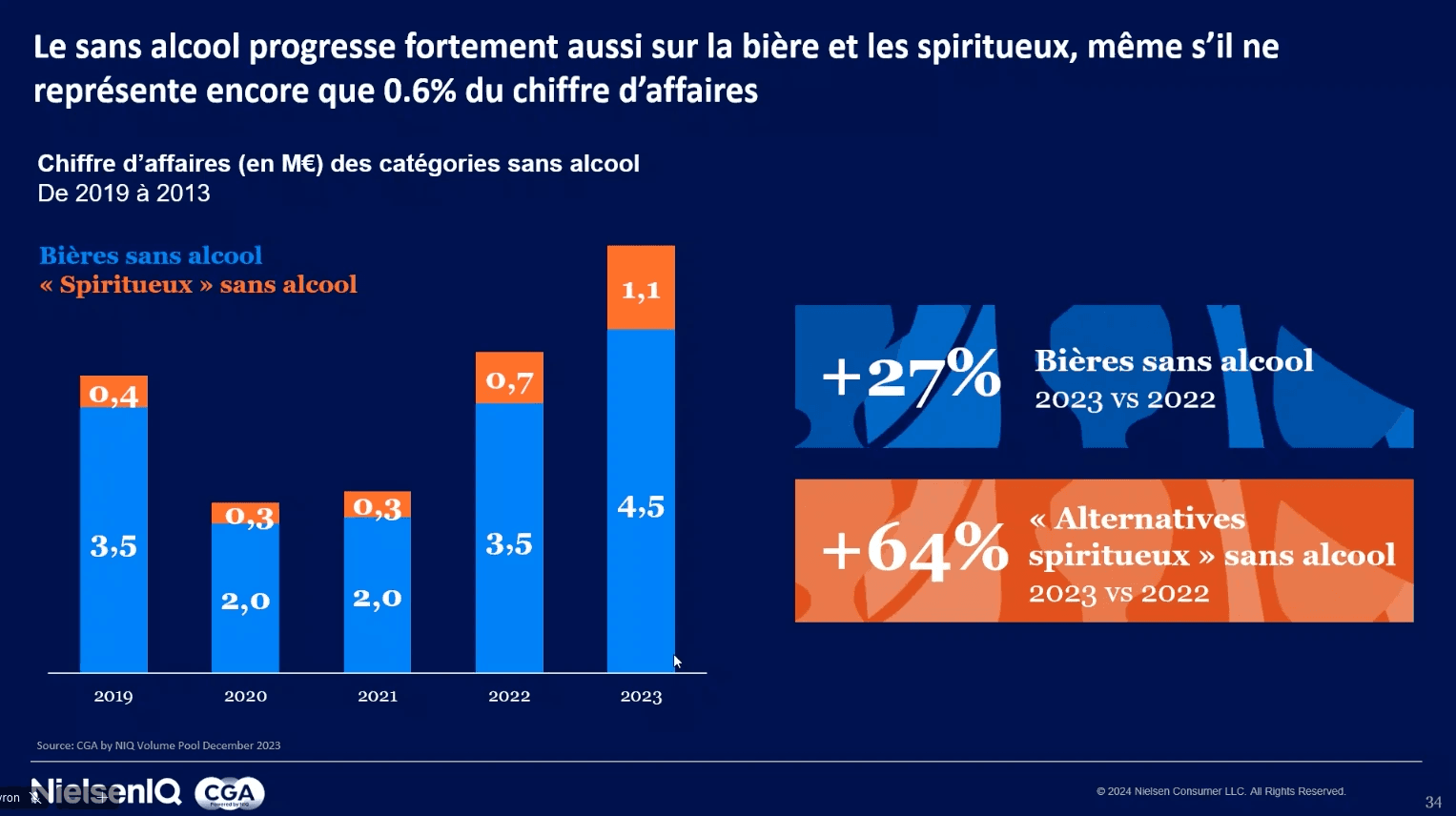
Alcohol-free vodkas are gaining ground, particularly among younger generations (Gen Z), who want to continue enjoying cocktails and other drinks without compromising their well-being. Between 2022 and 2023, this segment registered an impressive increase of 58%, although it still represents a small share of the overall vodka market. Brands like Lyre’s are positioning themselves in this niche, offering products that mimic the flavors of classic spirits while remaining alcohol-free.
This market, while still modest, shows undeniable potential with the rise of the "no-low" (no alcohol, low alcohol) movement. As the trend toward healthier products continues to grow, it is highly likely that alcohol-free vodkas will hold a more important place in the spirits landscape in the years to come.
Source: NielsenIQ
The must-have brands of the market
Although brands like Smirnoff, Absolut, Grey Goose, and Poliakov dominate the vodka market in France, particularly in supermarkets, artisanal and premium vodkas are making good progress. These stand out in specialized channels such as wine shops, cocktail bars, and high-end boutiques. In the second part of this article, we will explore in more detail the effective strategies for selling your vodka in supermarkets (GMS) and in Horeca establishments (Cafes, Hotels, Restaurants).
Selling vodka in supermarkets
In supermarkets, vodka continues to perform despite growing budget constraints in recent years. In 2023, white spirits (vodka, gin, tequila) accounted for 23.2% of spirit volumes sold in off-premise distribution channels, placing vodka in the lead, ahead of liqueurs and rums. According to Spiritueux Magazine, vodka represents 8.7% of sales value in supermarkets (GMS). Its versatility, especially in cocktails, and the rise of ready-to-drink (RTD) formats reinforce this trend, offering consumers simplicity and new taste experiences.
Did you know?
With the advent of the Soviet Union, many Russians immigrated to Europe and the United States. Some took their expertise with them and began producing vodka outside of Russia. Among these immigrants, we find the now-famous names of Smirnoff and Eristoff. Today, vodka is produced worldwide and has no fewer than 5,000 different brands.
Vodka experienced a slight slowdown in supermarkets, going from 23 million liters sold in 2022 (with a revenue of 420 million euros) to 22.5 million liters at the end of 2023, but with an increase in revenue to 450 million euros. Private labels (PL) play a key role in this market, occupying the second place behind Poliakov, the flagship brand of the La Martiniquaise group and the French leader. However, unlike the beer sector, craft beer remains barely visible on the shelves.
Source: Rayons boisson
Selling vodka in Horeca
Before integrating into supermarkets, some luxury spirits first go through bars and restaurants, building their reputation before reaching the general public.
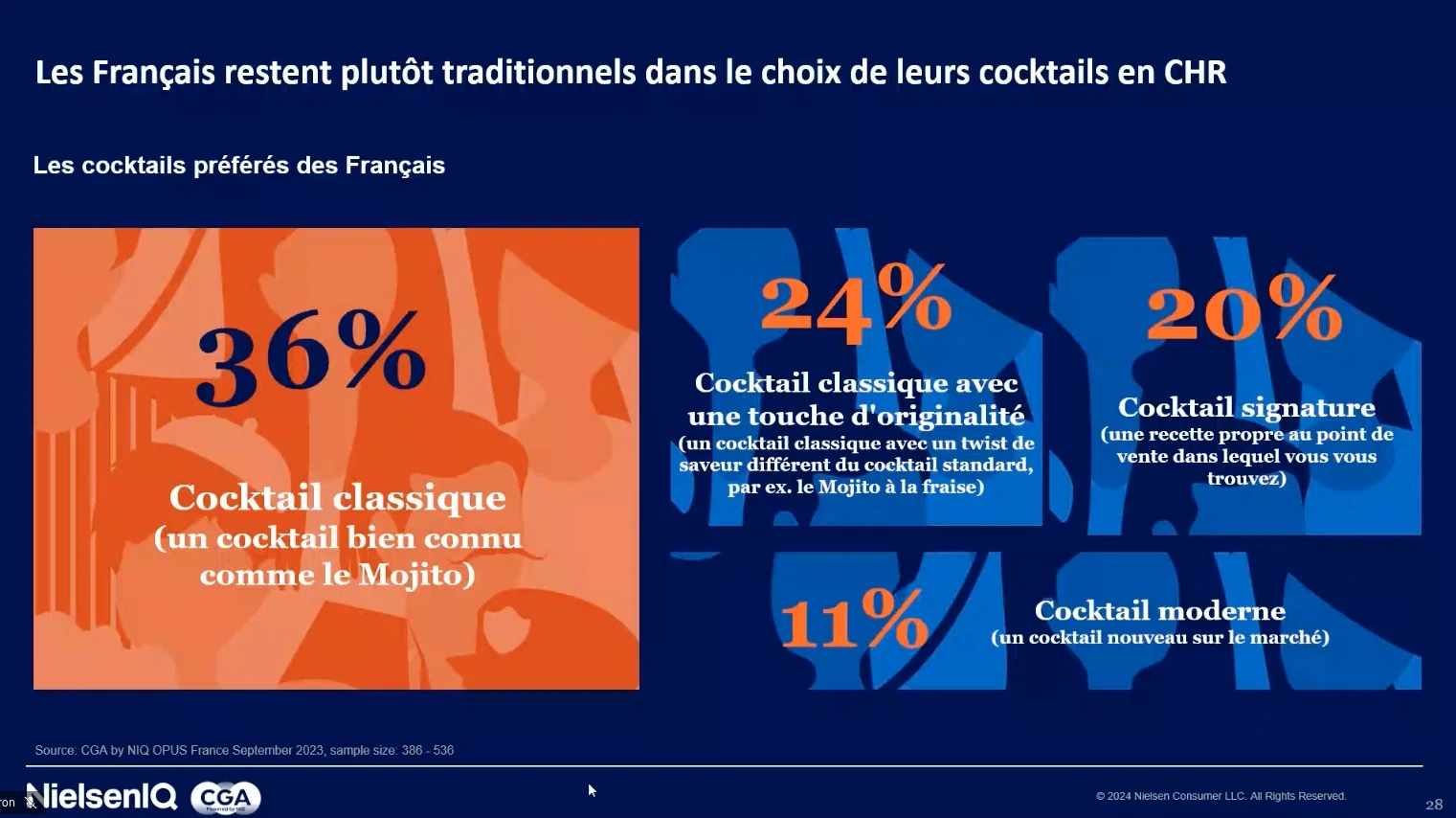
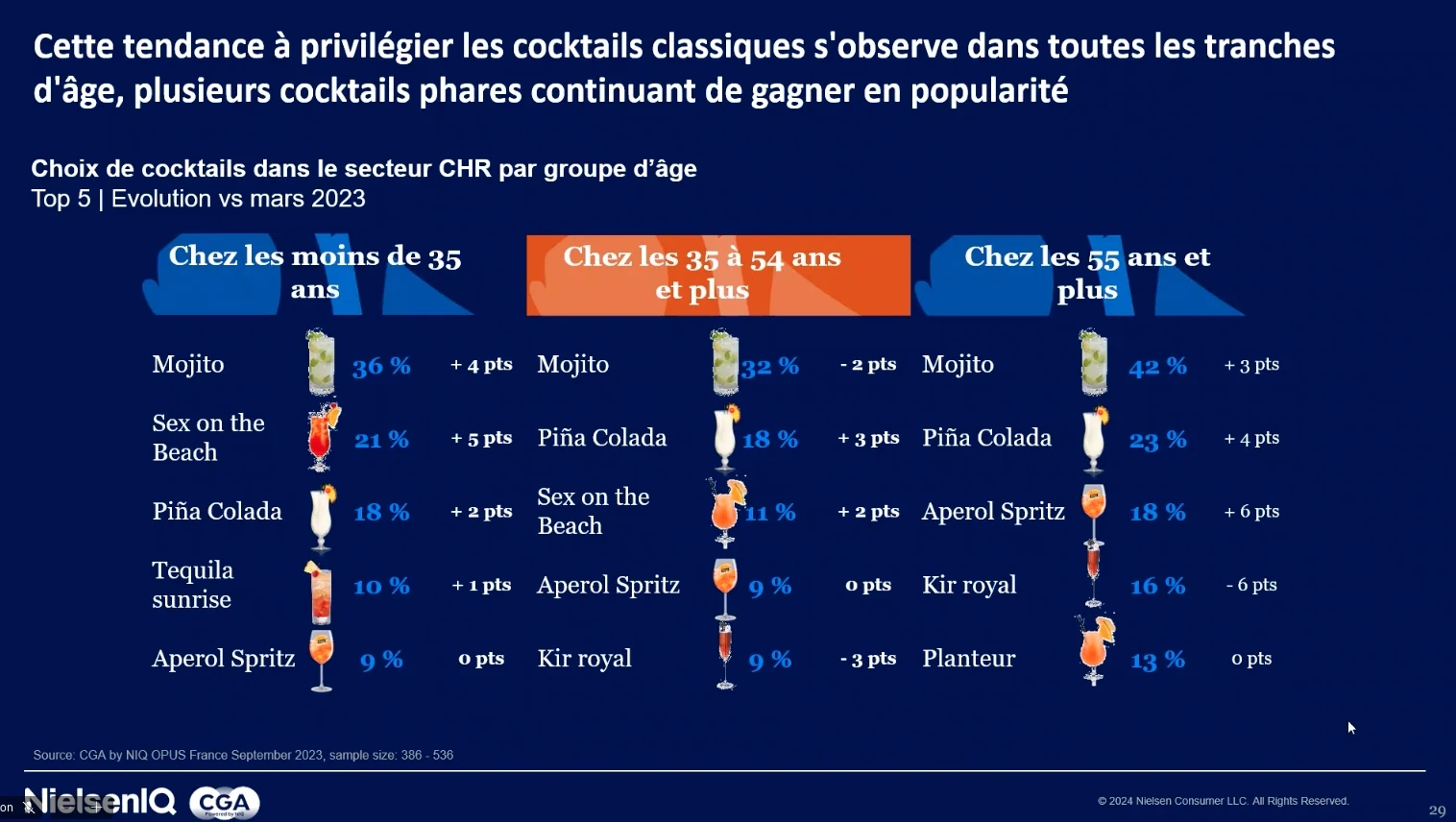
In 2024, vodka sales in Horeca establishments (Cafes, Hotels, Restaurants) continue to grow, notably thanks to the popularity of cocktails like the Moscow Mule and the Cosmopolitan. These drinks, both classic and revisited, are highly appreciated for their freshness and their ability to adapt to various contexts.
Source: NielsenIQ
Source: NielsenIQ
In this context, cocktails such as the Vodka Martini, Espresso Martini, and Cosmopolitan have become essentials, reinforcing vodka's position as a key spirit in festive or casual moments. The demand for premium vodkas in Horeca continues to grow, with consumers looking for quality and authenticity. These vodkas are not only used in sophisticated cocktails but are also often served neat, allowing establishments to offer high-end products to an audience seeking something new.
Source: NielsenIQ
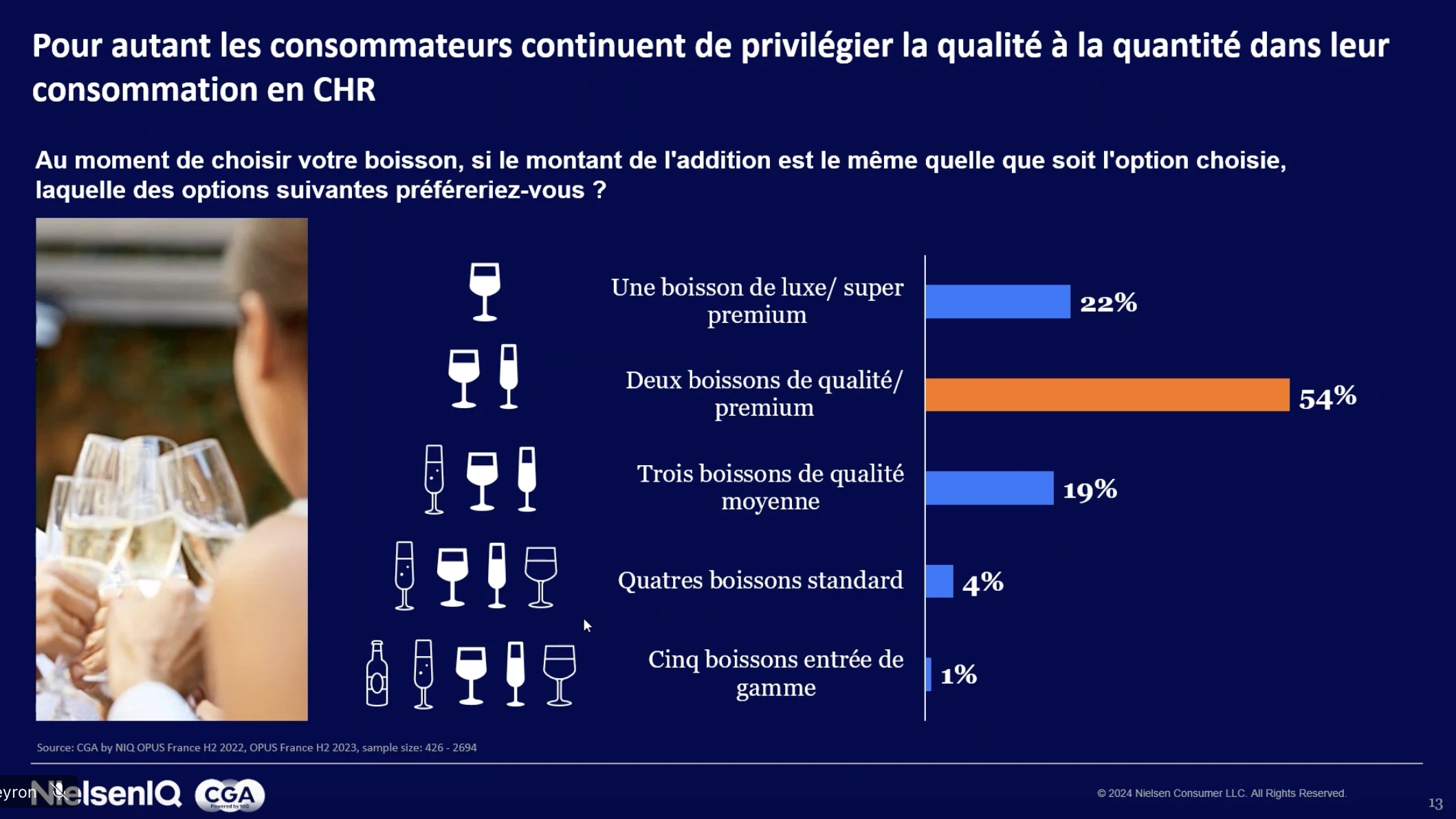
According to Spiritueux Magazine, in Horeca, vodka accounts for 15% of sales. Thanks to its versatility and ease of production — requiring no aging — vodka remains a favorite choice in cocktails, especially flavored versions that are gaining popularity. This flexibility allows new players to break into the market, further strengthening vodka's presence in the spirits sector in France.
Unfortunately, it is not just a short step from the factory to consumers. Let's now discover how to optimize the distribution of your vodka and maximize its impact on the market.
How to (better) distribute your vodka?
Effectively distributing your vodka requires a well-thought-out strategy, taking into account current market trends and the various distribution channels available. Here are some keys to better distribute your vodka, boost sales of your spirit, maximize its visibility and your sales.
Understand the target market
To succeed in selling vodka, it is essential to know your audience well. Segmentation is therefore the first key step. According to recent data, about 32% of French people regularly consume spirits. Among them, young adults between 18 and 34 years old are cocktail lovers, making them a prime target for flavored or premium version vodkas. You must therefore adapt your product range according to the segment you are targeting: classic vodka for cocktails, artisanal or premium vodkas for a more sophisticated clientele, and even non-alcoholic vodkas to respond to new consumer trends.
Optimize presence in supermarkets
Supermarkets represent an essential part of vodka sales, with sales reaching 450 million euros in 2024 in France. To ensure good visibility in supermarkets, it is crucial to negotiate partnerships with major chains like Carrefour, Leclerc, or Auchan. Make sure to be well-positioned and visible on shelves, as competition is fierce.
In addition, consider organizing promotions or in-store activities to boost sales and draw attention to your product. Free tastings or limited-time offers can also spark consumer interest.
Strengthen distribution in Horeca establishments
Bars, hotels, and restaurants (Horeca) are ideal environments to strategically position your vodka. These venues offer a platform to promote your products in sophisticated cocktail menus, where vodka can shine. According to Nielsen, the main expectation bartenders have of brands is assistance in creating and enriching their menus. By collaborating with mixologists, you can develop signature cocktails highlighting your vodka, thereby strengthening brand awareness.
This approach is beneficial for both the brand and the establishments. Bartenders play a key role in the consumer decision-making process. Indeed, 1 out of 2 consumers opts for the suggestion made by the bartender, making them an essential influencer to promote your vodka.
To go further, recruiting a brand ambassador is a wise strategy to strengthen your product's presence in Horeca establishments. This ambassador will be responsible for on-the-ground marketing activation, reinforcing the reputation and image of your vodka. They can organize events, tastings, and act as a link for educating bartenders on using your product. These actions help increase sales and establish your brand sustainably in the minds of consumers.
Leverage online sales channels
The rise of e-commerce has deeply transformed the spirits industry. With double-digit growth in recent years, it has become essential to be present on specialized platforms like The Whisky Exchange or The Whisky Shop. Creating your own online store can also allow you to capture consumers directly. In 2024, 20% of premium spirits sales are made online, according to IWSR data. Optimizing your SEO rankings and setting up an easy-to-use website are crucial elements to capitalize on this trend.
Focus on social media and digital marketing
Social media has become an essential tool for building a community around your vodka brand. Platforms like Instagram, Facebook, TikTok, or Pinterest allow you to share cocktail recipes, host online events, and collaborate with influencers to promote your products authentically. In 2024, more than 70% of young consumers claim to be influenced by social media in their beverage choices.
However, it is essential to comply with the Évin law of 1991, which strictly regulates the promotion of alcohol in France. Advertisements must avoid targeting minors, and under no circumstances can they encourage excessive alcohol consumption. Messages must also include health warning notices such as "Alcohol abuse is dangerous for your health". It is important to ensure that influencers and ambassadors respect these rules when representing your brand online.
Explore international markets
French vodka exports well. If you already have a solid presence in the local market, internationalization is an excellent path to expand your business. It is important to adapt your product to each market, taking into account local preferences and specific regulations.
The importance of trade shows
Trade shows like Vinexpo, Bar Convent Berlin, or France Quintessence are perfect platforms to meet buyers, distributors, and sector professionals. These events allow you not only to promote your brand but also to assess market trends and build partnerships.
In summary, to better distribute your vodka, it is essential to combine a strong presence in supermarkets with a targeted approach in Horeca establishments, while leveraging digital channels and participating in professional events. Innovation and loyalty must also be at the heart of your strategy to ensure sustainable growth.
For the past five years, Corentin has supported more than 200 sales teams, making him one of the longest-serving members of the company. He has seen the product evolve alongside the industries he supports, giving him a deep understanding of actual use cases. Between onboarding calls and training sessions, he has built up rare, hands-on expertise: knowing exactly what saves teams time.
See also

Artificial intelligence and field professions: what our 2026 studies reveal
Adoption, barriers, use cases: discover what our three studies reveal about the role of AI among sector managers, sales representatives, and foodservice sales reps.

CHR and RHF Sales Representatives: portrait of a relationship-driven profession in the era of data
Equipment, productivity, AI: discover the major trends for the HORECA and food service sales profession in 2026 through our field study.

Pharmaceutical Sales Representative in France: Portrait of a Field Job Under Pressure
Compensation, aspirations, AI usage: discover the major trends in the pharmaceutical sales representative profession in 2026 through our field study.

Area Sales Managers in France: who are they and how is the profession evolving in 2026?
Compensation, aspirations, AI usage: discover the major trends in the field sales representative profession in 2026 through our field study.
The area manager professions in 2026
Discover the trends, the challenges, and the key figures.