

The vegan and hybrid products market: an execution challenge more than a supply challenge
The vegan product market is growing rapidly, but the real battle is being fought on the shelves. Discover the real issues at stake in this article.

In short
10 min read
The vegan/plant-based market is experiencing rapid growth, with forecasts estimating it at over $55 billion by 2034.
The hybrid product category (a blend of plant and animal) is the most dynamic, particularly appealing to flexitarians.
In-store performance no longer depends solely on innovation, but on rigorous field execution and better shelf readability.
Taste, convenience, and health have become the primary purchasing drivers, progressively dethroning pure ethical conviction.
Success depends on the ability of brands to integrate naturally into the daily consumption habits of French consumers.
The vegan product market, also referred to as plant-based, has moved past the stage of a simple trend. Plant-based products are now a strategic topic for manufacturers and retail banners: the product offering is structuring itself, plant-based alternatives are establishing a permanent presence on shelves, and brands continue to innovate more than ever to meet growing demand.
According to Precedence Research (2025), the vegan/plant-based food market represented approximately $20 billion in 2024 and is expected to reach over $55 billion by 2034, with an average compound annual growth rate of around 10-11%. Consumer expectations are strong and clearly identified: reducing meat consumption without sacrificing taste, adopting a diet perceived as healthier, and limiting environmental impact without disrupting habits. Vegan products, plant-based foods, and especially hybrid products emerge as credible answers, offering compromises between pleasure, nutrition, and commitment.
Yet, despite this growth momentum, the market is still struggling to find a stable rhythm. Some categories are stagnating, others are declining, and performances vary widely depending on the retail banner and store. The multiplication of product references, which are often poorly differentiated, complicates shelf readability and weakens the purchasing act. The issue, therefore, is no longer whether to offer vegan products, but how to make them performant in very different retail contexts.
To understand these challenges, this article reviews the profiles and motivations of vegan consumers in France, the rise of hybrid products, performance factors at the point of sale, and the role of the food service industry (CHR) as a laboratory for usage. Finally, it examines why field execution and data have become the true levers of a market that has shifted from innovation to selection.
The Vegan Market
The vegan product market brings together several product families, which must be distinguished:
Vegetarianism concerns diet alone: vegetarians exclude all animal products from their plate (no meat, no fish, no eggs, no dairy). However, the question of honey is debated: some vegetarians consume it, others do not.
Vegan foods, also called plant-based, go further: they exclude all ingredients of animal origin, without exception. This includes meat substitutes (made from peas, soy, or wheat), dairy alternatives (almond, soy, oat, rice), plant-based desserts, or ready meals. Veganism is therefore a comprehensive lifestyle that excludes all animal exploitation, including outside of food, such as leather, wool, or cosmetics tested on animals.
Finally, hybrid products blend plant-based and animal-derived ingredients in adjusted proportions, with the goal of reducing the proportion of meat without a culinary disruption. This last category is currently experiencing the most dynamic growth, driven by flexitarian consumers.
In France, retail sales of plant-based alternatives grew by +20.5% between 2022 and 2024, reaching 537 million euros, according to the Good Food Institute Europe. This growth confirms that plant-based is no longer a niche category, but a structuring one.
Long associated with strong ethical commitment, the purchasing motivations for vegan products are now based on more concrete factors: taste, convenience, or ease of integration into daily meals. Plant-based alternatives are no longer bought solely out of conviction, but because they serve a clear purpose: replacing bacon bits in a quiche, preparing a quick weekday meal, or diversifying protein sources. This evolution reflects the normalization of plant-based products, whose performance depends above all on their ability to integrate naturally into consumption habits.
Who Consumes Vegan Products in France?
The market relies on varied profiles. We can distinguish committed vegans, whose consumption is regular and structured around ethical or environmental convictions, and flexitarians, the key growth segment, who alternate between traditional products and plant-based alternatives depending on the occasion. The market also attracts curious or occasional profiles, as well as consumers focused on health and nutritional balance, for whom vegan is a way to diversify protein sources rather than an ideological stance.
According to VeganPratique, 44% of French people declare they have already purchased plant protein-based products, proving that adoption goes beyond the circle of strictly committed consumers.
Motivations to Buy
Three major motivations structure the purchase:
Health, through the search for a lighter diet, protein diversification, or the reduction of processed animal products.
The environment, with a desire to reduce one's carbon footprint. For example, we see that “La Vie” products feature a carbon footprint reduced by 89%-95% compared to animal-based equivalents, according to Ademe, and have 60% less fat.
Finally, reducing meat without disruption. This is not about totally eliminating meat, but gradually reducing its share, without disrupting culinary habits.
Barriers to Purchase and Repurchase
Price constitutes one of the main obstacles: vegan products often display a premium pricing position compared to conventional products. Taste remains a determining criterion; if a product is deemed unsatisfactory during the first trial, it has little chance of being repurchased.
Finally, product readability represents a structural barrier: differences between vegan, vegetarian, and hybrid, the presence of allergens, the level of processing... Without clarity on the shelf, confusion hinders the purchase decision.
These barriers explain why market growth depends less on pure innovation than on the ability to lift them concretely, both in-store and in product messaging.

The Rise of Hybrid Products
Hybrid products, blending plant-based and animal-based ingredients, are establishing themselves as a strategic segment. Conceived as an entry point toward more plant-based consumption, they embody a logic of transition rather than disruption. It is not about completely eliminating meat, but reducing its share while retaining familiar culinary reference points.
Nearly 40% of French people declare they want to consume more plant-based products (Bpifrance, 2023), without necessarily adopting an exclusively vegan diet. Hybrid products respond directly to this expectation.
This rise, however, creates new complexity on the shelf. Hybrid products belong neither entirely to vegan products nor to traditional ranges. Without clarification, the consumer may not understand their promise or their use. This difficulty reinforces the importance of a detailed analysis of actual uses observed in the field, beyond declared intentions alone. Their performance varies widely depending on the local context, the maturity level of the shelf, and the ability to clearly explain their positioning.

Source: LinkedIn La Vie
Distribution and Performance at the Point of Sale
While the vegan product market is growing in value, its true performance is played out first and foremost at the point of sale, where supply, the customer journey, and local consumption habits clash.
Where is the Performance of the Vegan Market Really Played Out?
In supermarkets and hypermarkets, vegan products operate within a logic of volume, rotation, and readability. Specialized channels benefit from a customer base that is already aware, with a higher tolerance for innovation. But performance also depends on shelf positioning, and this is an often-underestimated challenge. Today, in the majority of supermarkets, vegan products are grouped in a dedicated space, an isolated "organic and plant-based" aisle, often on the periphery of the store, far from usual shopping paths. This grouping logic, designed to facilitate readability, actually produces the opposite effect: it categorizes the vegan product as a separate, activist, conscious, and therefore occasional purchase. The consumer who does not define themselves as vegan has no natural reason to go there.
Conversely, a vegan product integrated into the deli aisle, near bacon bits or meat products, fits into the usual shopping path. It is no longer an ideological choice, but one option among others, visible at the right time, in the right place. Its use becomes immediately understandable: replacing bacon bits in a quiche, varying proteins for the evening meal. It is this integration logic that transforms a niche product into an everyday product.
For brands, the challenge is therefore twofold: convincing the retailer to move their products out of the isolated vegan aisle and demonstrating that placement in traditional aisles generates higher rotation. A trade-off that cannot be declared, but must be proven through field data.
Placement, Readability, and Education
Shelf placement directly conditions visibility and purchase intent, and for vegan products, this challenge takes on an additional dimension. Unlike a traditional product that benefits from an established purchasing context, a meat substitute or plant-based alternative must first convince of its use before even convincing of its quality. A consumer who is not actively looking for a vegan product will not stop in front of it if it is poorly placed or, worse, relegated to an aisle they do not visit.
Understanding the rules of retail merchandising (hot zones, eye level, facing logic...) is therefore essential to maximize visibility. These rules pose an important question: should these products be placed in the dedicated vegan aisle, where the customer base is already convinced but limited in volume, or in the traditional aisle corresponding to their use (deli, dairy, butchery) to reach a wider but less acquired customer base? This placement choice is not trivial: it determines both the profile of the consumer who will discover the product and the frequency with which they will be exposed to it. It is precisely this dilemma that makes field execution so strategic in this market.
Signage plays a central role in the performance of vegan products on shelves. The challenge is twofold: clarifying what the product is (vegan, vegetarian, hybrid) and above all clarifying who it is for and for what use.
For example, the brand “Herta” was one of the first major brands to solve this problem through packaging. By launching its "Le Bon Végétal" range in 2016, the brand made a strong strategic choice: addressing flexitarians explicitly, rather than committed vegans, estimated at only 0.5% of the population. The packaging adopted the visual codes of the traditional deli section, with a transparent film allowing the product to be identified visually, while clearly signaling its plant origin. Furthermore, “Herta” was one of the first brands to stand out by positioning its products in the deli aisle, alongside traditional meat products, rather than in an isolated vegan space. A crystal-clear positioning that paid off handsomely: according to LSA, since “Herta” targeted this flexitarian segment, the market has multiplied by 5, and the brand has become the leader with nearly 54% of market share in plant-based deli products in France in less than five years.
This case illustrates a key lesson: in the vegan aisle, clarity of the message does not come from text, it comes from visual codes, immediately understandable use, and the absence of symbolic barriers to purchase.
Why Can the Same Product Perform or Fail Depending on the Store?
Local effects are powerful: dietary habits, purchasing power, and environmental awareness directly influence rotation. In addition, shelf maturity conditions performance: in a store where the plant-based offering is already structured and readable, a new product integrates more easily than elsewhere. It is precisely this variability that makes a rigorous rationalization of assortments necessary, adapted to each local context.
The first challenge for brands is therefore to target areas where habits are already most established, to build solid proof of performance there before expanding.
The second challenge is relational. Successfully establishing a plant-based product sustainably in supermarkets assumes building a true commercial relationship of trust with store teams. This relationship is what opens the door to displays, promotions, and placement tests that make the difference between a product that survives on the shelf and one that recruits consumers.
Finally, there is a real challenge of democratization and retailer education on plant-based products. Brands that invest in this education with buyers and field teams are the ones that manage to exit the isolated aisle to integrate sustainably into the daily shopping path.

Source: Linéaires
The Battle of Denominations
Beyond the physical shelf, the visibility of vegan products is also played out in online grocery shopping (click & collect and e-commerce). In this channel, denominations are the main driver of discoverability: a consumer typing "bacon bits" into the search bar of an online store will only find a plant-based product if it uses that term. Just as shelf facing in physical stores conditions visibility in-store, the product name online conditions its existence in the eyes of the digital buyer.
This is precisely the issue that crystallized the regulatory battle around plant-based denominations. A first decree in June 2022 prohibited the use of any denomination using the specific terminology of butchery, charcuterie, or fishmongery to designate a processed product containing plant proteins—no more "veggie steaks," "vegan sausages," or "veggie bacon bits."
After two successive prohibition decrees (2022 and 2024), both suspended by the Conseil d'État at the request of plant-based manufacturers, the Court of Justice of the European Union finally ruled in October 2024: the use of denominations originating from butchery and charcuterie for plant-based products is authorized. The two decrees were canceled immediately after. Brands themselves mobilized publicly on the subject, HappyVore, in particular, took a direct stance against what they considered a maneuver by meat lobbies to limit the visibility of plant-based products.
For brands, the outcome is favorable, but the episode illustrates a structural issue: the denomination of a plant-based product directly conditions its visibility online. A product that can no longer be called "veggie bacon bits" mechanically disappears from search results in click & collect. An additional illustration that the performance of the vegan market is not played out solely in the physical aisle.
The Role of the Food Service Industry (CHR) in the Vegan Product Market
The CHR sector (cafés, hotels, restaurants) plays a structuring role in the evolution of uses and perceptions. Dining out constitutes a prime observation ground for food trends, often ahead of in-store purchasing behaviors. To understand the specifics of this channel and its commercial challenges, it is useful to discover how the out-of-home dining sector is organized.
The Food Service Industry as a Laboratory for the Vegan Market
Unlike supermarkets, the food service industry relies on a logic of experience. The restaurateur plays the role of prescriber: it is not the brand or the packaging that convinces, but the culinary offering. The food service industry also performs an acculturation function: a non-vegan consumer can try a plant-based dish at a restaurant out of curiosity, without a strong commitment. This first experience can then influence their purchases in supermarkets. The food service industry is therefore not a secondary channel, but an upstream space where habits are built.
Adoption of Vegan Products in Restaurants
In France, the dynamic is more gradual than internationally, due to the weight of culinary tradition. Urban areas generally show faster integration, while suburban or rural areas progress at a more measured pace. For brands wishing to sell in the food service sector, this implies properly segmenting targets and adapting the commercial approach according to the profiles of the establishments.
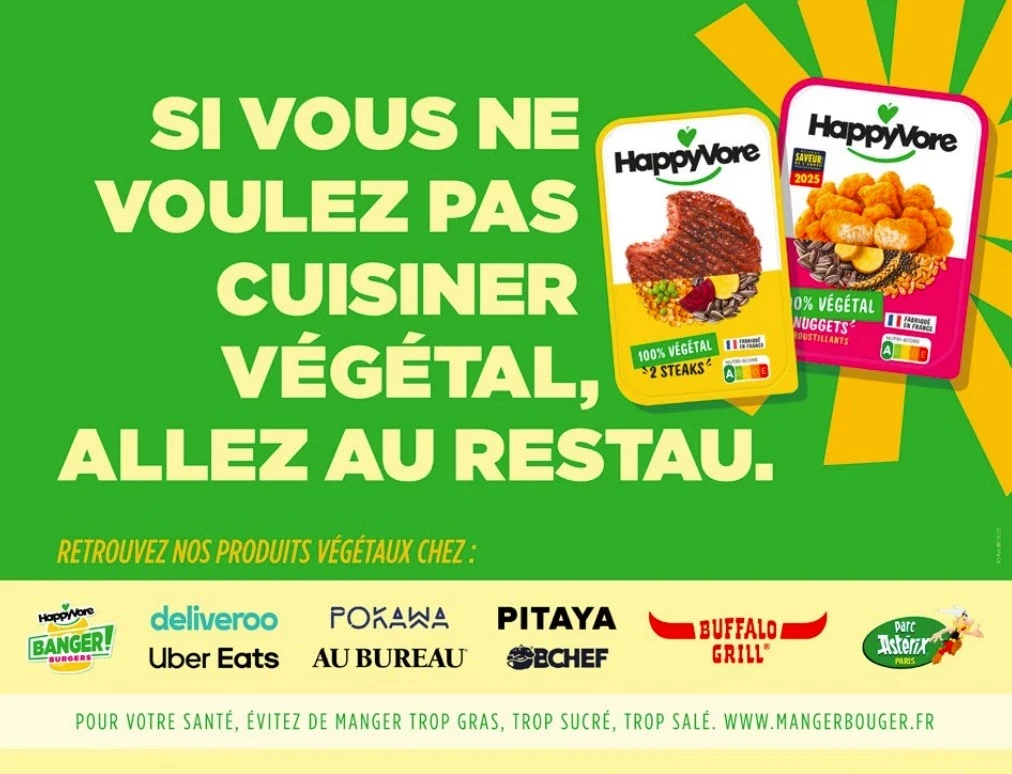
In restaurants, simple uses determine performance: native vegan dishes (bowls, falafels, curries) or plant-based products integrated into existing recipes. The dominant logic remains that of the option, rather than that of a 100% vegan menu. Hybrid products appear here as a suitable lever: reducing the share of meat in a dish while maintaining its structure and appeal, while controlling costs.
Furthermore, it can be noted that in France, the vegetarian offering has made a notable leap on restaurant menus in recent years, but the strictly vegan offering remains very confidential. More than one in two respondents has already experimented with vegan dishes or plant-based alternatives in restaurants according to Deliveroo, but this reflects occasional curiosity rather than regular adoption.
Source: E-marketing.fr
From an Innovation Market to a Selection Market
The vegan market initially structured itself around a logic of rapid innovation. Veggie burgers, nuggets, dairy alternatives, and plant-based desserts made it possible to democratize the segment, but often with very similar promises.
This phase has reached its limits. The end of the novelty effect marks a first turning point: only products responding to a clear and regular use have kept their place. Retail banners have initiated a movement toward assortment optimization with a narrowing of the offer, elimination of duplicates, and more frequent trade-offs. Each product must now justify its presence through concrete indicators: rotation, contribution to revenue, ability to recruit or retain customers.
More than half of French consumers have already purchased plant protein-based products (VeganPratique). The challenge is therefore no longer to introduce these products, but to make them a permanent part of purchasing habits.
A Field Execution That Has Become Decisive
In this context, everything can be decided in a few meters of shelving. A meat substitute relegated to a discreet vegan space, at the end of the aisle, will be associated with an occasional purchase. The same product placed in the heart of the deli section or near meat products becomes a credible everyday option.
The product hasn't changed. The placement has.
And with it, the probability of purchase and repurchase.
The lack of consumer education reinforces this difficulty. The differences between vegan, vegetarian, or hybrid diets, nutritional benefits, or preparation methods are rarely explained on the shelf. Without clear reference points, even relevant products can underperform. These challenges directly fall under the fundamentals of retail execution and solid product presence and visibility in-store, from facing to point-of-sale materials, including placement.
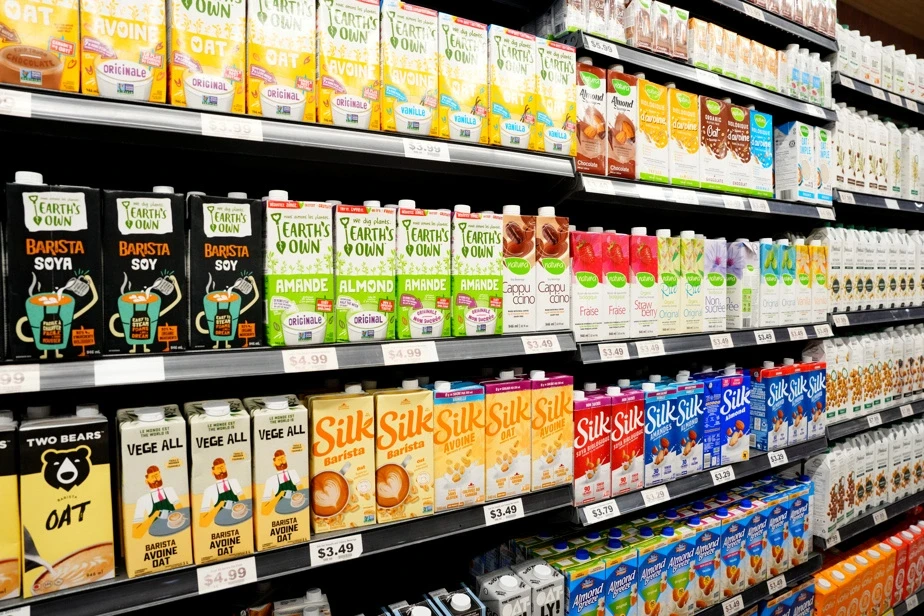
The example of plant-based beverages perfectly illustrates the direct impact of shelf placement on performance. Depending on the banner, oat, soy, or almond milks (Oatly, Alpro, Bjorg...) are found sometimes in the milk aisle, positioned as a direct alternative to dairy products, sometimes in the organic or healthy aisle, where they address a customer base that is already convinced but more limited. The same product can thus display very different rotations depending on whether it sits alongside semi-skimmed milk or niche organic references, without the product itself having changed by a single gram.
Source: laPresse.ca
What the Field Must Change Concretely
The field must adopt a different posture: finely reading local uses and adapting the message depending on whether the store addresses already-committed consumers or more flexitarian profiles. In some stores, the challenge will be to reassure regarding use and preparation. In others, it will be about positioning plant-based products as simple everyday alternatives, and not as niche products.
Beyond the messaging, the field must also play an active role in operational adjustment: placements, promotions, prioritization of actions. These decisions are not made at headquarters but are observed and built in the field, relying on a commercial management tool adapted to retail realities.
Furthermore, the most underestimated lever remains the gathering of qualitative feedback. A product that underperforms on the shelf is not necessarily a bad product; sometimes it is a problem of unreadable packaging, unsuitable size, or a poorly perceived price positioning.
Field Data as a Management Lever
In this heterogeneous market, global trends are insufficient for effective steering. A category can seem to be struggling on a national scale while performing very well locally. Field data allows for a change in reading level: identifying precisely the points of sale where plant-based products find their audience, and adjusting assortments and placements store by store.
Tracking the right KPIs in retail, such as numerical distribution, shelf share, or coverage rate, is essential to transform field observations into concrete decisions. In this market, field data is no longer a simple monitoring tool, but a true strategic management lever.
The vegan market in France remains in a structuring phase. After a period of rapid innovation, it is entering a more mature stage where growth will depend on the ability of players to respond concretely to consumer expectations.
Three levers can support growth: hybridization, which widens the customer base beyond strictly committed vegans; improvement of taste and usage, which strengthens the probability of repurchase; and better field execution, which transforms purchase intent into real rotation.
Conversely, offering saturation, taste disappointment, and lack of product clarity can sustainably slow down the market, despite positive consumer intentions.
Performance can no longer be declared. It is built through an ability to observe, understand, and adjust continuously. “La Vie” illustrates this better than anyone: deployment across Europe, partnerships with banners like Burger King, KFC, Pizza Hut, Picard, and Carrefour, without ever adopting an activist discourse, but by making vegan obvious, tasty, and accessible.
A model that says less “become vegan” and more “keep living. Only better.” Ultimately, it is in this operational detail that sustainable performance trajectories are drawn.
Taina left her position as Area Manager at AB InBev for marketing and communications, a true career choice. Having experienced the reality of the sales force from the inside, she writes about the profession without ever distorting it. She doesn't just talk about the field; she comes from it. Outside the office, she tracks down the best tables in town: finding the right spot is a serious business.
See also

Artificial intelligence and field professions: what our 2026 studies reveal
Adoption, barriers, use cases: discover what our three studies reveal about the role of AI among sector managers, sales representatives, and foodservice sales reps.

CHR and RHF Sales Representatives: portrait of a relationship-driven profession in the era of data
Equipment, productivity, AI: discover the major trends for the HORECA and food service sales profession in 2026 through our field study.

Pharmaceutical Sales Representative in France: Portrait of a Field Job Under Pressure
Compensation, aspirations, AI usage: discover the major trends in the pharmaceutical sales representative profession in 2026 through our field study.

Area Sales Managers in France: who are they and how is the profession evolving in 2026?
Compensation, aspirations, AI usage: discover the major trends in the field sales representative profession in 2026 through our field study.
The area manager professions in 2026
Discover the trends, the challenges, and the key figures.