
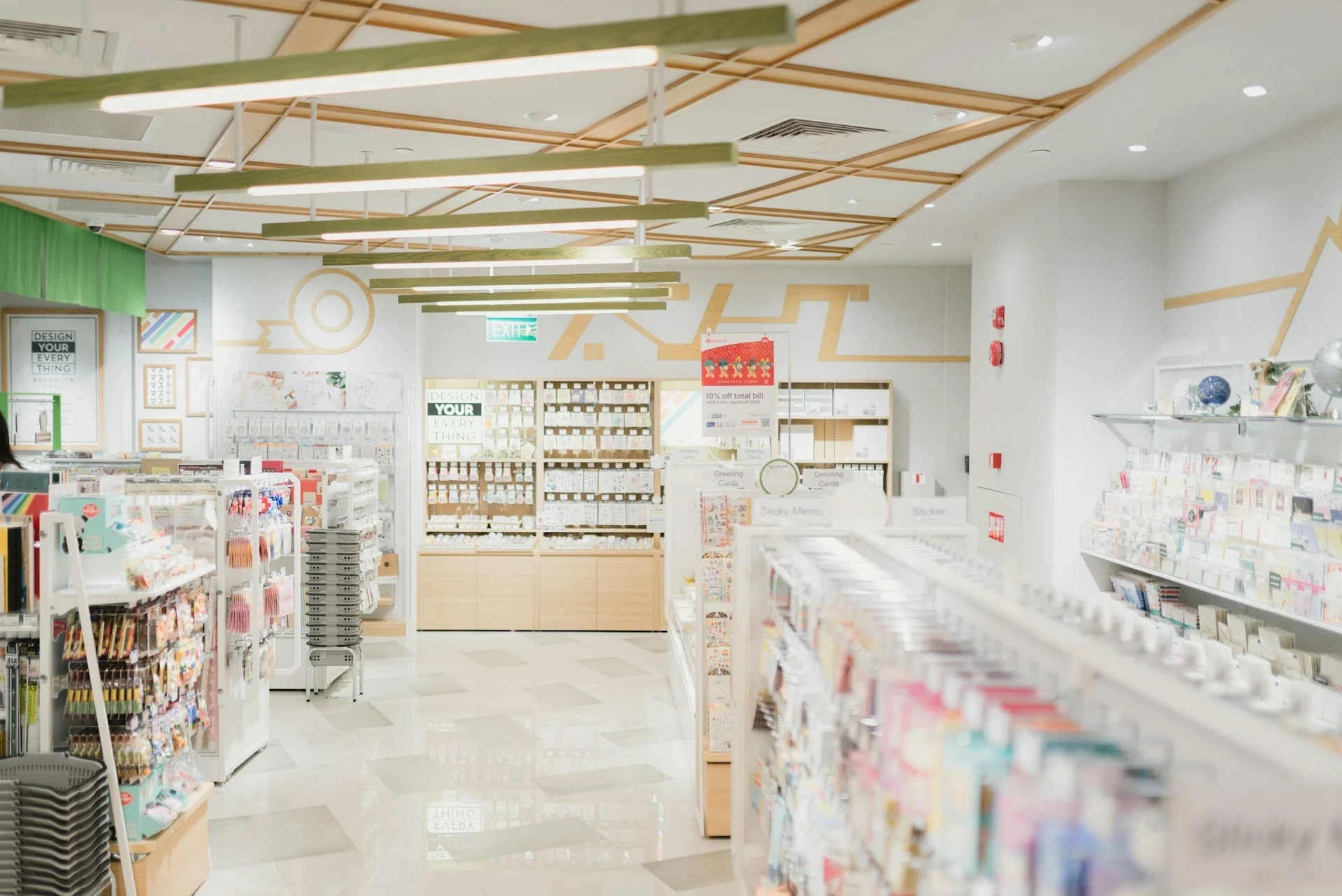
Pharmaceutical trade marketing: definitions, levers, and examples in pharmacies
How to deploy a trade marketing strategy in pharmacies? Definitions, activation levers (merchandising, POS advertising, in-store events), and concrete examples in pharmacies and drugstores.

In short
9 min read
Pharmaceutical trade marketing aims to establish win-win operational synergies between laboratories and pharmacists.
It differs from pharmaceutical marketing, which focuses on the brand and the prescriber, by focusing on direct activation at the point of sale.
Key levers include merchandising (planograms), commercial animations, POS (point-of-sale) advertising, and training pharmacy teams.
Performance relies on managing 'sell-in' (manufacturer sales to pharmacy) and 'sell-out' (pharmacy sales to patient).
Successful collaboration requires active listening to the pharmacist's needs and adapting action plans to the field.
Evaluating success relies on key performance indicators (KPIs) such as out-of-stock rates, shelf visibility, and the incremental value of operations.
What if pharmaceutical trade marketing could help your brand improve its sales performance?!
Theorized in the United States in the retail sector, this strategy is gaining popularity in the healthcare sector. And for good reason, trade marketing aims to transform natural antagonisms between suppliers and distributors into operational synergies!
It didn't take more than that to convince laboratories to adopt it. But, in practice, deploying your pharmaceutical trade marketing (PTM) strategy is not without challenges. Sidely therefore invites you to explore the issues of this fascinating subject.
We will start by addressing the theoretical concepts of trade marketing, then study its application in the pharma sector. We will then reveal a list of winning techniques to collaborate with your business partners, and finally, we will see how to measure the results of your actions.
Here we go!
What is trade marketing in pharmacy?
Pharmaceutical trade marketing: definition
Pharmaceutical trade marketing is a strategy based on the search for mutual performance between laboratories and pharmacists. Together, these business partners develop systems designed to optimize sales in a win-win mode.
This of course includes merchandising, promotional operations, but also all actions allowing the manufacturer / point of sale duo to increase their respective results. The term is used indistinctly for pharmacies and drugstores, in urban areas as well as in a shopping mall or even a supermarket aisle. On the other hand, it is rarely used in the context of e-commerce.
What is the difference between trade marketing and pharmaceutical marketing?
Both pharmaceutical marketing and trade marketing pursue a sales performance goal, but they operate neither at the same level nor with the same targets.
Pharmaceutical marketing is a brand and patient-oriented strategy, meaning it is aimed at prescribing healthcare professionals (physicians, sometimes pharmacists), and/or the final consumer (within the regulated framework of OTC, drugstores, or digital channels). Pharmaceutical marketing includes actions designed to position a health brand or product, build its awareness, and support its prescription or recommendation. In other words, it works on the message, the perceived value of the product, and the demand.
Pharmaceutical trade marketing is a point-of-sale activation strategy, meaning it sits downstream from marketing. It aims to activate the distribution channel, in particular the pharmacy, to transform the marketing strategy into concrete results at the point of sale. It is aimed at pharmacists, pharmacy teams, and distribution networks.
Pharmaceutical marketing | Pharmaceutical trade marketing |
|---|---|
Creates demand | Activates distribution |
Works on image and message | Works on visibility and rotation |
Guides prescription and purchase intent | Guides highlighting and in-store sales |
Upstream of the chain | Downstream of the chain |
Product / brand strategy | Point-of-sale strategy |
These are two complementary approaches. Trade marketing does not replace pharmaceutical marketing: it makes it effective on the ground. Without pharmaceutical marketing, there is no demand or product legitimacy. Without trade marketing, products are poorly visible, poorly positioned, and stock sits idle.
Why has trade marketing become essential in pharmacies?
The era when pharmacist/laboratory collaboration was limited to ordering medications is over!
On one hand, competition is increasingly intense between brands, each trying to maximize the listing and visibility of its products.
On the other, pharmacists have little time to receive all the pharmaceutical sales reps who contact them. Above all, they expect much more than a simple presentation of product benefits by representatives.
Now, what pharmacists want is high-quality consulting support. While they are still as demanding on the commercial conditions offered, a simple discount is no longer enough, and it is in the areas of training and marketing support that suppliers can win their listing.
However, pharmacists are in a good position to evolve relations toward partnerships in which laboratories commit to supporting pharmacies on an operational level. They notably draw their strength from the pharmacy privilege which guarantees them exclusivity on the sale of medicines, and makes them a key player almost impossible to dislodge in drugstores, where they capture 85% of turnover!
Yet it would be wrong to see this as an unbalanced relationship; this need for marketing and sales expertise is a wonderful opportunity for manufacturers because, overall, pharmacists face strong constraints, particularly in terms of recruitment, and trade marketing can allow brands to vitalize pharmacies that are sometimes losing momentum in their sector.
For example, brands can share their knowledge in terms of highlighting drugstores, an eminently strategic sector for pharmacists, since drugstore prices are set freely, allowing a higher profit margin. The cost of storage also encourages pharmacists to accelerate the product rotation rate, and laboratories must be proactive to achieve this.
The success of the commercial partnership also involves a mutual transfer of knowledge. For example, no one knows the population of a neighborhood better than the pharmacist, but the laboratory sales rep, for their part, exchanges with different points of sale and also receives information from headquarters. Retailer and manufacturer therefore have every interest in exchanging their data and information so that each can progress thanks to the other.
This requires a change in mindset and the implementation of a truly collaborative approach. This is the whole art of pharmaceutical trade marketing.
What are the objectives and operational resources of trade marketing in pharmacies?
The objective of pharmaceutical trade marketing is to influence the buying behavior of healthcare professionals and customers, using various advertising and promotion tools.
Laboratories use it to achieve different goals:
Increase their visibility in points of sale;
Encourage sell-out through targeted actions;
Optimize stock rotation and minimize unsold items.
Unlike traditional marketing, trade marketing is a B2B (business-to-business) technique since it focuses on prescribers (physicians and pharmacists) rather than the end consumer.
Commercial marketing in pharmacies leads manufacturers to:
Strengthen their relationships with pharmacies, drugstores, and wholesalers;
Provide POS display materials: posters, displays, free samples;
Train pharmacy teams: to better know and promote products;
Create promotional events: directly engage healthcare professionals.
While trade marketing relies on establishing proactive cooperation with points of sale, its execution also depends heavily on merchandising, with classic techniques like dramatizing displays.
However, the promotion of medicines is subject to a strict regulatory framework, and some intrusive advertising techniques like commercial animations are much more suited to the world of drugstores.
The main drivers of pharmaceutical trade marketing
Pharmaceutical trade marketing relies on a set of operational drivers that can be activated directly in pharmacies. Their objective is to improve the visibility of products, facilitate their recommendation by the pharmacy team, and optimize their sales performance in compliance with the regulatory framework.
Merchandising and planogram in pharmacy
Pharmacy merchandising aims to organize the sales area in a coherent manner to maximize product clarity, product visibility, and accessibility for the customer.
The planogram allows for formalizing this organization by precisely defining the location of products on shelves, their prioritization, and the distribution of shelves by category.
In pharmacy, effective merchandising takes into account the specificities of the point of sale (surface area, customer flow, customer typology) while ensuring compliance with brand recommendations.
In-store promotion and field operations
Commercial promotion in pharmacies groups together all one-off actions intended to support sales during identified peak times: seasonality, range launches, special operations.
In the pharmaceutical sector, these actions are mainly deployed in drugstores, where regulations allow for more promotional leverage.
The objective is not promotion at all costs, but the creation of contextual visibility, in line with the patient's needs and the pharmacy's priorities.
POS displays and in-store visibility
Point-of-sale advertising aims to capture the customer's attention in the right place and at the right time, without disrupting the purchasing journey.
In pharmacies, POS display performance relies on the choice of media (displays, shelf-talkers, posters), their strategic location (window, counter, shelf), and their harmonious integration into the retail environment.
Effective POS advertising reinforces product recognition and supports pharmacy recommendation, while respecting the regulatory constraints of the sector.
Pharmacy training and support
Training pharmacy teams is a differentiating driver of pharmaceutical trade marketing. It allows pharmacists and their teams to better master product characteristics, benefits, and their uses and indications.
This support helps improve the quality of advice given to the patient. From a trade marketing perspective, training does not only aim at promotion, but at the sustainable skill development of teams. It often takes the form of training sessions, educational materials, and field support.
Sell-in and sell-out in pharmacies: the heart of trade marketing
Pharmaceutical trade marketing acts on several key performance drivers in pharmacies: product listing, shelf visibility, merchandising and planograms, commercial promotion, but also sell-in and sell-out.
More broadly, trade marketing is the strategy that aims to activate the point of sale - here the pharmacy - in order to improve the sales performance of products. Its role is not to sell directly to the end consumer, but to create favorable conditions for sales in the pharmacy.
In this logic, sell-in and sell-out constitute two operational pillars of trade marketing, as they allow for managing performance at each stage of the distribution chain.
Sell-in: getting the product into the pharmacy
Sell-in corresponds to sales made from the laboratory to the pharmacy. It allows tracking, on the manufacturer side, what is actually sold to the point of sale upstream of final consumption.
The main objectives of sell-in are:
to get the product listed,
to encourage ordering,
to ensure stocking in the pharmacy.
Sell-in therefore has a direct impact on:
commercial negotiations,
product listing,
purchase conditions,
the trade marketing plan put in place with pharmacies.
Sell-in is thus an essential component of trade marketing, from the laboratory's point of view.
Sell-out: getting the product off the shelf
Sell-out refers to sales made from the pharmacy to the customer or patient. It measures the ability of a product to sell once it is present on the shelf.
Its main objective is to get the product off the shelf, meaning to optimize its rotation and avoid idle stock.
Sell-out is strongly influenced by:
merchandising,
planograms,
POS displays and in-store visibility,
commercial promotions,
the quality of pharmacy advice, closely linked to team training.
Sell-out is the other major component of trade marketing, this time from the pharmacy's point of view.
The link between trade marketing, sell-in and sell-out
In practice, trade marketing orchestrates sell-in and sell-out to maximize commercial performance in pharmacies.
Without sell-in → no product on the shelf
Without sell-out → idle stock
Without trade marketing → isolated, uncoordinated, and inefficient actions
Sell-in and sell-out are therefore the two operational pillars that allow pharmaceutical trade marketing to deploy its full effectiveness.
The pillars of optimal collaboration with pharmacists
Between pharmacists and trade marketers, chemistry is not always obvious. There are many differences (level of education, socio-professional category, or even generation!). While the meeting between doctor and sales rep may seem unlikely, we have just seen that each can benefit from the other's expertise and commercial data.
Together, they have all the elements to boost the sales performance of a given range of products in the short, medium, or long term.
Here are some best practices that brands can put in place to strengthen their relationships with pharmacies and drugstores, improve the visibility of their products on shelves and, of course... increase sales!
1. Establish an agnostic diagnostic of the pharmacy
When a prospect receives you for the first time, focus on a high-quality discovery session, to bring to light the specific challenges the pharmacist faces. Nothing is worse for them than a pretentious sales rep trying to explain how to do their job. Most pharmacies have a marketing plan built and adapted to the customers of their area.
While many of them lack time to optimize merchandising on a daily basis, do not make the mistake of imagining that they are helpless. The first rule of trade marketing is to associate yourself with your business partner's problems to find solutions together.
2. Advice and support for pharmacists
Pharmacists and pharmacy staff expect much more than a simple delivery of medicines. Organize regular training sessions to inform your retailers about new products, their benefits, and their use.
Share your feedback regarding the layout of sales areas and the optimization of product presentation to improve their visibility. Rely on sales data from other pharmacies that value your products differently. Zoning is fundamental; make your interlocutors aware of the importance of the customer journey in the point of sale, and all the possible product placement and POS opportunities.
3. Development of strategic partnerships
The success of the collaborative approach also relies on your ability to think in terms of partnership rather than simple transactions. Your laboratory must position itself as an ally in the business development of pharmacies.
For example, think together about developing joint action plans, such as setting up commercial operations that benefit both parties, promotional campaigns, or specific window displays.
4. Active Listening and Adaptation to Needs
Collaboration with pharmacists must also encourage upward communication. Conducting regular surveys with points of sale will allow you to understand their specific needs and adapt your offers accordingly. This helps refine the marketing strategy and improve customer satisfaction.
The more points of sale feel heard and involved in the strategy, the more effort they will deploy to prescribe your products to their customers.
5. Reorganize your resources
Finally, there is no single standard commercial organization. If you do not have sufficient internal resources to dedicate to trade marketing, you can call on an external company, either on an ongoing basis or for specific campaigns. You can commission them for sell-out or for training pharmacists.
It is also possible to do the opposite: train your trade marketers internally and outsource the traditional sales force, or the activation of campaigns.
Concrete examples of trade marketing in pharmacies
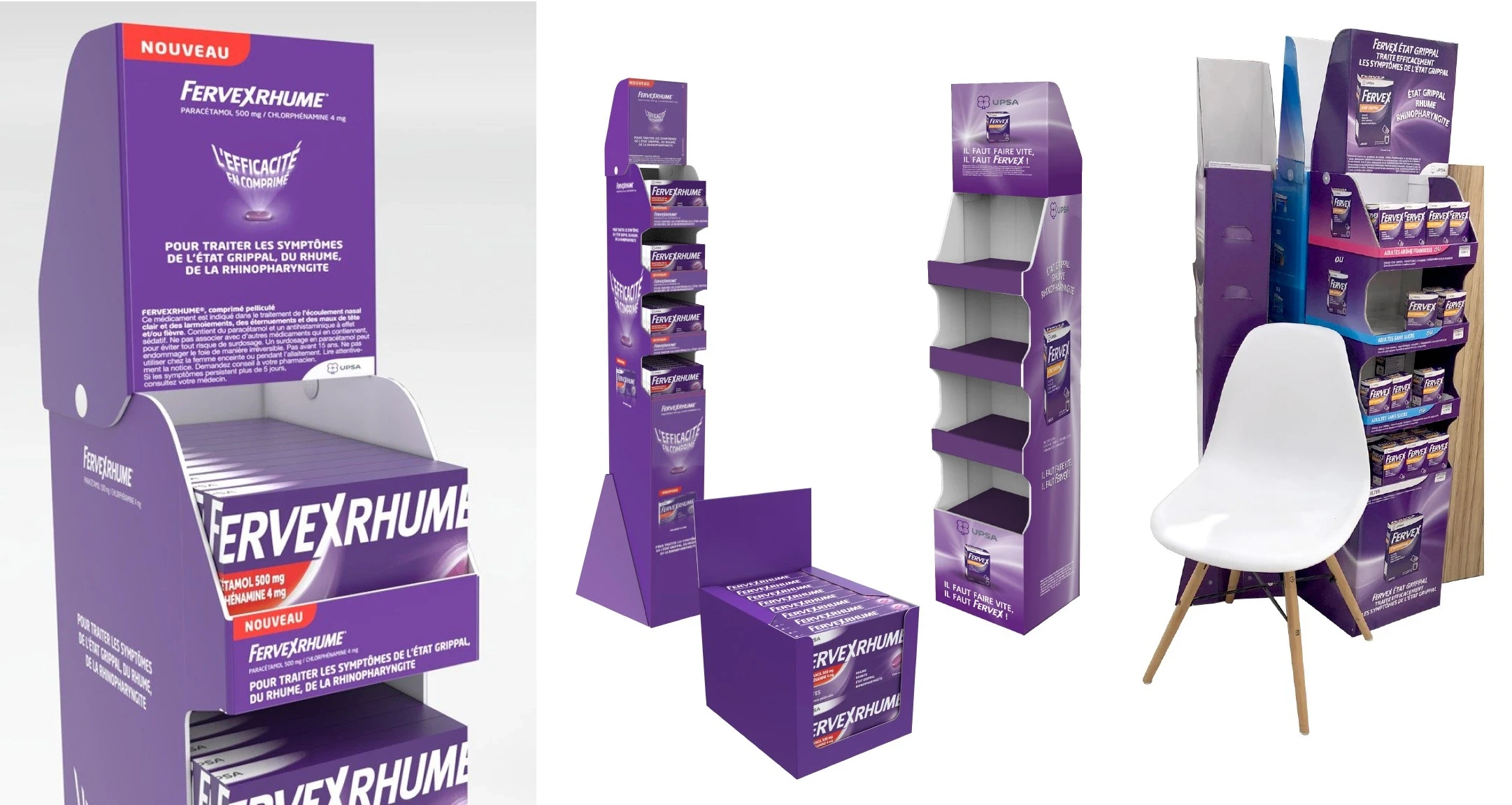
Example 1: seasonal OTC activation
UPSA implements seasonal OTC activations (winter, pain, fatigue) in drugstores, combining:
end-caps,
temporary displays,
clear seasonal signage.
The objective is to align the offer with an immediate patient need, identified by the season.
Value for the brand
Strengthen visibility during periods of high demand
Accelerate rotation of OTC products
Facilitate pharmacy recommendation thanks to contextual highlighting
Trade marketing here allows transforming a season into a business opportunity, without depending solely on counter advice.
Example 2: launching a new pharmaceutical product
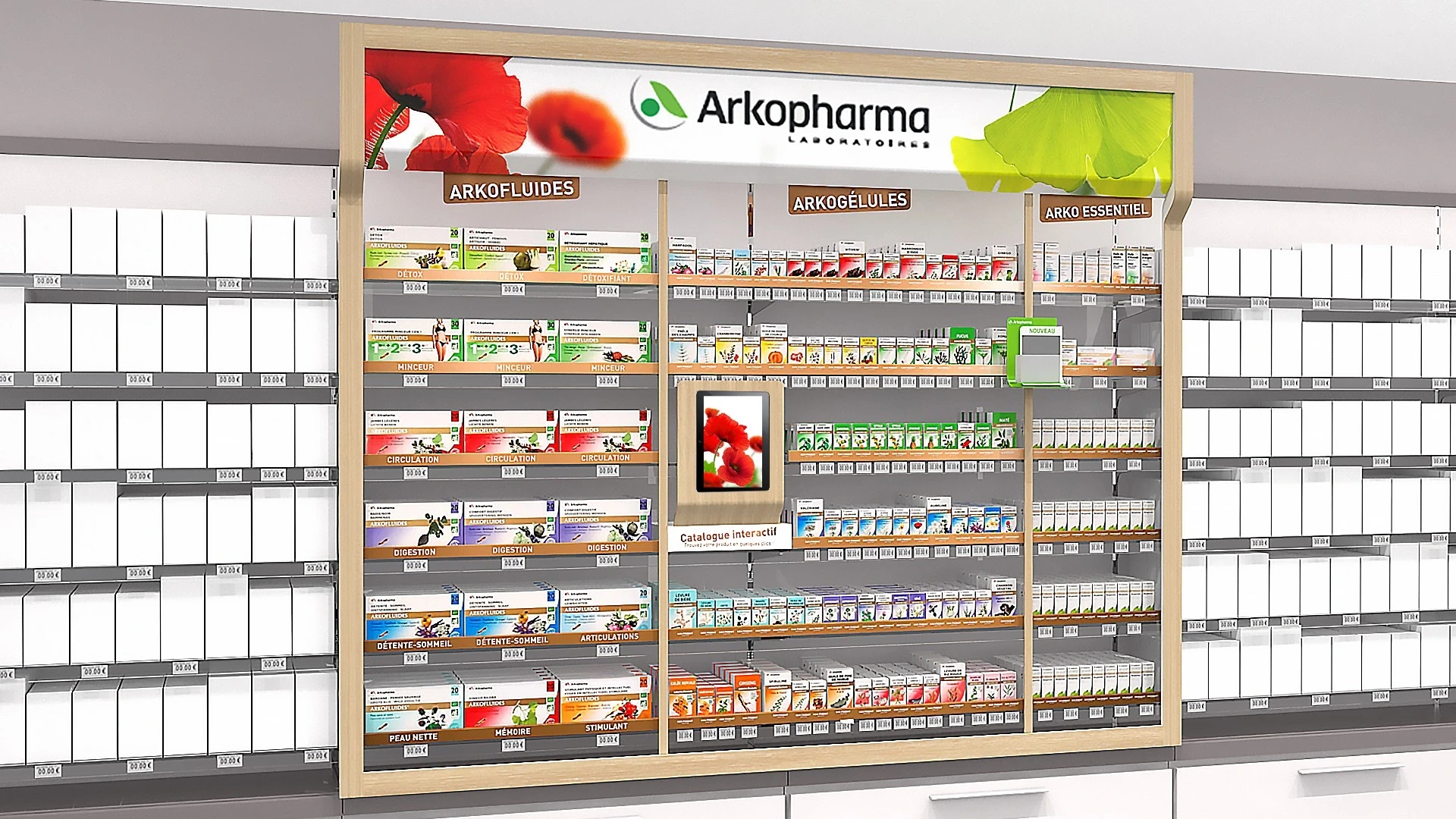
During a product launch, Arkopharma deploys a comprehensive trade marketing plan:
POS displays dedicated to the launch,
premium placement on shelves,
educational materials aimed at the pharmacy team.
The product thus benefits from immediate exposure, despite the high density of products in drugstores.
Source: Cameleon Group
Value for the brand
Secure product listing
Reduce the risk of invisibility on shelves
Accelerate product adoption by pharmacy teams
Trade marketing acts here as an accelerator of sell-out, essential in the first weeks of the product's life.
Example 3: window and shelf display in pharmacies
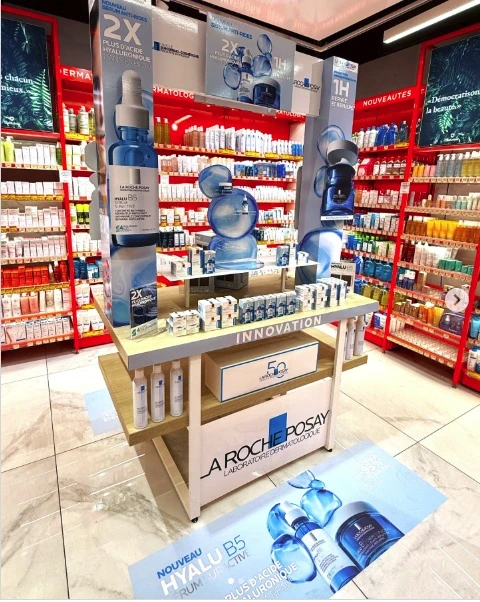
La Roche-Posay uses the window and shelf as full-fledged activation media:
thematic windows (sensitive skin, sun care),
staged shelves,
strong graphic consistency between window and shelf.
This display creates a continuous visual journey, from the outside to the inside of the pharmacy.
Source: Pharmacie RER La défense
Value for the brand
Maximize visual impact right from entering the pharmacy
Strengthen awareness of the range
Encourage impulse buying in drugstores
Here, trade marketing transforms the window and shelf into a media channel of its own, at the service of the brand.
Evaluating the success of your pharma trade marketing strategy
It is complex to evaluate with precision the impact of trade marketing on your results. However, you can track the progress of various performance indicators (KPIs), such as:
Turnover by channels;
Market share by category (OTC, cosmetics etc.);
Participation rate of points of sale in specific operations;
Stockout rate, or availability;
Incremental value: additional sales volume linked to an operation;
Commercial coverage rate: percentage of points of sale visited;
Number of training sessions provided to pharmacies and drugstores;
Distributor loyalty rate: monitoring of regular restocking;
Shelf space gained.
It is difficult to list them all, and each laboratory or brand must find the measurement indicators that correspond to its business objectives. Above all, it is necessary to ensure that the actions deployed drive the brand's goals, and this requires retail execution.
Retail execution
A good indicator of the success of your trade marketing strategy is shelf compliance with what you planned in your planogram. With Sidely CRM, you can optimize your shelf audits so as to evaluate your listing, visibility, and merchandising.
We recommend establishing a visibility score, which is a rating based on the presence of POS materials, product visibility, and their strategic placement on shelves. This scoring allows you to harmonize your marketing and commercial practices across your entire distribution network.
Finally, as we have seen, setting up a trade marketing strategy can lead you to recruit or train expert profiles in this field. We will therefore conclude this article with a brief overview of what makes a good trade marketer profile.
Profile of the trade marketer in the healthcare sector
⚠️ Trade marketing can be a strategy or a mission, but in some cases, it is also a job in its own right.
The pharma trade marketer (TM) must design plans to maximize the distribution, visibility, but also the recommendation of their products by pharmacists. This generally involves setting up training actions and sales incentive mechanisms.
The TM may also be required to work on pricing, negotiate with distributors and points of sale, and discuss assortment and promotional plans. In some laboratories, they are also associated with category management strategy or execution.
In connection with marketing, the trade marketer participates in the deployment of activation campaigns. They also collaborate with account managers and sales representatives, in order to promote the implementation of best practices for sales performance on different channels.
Generally in charge of a portfolio of brands, their missions include analyzing existing strategies, observing in-store merchandising, and reporting sell-out, in order to consolidate the S&OP (sales and operations planning).
On the education side, they are often required to have a master's degree, and successful experience in a similar or adjacent role, such as key account manager (KAM) or category manager. Their teamwork skills and interpersonal ease are highly valued. The English language is not a barrier for this marketing expert.
Margot has been working in Tech and SaaS for 8 years, with a multi-product experience that has given her a unique understanding of business challenges. On a daily basis, she analyzes, relentlessly tests, and relies on facts to shed light on market trends and help sales teams move forward.
See also

Artificial intelligence and field professions: what our 2026 studies reveal
Adoption, barriers, use cases: discover what our three studies reveal about the role of AI among sector managers, sales representatives, and foodservice sales reps.

CHR and RHF Sales Representatives: portrait of a relationship-driven profession in the era of data
Equipment, productivity, AI: discover the major trends for the HORECA and food service sales profession in 2026 through our field study.

Pharmaceutical Sales Representative in France: Portrait of a Field Job Under Pressure
Compensation, aspirations, AI usage: discover the major trends in the pharmaceutical sales representative profession in 2026 through our field study.

Area Sales Managers in France: who are they and how is the profession evolving in 2026?
Compensation, aspirations, AI usage: discover the major trends in the field sales representative profession in 2026 through our field study.
The area manager professions in 2026
Discover the trends, the challenges, and the key figures.