
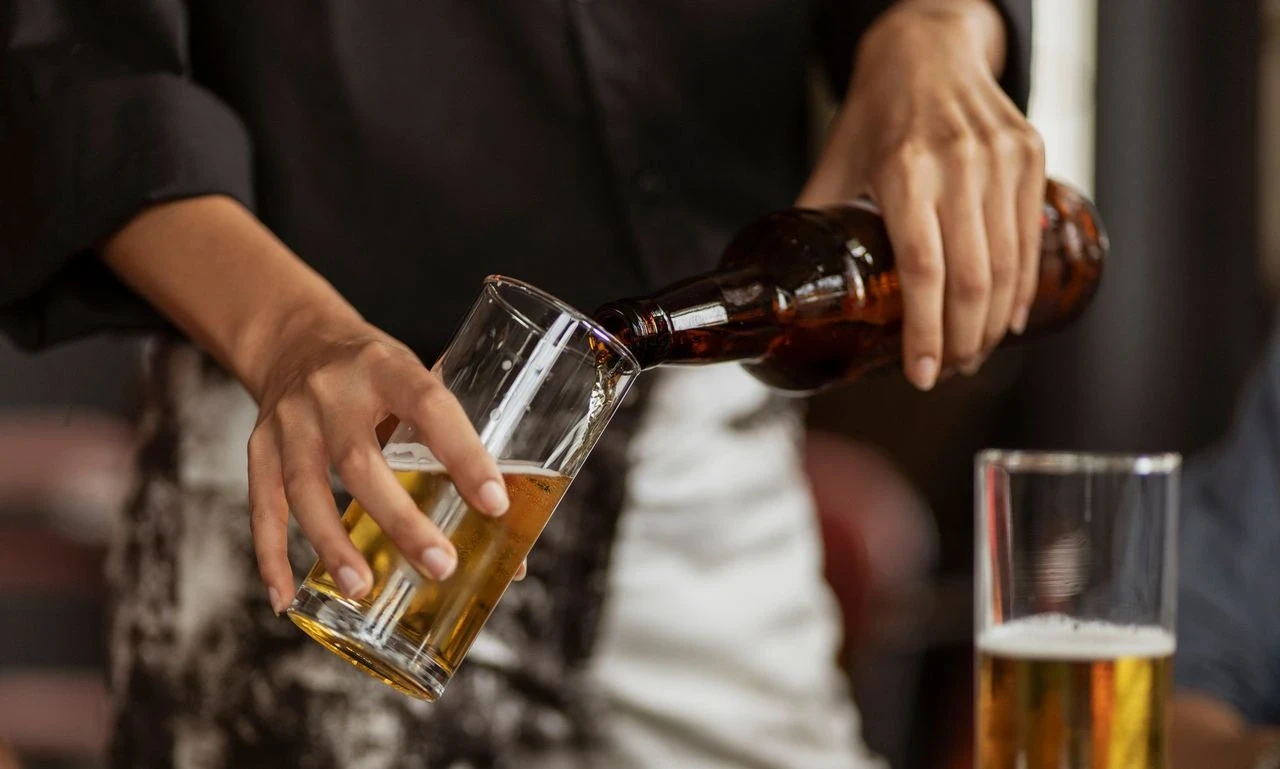
The non-alcoholic beverage market is moving out of the niche
The non-alcoholic beverage market is booming. Consumption habits, segmentation, channels... and most importantly, how to turn this growth into performance at the point of sale.

In short
7 min read
The non-alcoholic beverage market is no longer a niche but a structural transformation, with 30% growth since 2022 in France.
Consumption is driven by new profiles: 'flexidrinkers' (alternating with alcohol), 'sober curious', and health/performance consumers.
The category is multidimensional: it includes 'zero' (dealcoholized) drinks, functional (fortified) drinks, as well as premium mocktails and soft drinks.
Commercial performance plays out locally: the heterogeneity of catchment areas requires precise segmentation of points of sale and fine-tuning of in-store layouts.
Commercial success now relies on pitching by 'use' rather than simple volume, positioning these products as additional growth opportunities for the aisle.
For a long time, the non-alcoholic drink was the drink offered by default. The one brought out for pregnant women or designated drivers. In other words, a substitute, not a choice. A constraint, not a preference.
Those days are over.
In France, 28% of French people now consume no-low drinks (alcohol-free or low-alcohol), and nearly half of 18-25 year olds are already regular consumers of these products (Statista 2024). The movement is not temporary. It is structural, driven by a profound change in behavior: in 2021, only 39% of French people declared drinking alcohol every week, compared to 63% in 2000 (Santé publique France Barometer 2021).
For brands distributed in supermarkets, on-trade (CHR), or out-of-home catering (RHF), this shift is not a trend to be observed from afar. It is a market to be built, defended, and managed, store by store.
But before talking about strategy, we must first understand what we are talking about.
What does the non-alcoholic market actually cover today? What explains such growth in just a few years?
This article reviews the fundamentals of the non-alcoholic beverage market, the consumers, and the dynamics that have shaped it, before analyzing what this concretely changes for field teams.
The Non-Alcoholic Beverage Market
The term "alcohol-free" covers very different realities, which should be distinguished to avoid any confusion on the shelves as well as in negotiations.
Zero-alcohol drinks (0.0%) mainly refer to alcohol-free beers, wines, and spirits derived from initially alcoholic products. Alongside this category, we find drinks that are alcohol-free by nature, such as mocktails, premium soft drinks, kombuchas, or functional drinks, which also contribute to the market dynamics.
Low-alcohol drinks (between 0.5% and 3%) constitute an intermediate category that is still underdeveloped in France, but more present in Northern Europe, with, for example, light beers like Carlsberg Nordic at around 2.6%. Their rise is expected, but the French market is not yet ripe for it.
As mentioned above, functional drinks, enriched with proteins, vitamins, probiotics, CBD, or adaptogens, respond to a health and performance logic rather than simply acting as a substitute for alcohol. They represent 7% of the non-alcoholic market share (Xerfi) and are experiencing strong growth, driven by active urban consumers.
This distinction is not minor. A buyer looking for a beer during happy hour, a consumer wanting to boost their sports recovery, and a customer ordering an elaborate mocktail at a restaurant are not on the same purchasing journey, do not visit the same aisles, and do not respond to the same arguments. Treating "alcohol-free" as a homogeneous category means missing out on half of the opportunities.
In France, the no-low beverage market is estimated at 290 million euros, with 30% growth since 2022 (Accio). On a global scale, the most optimistic projections estimate that the global market could reach 40 billion dollars by 2033 (IWSR).
Who Consumes Non-Alcoholic Drinks in France?
The market relies on very diverse profiles, and this is precisely what explains both its potential and its complexity at the point of sale.
Structural non-consumers of alcohol: due to religious conviction, medical reasons, pregnancy, or lifestyle choices, they have always existed. But this segment has never been enough to create a mass market, and it does not explain the current growth.
Flexidrinkers constitute the real engine. These are consumers who regularly drink alcohol but consciously alternate with non-alcoholic drinks depending on the occasion: to keep a clear head during the week, perform during training, or simply for variety. The phenomenon of "zebra striping", alternating alcoholic and non-alcoholic drinks during the same evening, is gaining ground (IWSR, 2024).
The sober curious are mainly 18-35 year olds who actively explore sobriety out of curiosity, concern for performance or health, or adherence to a wellness culture, without necessarily defining themselves as abstinent. We can see that among consumers of non-alcoholic drinks, this consumption is more widespread among women (31%) than among men (24%) (SOWINE/Dynata, 2024). Dry January also illustrates this trend: in 2025, 41% of participants were under 35 years old (CSA Institute for Maison Chavin, 2025).
Finally, health and performance consumers (athletes, active urban professionals attentive to their nutrition) are not looking for a substitute for alcohol but a positive choice consistent with their lifestyle. It is this profile that is notably driving the growth of functional drinks.
Driving Forces Behind Non-Alcoholic Beverage Purchases
Three main motivations structure the consumption of alcohol-free or low-alcohol products. Reducing alcohol consumption comes first, cited by 52% of consumers (Nutrimarketing, 2024). Next comes health at 41%, calorie reduction, sleep, athletic performance (SOWINE/Dynata, 2024). And finally, tied, taste and discovery: 59% of consumers place fruity, spicy, or bitter notes at the top of their expectations (Backline/Salon Degré Zéro, 2024). Consumers are no longer just looking for a substitute, they are looking for an independent taste experience.
Points of Resistance
Taste remains the main barrier: if a product does not satisfy the first tasting, repeat purchase will not happen. Price is the second obstacle, as premium non-alcoholic drinks are often priced similarly to their alcoholic equivalents. And above all, shelf visibility remains largely insufficient: according to the Seeds/Moderato barometer (2025), 66% of non-alcoholic wine consumers believe that the category's visibility is low or non-existent at the point of sale, a structural problem that falls directly on the work of field teams.
The Shift in the Non-Alcoholic Beverage Market
For a long time, taste was the main obstacle to developing this market. This barrier has been broken. Dealcoholization processes have progressed to the point of faithfully reproducing the taste profiles of the originals. Result: for non-alcoholic beers, sales increased by +11.8% in volume in France (Circana, 2025), while the beer market as a whole is down by over 1% in volume.
New Consumption Occasions
The non-alcoholic drink is no longer answering a need for compensation. It has found a place in new rituals: lunch breaks at work, happy hours with colleagues, sports recovery, or evenings with friends where guests want to stay sharp. These new consumption contexts have shifted perception: it is no longer about replacing alcohol, but about satisfying a specific desire. In France, 42% of non-alcoholic beverage consumers report drinking more than before (Backline/Salon Degré Zéro, November 2024).
A Deeply Rebranded Image
Alcohol-free has changed registers. It is no longer associated with deprivation or being an outcast but with performance, clarity, and well-being.
Major brands have followed and validated this rebranding. Heineken with its Heineken 0.0, Grimbergen with its alcohol-free offer, Corona with its "Corona Cero" version: when category leaders invest heavily in the segment, they send a strong signal to all distributors and buyers and help normalize the category. And this dynamic is accelerating.
Indeed, Heineken is no longer limited to an entry-level offer and is now looking to premiumize non-alcoholic drinks, notably with references like Gallia IPA 0%. This marks a change in posture: alcohol-free is no longer an opportunistic extension, but a true axis of growth, with ranges expanding and building in value. In other words, alcohol-free is establishing itself permanently as a full-fledged segment of the beverage market.
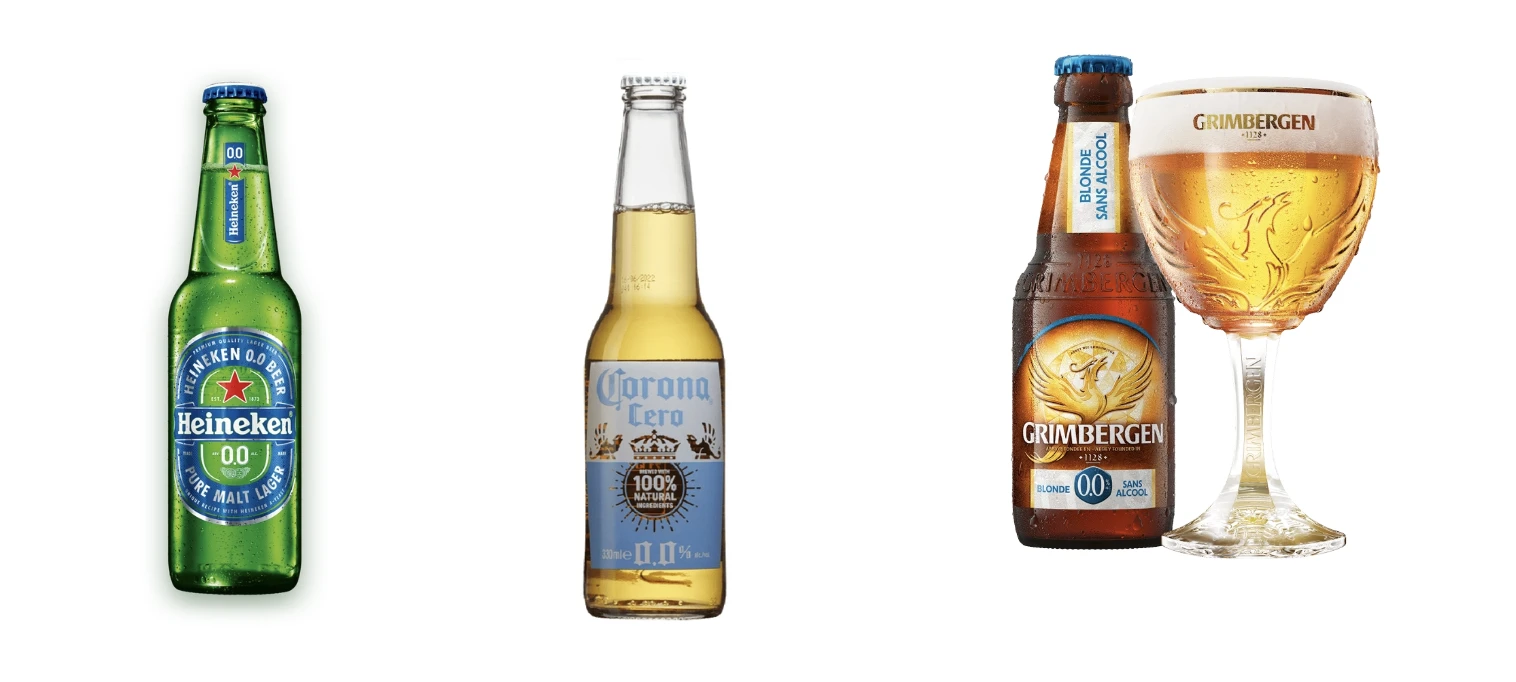
Source: Heineken.com, Sansalcoolshop.fr, Grimbergen.com
How the Market is Segmented
Today, non-alcoholic beverages cover very different realities, with highly unequal levels of maturity and growth. They must be distinguished to avoid generalities on shelves as well as in negotiations.
Non-Alcoholic Beer: The Driving Segment
This is the most structured and most promising segment in terms of non-alcoholic drinks. Indeed, in France, sales of non-alcoholic beers reached nearly 238 million euros in 2024, with growth of +5.4% in value and +3.9% in volume according to Into the Minds. Non-alcoholic beer now represents 4% of the total beer market in France and Belgium (INAO/IWSR), compared to 13% in Spain and 7% in Germany (Xerfi). The catch-up potential is considerable.
Mocktails and Premium Softs: Upgrading the Happy Hour
Non-alcoholic cocktails, called mocktails, and premium soft drinks embody the premiumization of the market. Their growth is based on the rise of the alcohol-free happy hour: entire ranges are now positioned for festive consumption occasions, with packaging and prices that rival spirits. This category benefits directly from the rise of the alcohol-free happy hour, a rapidly growing consumption occasion, especially in bars and restaurants (CHR).
Seedlip

Source: Seedlipdrinks.com

Source: Les Échos
Their common ground: using Horeca (CHR) as a lever for value enhancement to establish a premium image before expanding more widely.
A Highly Different Market Depending on the Channels
The same non-alcoholic item does not have the same potential depending on whether it is in a hypermarket, a bar, or a corporate cafeteria. Each channel has its own rules of the game.
In Supermarkets: The Challenge of Shelf Space
In large retailers, alcohol-free was long stuck between two categories: too premium for the soda aisle, not legitimate enough for the beer aisle. The question of positioning is central. A product can be officially listed but poorly placed, under-exposed, or relegated to a cold zone of the aisle, leaving it with no chance of being bought.
The French non-alcoholic beverage market was worth over 7 billion euros in supermarkets in 2024 according to Xerfi. In this high-volume context, gaining or losing a few facings can represent considerable differences in rotation.
Concretely, some banners have already evolved their shelf arrangements to support the growth of alcohol-free. For example, we increasingly observe:
groupings of non-alcoholic beer offerings directly next to classic beers, to capture an impulse choice at the moment of purchase
prominent displays at gondola ends during peak periods like Dry January, allowing sales to scale quickly
or dedicated shelves for "alcohol-free" or "no/low," particularly in urban stores, to make the offer easy to read.
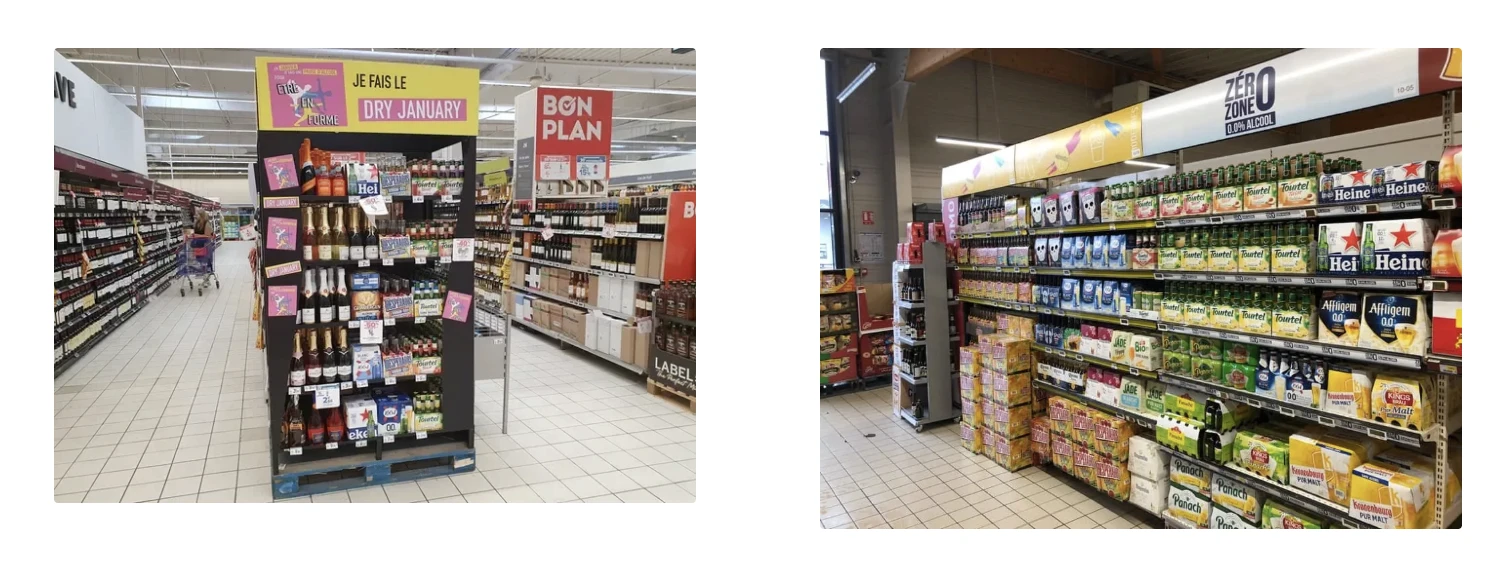
Source: Rayon Boissons, Facebook
We are also seeing new distribution formats emerge, still marginal but indicative of how the market is structuring:
In Lille, for example, specialized wine merchants like Sanzalc offer a selection entirely dedicated to non-alcoholic drinks, with a wide range from beers to spirits and mixology products.
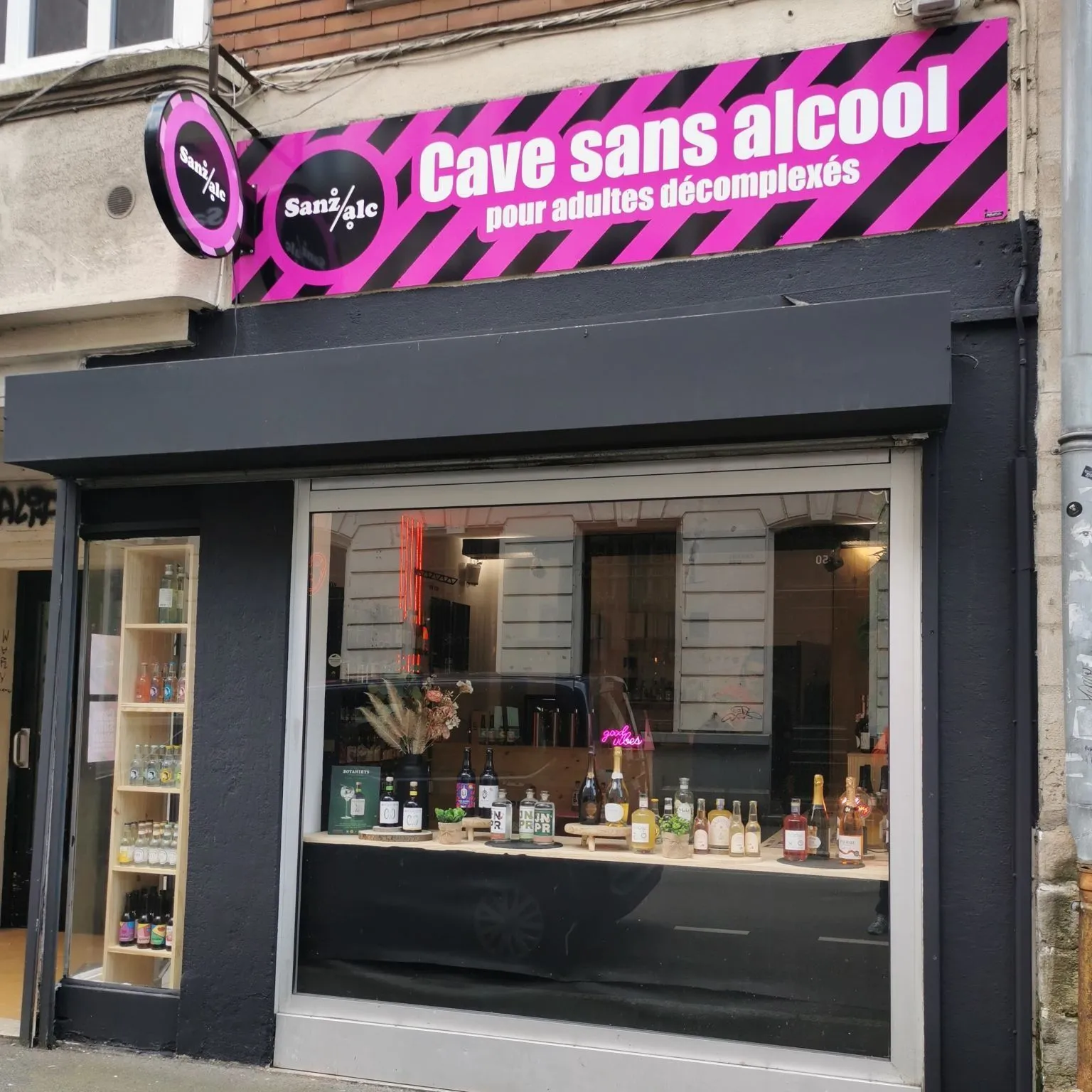
Source: Radio France
This type of point of sale does not respond to a substitution logic, but to a category logic in its own right, with its own codes, advice, and usages. Alcohol-free is no longer limited to existing shelves; it is beginning to create its own distribution channels.
In CHR (Horeca): A Credible Alternative to Alcoholic Drinks
In cafés, hotels, and restaurants, the dynamic is different. The consumer is in a social setting, wanting a glass in hand to share in the convivial moment. Non-alcoholic beer and premium mocktails satisfy this need perfectly. In 2024, while non-alcoholic beer sales held steady in supermarkets (+0.5%), the most distinct growth was in the on-trade (CHR): 74% of distributors noted an increase in sales in this segment (Brasseurs de France/FNB, 2024).
This trend is also visible in events. During the FIFA World Cup 2022, the partnership with Heineken led to an unprecedented situation: only non-alcoholic beers were permitted in stadiums. We are also seeing the emergence of venues entirely dedicated to non-alcoholic drinks. In Lille, for example, the bar "Le Consulat" offers a menu consisting exclusively of mocktails and non-alcoholic drinks, with a refined approach to mixology and customer experience.
The key in restaurants and bars would therefore be to: train service staff and assist them in designing mocktails, list visible alternatives on menus, and ensure that the non-alcoholic drink is not perceived as a default option but as a genuine, high-quality choice.
RHF: Practical and Functional Drinks
Out-of-Home Catering (corporate cafeterias, hospitals, service stations) values practicality and functionality above all. Single-serving formats, enriched drinks, and clearly stated health-benefit references fit perfectly there. It is also a channel where purchasing decisions are often centralized through national tenders and listings, which requires a specific commercial approach, distinct from supermarkets.
Why This Market is Played Nationally and Locally
One of the strongest characteristics of the non-alcoholic market is its geographic and sociological heterogeneity with, for example, the socio-demographic composition of the trade area, the presence of a sporty or young urban population, and local consumption habits.
We can also see that major cities like Paris, Lyon, Bordeaux, and Nantes show dynamics far exceeding the national average. Conversely, some rural markets remain deeply attached to traditional alcoholic beverages.
For this reason, steering from headquarters or through central buying offices is not enough. Performance is built store by store, by identifying high-potential points of sale, testing differentiated assortments, and adjusting placement based on feedback from the field. Understanding how store tiers work is a prerequisite to prioritizing effort correctly.
What This Changes for the Field
In a category that is still structuring itself, where performance gaps between stores are significant, sales teams cannot apply a uniform logic.
Field teams must adapt their approach, refine their prioritization, and direct their actions as closely as possible to store reality.
Prioritizing the Right Stores
First of all, not all stores deserve the same effort. The challenge for sales teams is to score and segment their store portfolios according to the true potential of the non-alcoholic category: store size, customer profile, historical rotation, and competitor presence. It is this segmentation that will allow visits and actions to focus where they create the most value.
Adapting Shelf Placement to Store Profiles
The national planogram gives direction, but the sales representative negotiates the best possible local placement. In the non-alcoholic segment, this negotiating around the planogram is highly strategic: the category is still young, shelves are being structured, and department managers are often open to testing new layouts if they see a clear argument in terms of rotation and added value.
Tracking Visibility and Rotation in Real Time
An agreement obtained at headquarters does not automatically translate into effective presence on the shelves. Out-of-stocks, poor placements, products moved to cold zones: these represent real lost revenue, difficult to detect without rigorous field tracking.
Contractual visibility (what was negotiated) and real visibility (what the consumer sees in the store) can differ significantly. Only regular and systematic field tracking allows for detecting these gaps and taking action before they permanently affect performance.
What This Changes in Negotiations
In a market that is still fluid, decisions are increasingly based on what actually works in stores. This forces sales teams to rely on concrete results, adapt their narrative to real uses, and secure their proposals with field tests.
Field Data as a Steering Tool
Field data lets us change the level of analysis: identifying precisely the stores where non-alcoholic drinks find their audience, adjusting assortments, and placing items store by store. Tracking the right KPIs in retail is essential to transform field observations into concrete decisions. In this market, field data is no longer a simple monitoring tool, but a true strategic steering lever.
Arguing by Usage, Not Just by Volume
Non-alcoholic is still an emerging market in France. Central buyers do not always have solid market data to decide in favor of a range extension or better shelf space. It is up to the brand to build the argument.
The best approach: reason by consumption occasion. A non-alcoholic beer is not in direct competition with a classic beer; it meets a complementary usage, captures a different consumer, and can increase the average basket value of the aisle. It is this additive growth argument that sales teams must master, especially regarding listing and purchasing practices in retail.
Test Before Generalizing
Finally, in such a heterogeneous market, generalizing too quickly is risky. The best practice is to propose tests on a small selection of stores, ideally with high potential, before requesting a national rollout. These tests allow for building concrete rotation data, validating the optimal shelf placement, and providing buyers with proof of performance that strengthens negotiations. To structure this approach, understanding how to list products in large retail chains provides a concrete framework.
Gondola ends and promotional displays are also powerful tools to accelerate the discovery of a new non-alcoholic item. Properly used, they can generate a mass effect and quickly demonstrate the category's dynamic.
The non-alcoholic beverage market is no longer a niche. It is a genuine category, driven by deep trends, serious product innovations, and a lasting cultural evolution. Supported by sustained growth and strong long-term potential, the non-alcoholic market offers a decisive advantage to players who stake their claim today.
But beware: this market is not steered from headquarters. It is built on the shelves, in local negotiations, in field tracking, and through ongoing adjustments. The brands that succeed will be those that know how to score their stores, adapt their placement, equip their teams, and transform field data into commercial arguments.
Alcohol-free is an opportunity. Winning it is a job done in the field.
Taina left her position as Area Manager at AB InBev for marketing and communications, a true career choice. Having experienced the reality of the sales force from the inside, she writes about the profession without ever distorting it. She doesn't just talk about the field; she comes from it. Outside the office, she tracks down the best tables in town: finding the right spot is a serious business.
See also

Artificial intelligence and field professions: what our 2026 studies reveal
Adoption, barriers, use cases: discover what our three studies reveal about the role of AI among sector managers, sales representatives, and foodservice sales reps.

CHR and RHF Sales Representatives: portrait of a relationship-driven profession in the era of data
Equipment, productivity, AI: discover the major trends for the HORECA and food service sales profession in 2026 through our field study.

Pharmaceutical Sales Representative in France: Portrait of a Field Job Under Pressure
Compensation, aspirations, AI usage: discover the major trends in the pharmaceutical sales representative profession in 2026 through our field study.

Area Sales Managers in France: who are they and how is the profession evolving in 2026?
Compensation, aspirations, AI usage: discover the major trends in the field sales representative profession in 2026 through our field study.
The area manager professions in 2026
Discover the trends, the challenges, and the key figures.