

These invisible tasks that eat away at your field performance
A sales representative loses up to 6 hours/week on planning and reporting. Route planning, preparation, meeting reports: 5 concrete levers to win back field time.

In short
4 min read
Repetitive organizational tasks (scheduling, reporting) consume precious time to the detriment of direct contact with clients.
Manual management and the lack of connection between field tools create major operational inefficiencies.
Time spent behind a screen represents a real cost, with an estimated loss of one day of visits per week for 6 hours of administration.
This cumulative loss of time translates into a tangible drop in turnover for businesses over the year.
It is possible to regain control by centralizing data, automating scheduling, and standardizing reporting via an adapted CRM.
Like every Friday, you are finalizing the organization of your upcoming week. Whether in a CRM or an in-house solution, you juggle priorities, areas to cover, point-of-sale history... This ritual is well-established, almost automatic. And in a way, it is reassuring: planning is preparing, therefore being more efficient. Right?
That is what most sales representatives think. And it makes sense. But one question still arises: what if this time spent organizing is gradually eating away at the time you could be spending in the field?
Without us really realizing it, these organizational tasks take up more and more space. They are useful, of course. But they end up making you lose precious hours, sometimes at the expense of customer contact, point-of-sale discussions... in short, what really makes a difference.
This article highlights a reality that you may experience on a daily basis: this time that evaporates between planning, organization, and reporting. You will discover how to identify these invisible tasks that eat away at your days and measure their true cost. You will also see how to trigger simple levers to regain control and refocus on the essential: your clients.
These invisible tasks that eat away at your days
Each week, a significant portion of your time vanishes into organizational tasks. They are neither complex nor extraordinary, but they keep coming back, often in a manual, repetitive way, and with little visible impact on field performance.
Here are some concrete examples that you will surely recognize:
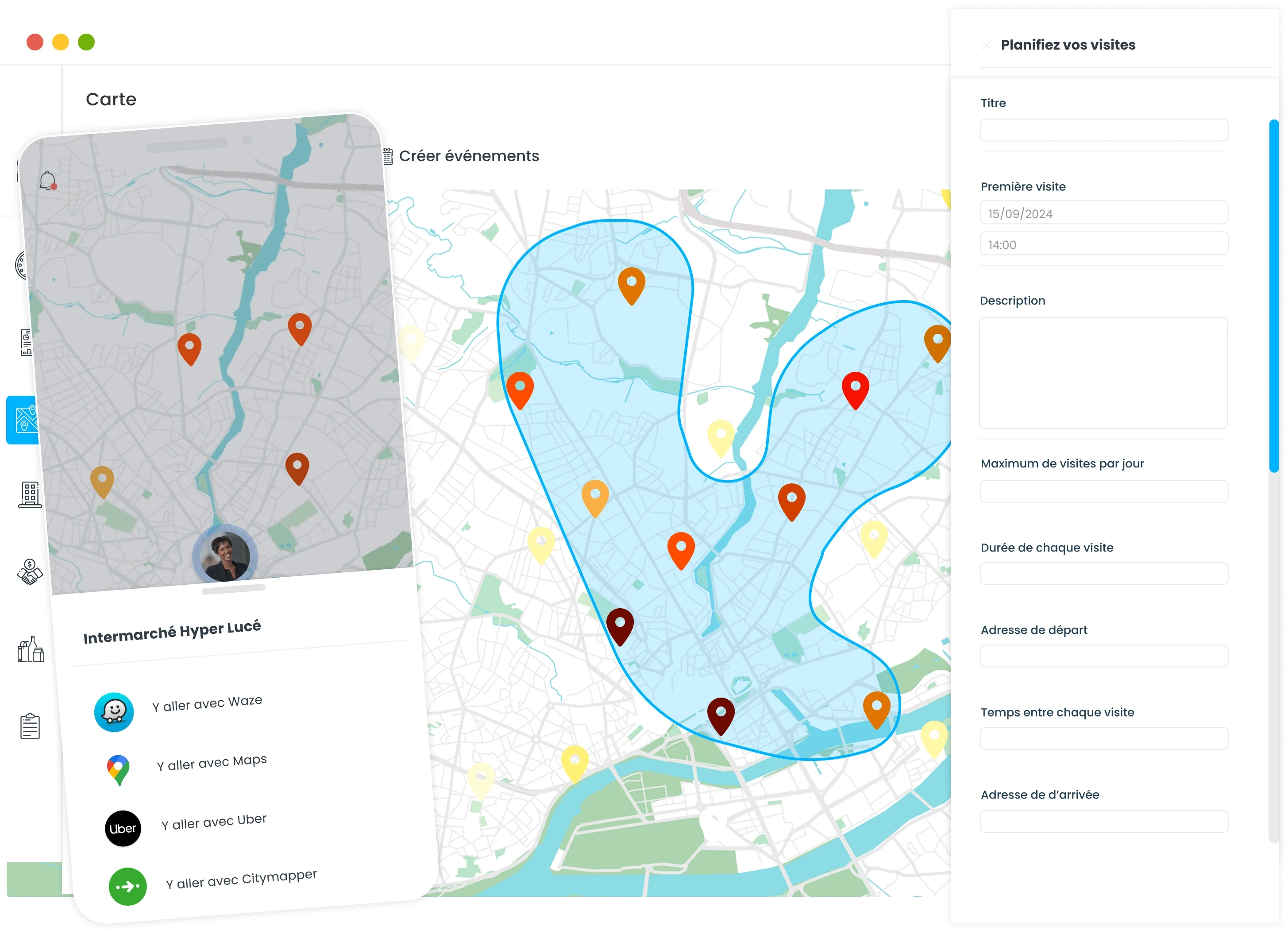
Route planning
You are well aware that each week, it is necessary to define the order of your visits by taking into account field priorities, contact availability, sales emergencies, and geographical constraints. This task, although recurring, offers little strategic value because it often relies on patterns reproduced out of habit.
Route organization
The goal is to optimize travel by limiting useless back-and-forth and choosing the most relevant time slots according to point-of-sale activity or team availability. Even when you know your sector and clients well, and this organization becomes almost automatic, it remains mentally exhausting.
Visit preparation
Before each meeting, it is essential to get back up to speed: review the visit goals, consult the latest actions taken, and identify the specific challenges of each point of sale.
But very often, a clear and synthetic view is missing. Instead of directly having the previous report attached to the day's visit, you have to go looking for it, which wastes time and harms operational efficiency.
Sales reporting
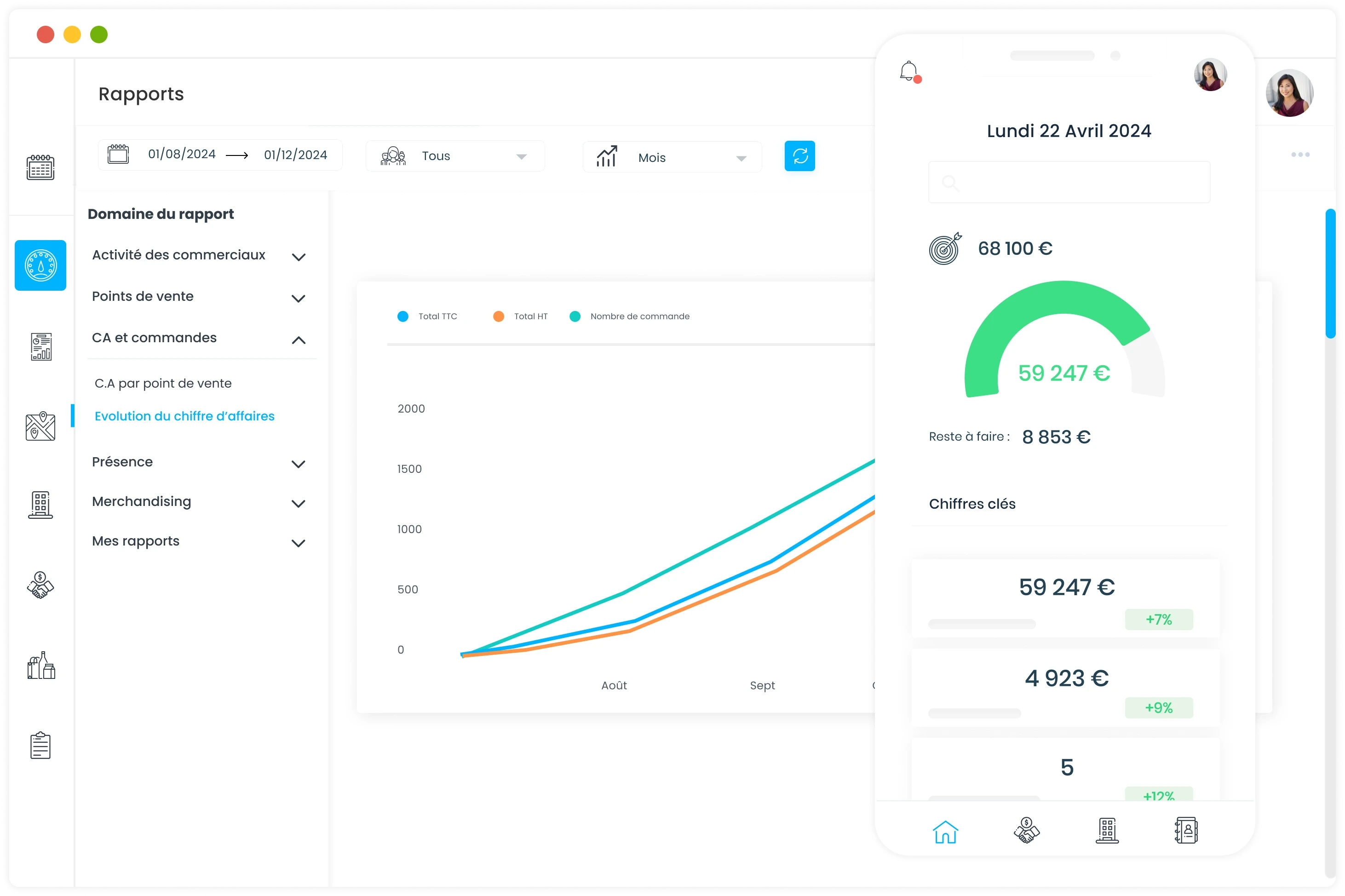
After the visits, you must compile all the information gathered: reread your notes, enter them into your CRM (when it is available), escalate key data, and plan action items. This work, often done in the evening or between two meetings, encroaches on the time spent in the field.
The hidden cost of time spent behind a screen
This time spent planning and reporting is not "free": it is paid for in sales efficiency. A sales representative who spends 6 hours a week on these tasks loses the equivalent of one day in the field, or 5 to 6 potential customer visits.
Just as many missed meetings to develop a relationship, spot an opportunity, solve a problem, or simply be present. A single visit can be enough to avoid an out-of-stock situation, secure an order, or negotiate a product placement.
Multiply this by the number of employees involved and the invisible cost quickly becomes a tangible loss of revenue. Over a year, this means tens of thousands of dollars slipping away from the company, due to a failure to optimize time where it matters most: in the field.
Why are you still losing time?
If this time is still so heavily absorbed by planning or reporting tasks, it is often because the tools available are not fully connected or adapted. Many teams rely on an assembly of solutions: one app for point-of-sale mapping, another for customer accounts, a system for field tracking... but without any direct link between them. Consequently: you have to juggle sources, manually reconcile data, and sometimes... start all over again.
In addition to this, there is a deeply anchored inertia: we keep operating "the way we've always done things," even if it is no longer suited to today's field. Sometimes too, there is a lack of trust in tools like CRMs or a certain reluctance toward technology, perceived as a constraint rather than a lever. But it is possible to reverse the trend. By rethinking organization, equipping yourselves smarter, and giving you back visibility.
How to regain control of your time?
The good news is that there are simple levers to gain efficiency, without disrupting your habits or making your days longer. A few concrete adjustments can make a real difference:
Centralize data: Gathering information related to visits, clients, objectives, and meeting reports in a single place avoids back-and-forth between multiple tools and limits wasted time.
Automate planning: Benefiting from route suggestions based on priorities, location, and visit frequency allows you to organize your week more efficiently.
Standardize reporting: With clear, simple, and quick-to-fill models, reporting becomes a management tool, not an administrative constraint.
Optimize travel: A map view of the points of sale helps group visits intelligently, reduce unnecessary travel, and focus on face-to-face customer time.
And that is precisely where a well-designed CRM can make the difference. Far from being a simple reporting tool, it becomes a true operational support. It thus allows you to refocus on what really matters: the field, the customer relationship, and sales performance.
Sales representatives have a lot to gain by taking back control of their time.
It is not by working more, but by working better, that performance improves.
This involves simple actions: planning routes more efficiently, optimizing travel and navigation, preparing visits at a glance, and simplifying sales reporting.
Every hour regained is one more opportunity to be in the field, where the impact is real
🔎 What if your next most profitable sales action was to automate what you still do by hand?
See also

Artificial intelligence and field professions: what our 2026 studies reveal
Adoption, barriers, use cases: discover what our three studies reveal about the role of AI among sector managers, sales representatives, and foodservice sales reps.

CHR and RHF Sales Representatives: portrait of a relationship-driven profession in the era of data
Equipment, productivity, AI: discover the major trends for the HORECA and food service sales profession in 2026 through our field study.

Pharmaceutical Sales Representative in France: Portrait of a Field Job Under Pressure
Compensation, aspirations, AI usage: discover the major trends in the pharmaceutical sales representative profession in 2026 through our field study.

Area Sales Managers in France: who are they and how is the profession evolving in 2026?
Compensation, aspirations, AI usage: discover the major trends in the field sales representative profession in 2026 through our field study.
The area manager professions in 2026
Discover the trends, the challenges, and the key figures.