
Fermented beverages: a trendy market struggling to build customer loyalty?
Some shelves sell 10 of them a day. Others don't even sell one in a week. What the numbers really say about these highly talked-about drinks.

In short
8 min read
The functional beverage market (kombucha, kefir, mate) suffers from a paradox: highly popular in wellness discourse, they struggle to gain a foothold in mass-market retail.
Their commercial success is hindered by an identity blur, an offering that has become too abundant, and a lack of dominant references to guide the consumer.
Strict regulations on health claims, which prevent brands from communicating benefits clearly, limit buyer understanding and loyalty.
The exploration phase is over: retailers are streamlining their shelves and delisting products that do not show sufficient sales turnover.
The survival of brands now depends less on the novelty effect and more on their ability to build real consumption rituals, supported by rigorous execution on the ground.
Type “kombucha” into Instagram and you'll see millions of posts, influencers swearing by their bottles, or even homemade recipes. Do the same exercise in a supermarket and this time you'll only see one or two timid facings squeezed between fruit juices and flavored waters (or even nothing depending on where you live) and never in the same place as the others.
This discrepancy between media buzz and shelf reality is no accident. It reveals an underlying problem in this market and the difficulty some product categories have in crossing the line from trend to consumption habit.
Kombucha, kefir, and mate share this paradoxical fate: omnipresent in wellness conversations, but still a long way from having convinced the general public, and therefore retailers. In France, these three beverages remain confined to specific channels, to precise consumer profiles, and their performance varies spectacularly from one point of sale to another.
Why? This is the question this article attempts to answer.
We will first define these three beverages, before mapping out the profile of those who consume them. Then we will see why this market is struggling to establish itself (vague identity, uneven performance, unreadable selection) and what the ongoing wave of delisting will change.
Kombucha, kefir, mate: what exactly are we talking about?
These three beverages are often mentioned together, grouped under the convenient label of "alternative functional beverages." But their origins, compositions, and uses are very different. Let's start by defining them clearly.
Kombucha
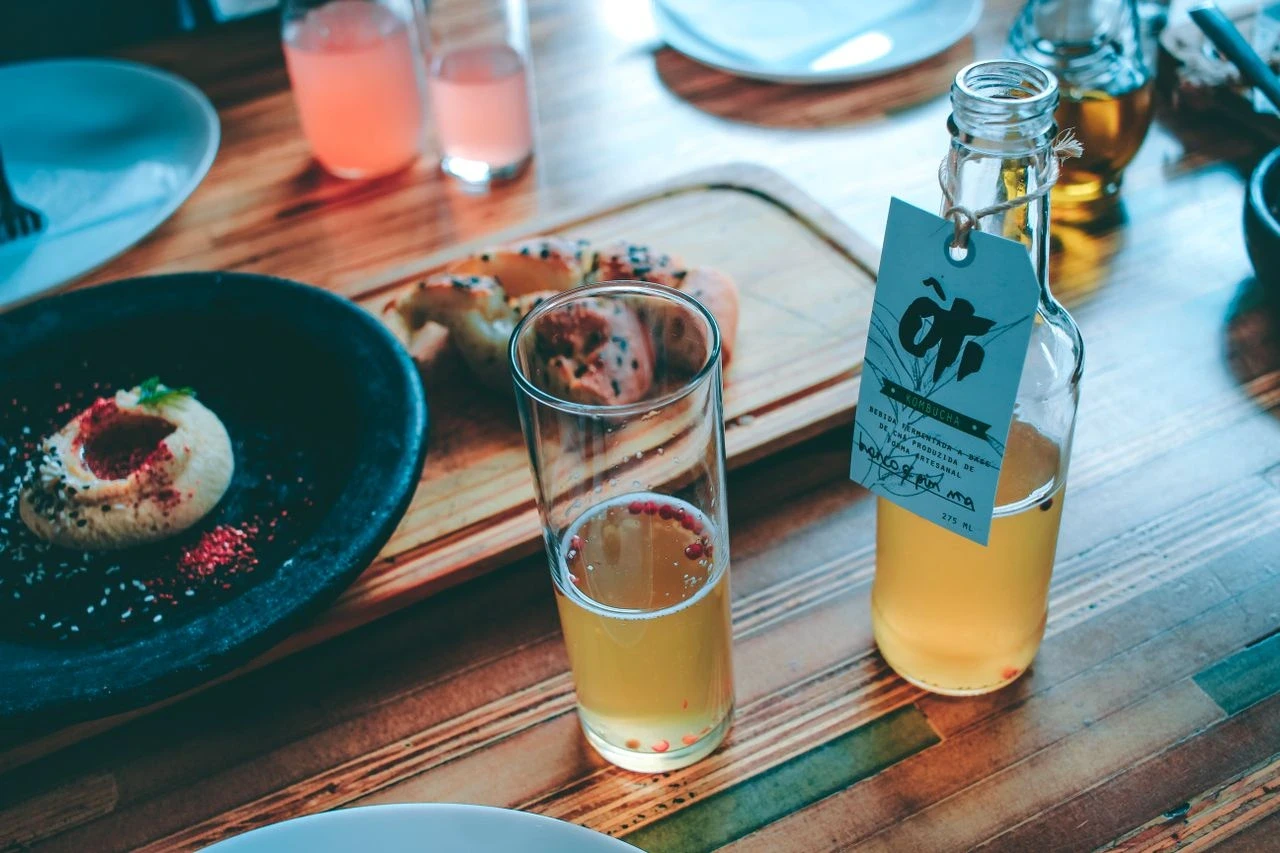
Kombucha is a beverage obtained by fermenting sweetened tea using a SCOBY (an acronym for Symbiotic Culture of Bacteria and Yeast). This process, which generally lasts between 7 and 30 days, produces a slightly sparkling, tangy, low-alcohol beverage (less than 0.5% in commercial versions) naturally rich in probiotics.
Originating in Manchuria over 2,000 years ago, kombucha experienced a dramatic resurgence of interest in the 2010s, driven by the California wellness wave. Brands like GT’s Kombucha in the United States or Remedy in Australia industrialized its production and brought it into supermarkets. In France, brands like Booch, Ciao Kombucha, or Jubiles have positioned themselves in this niche.
Taste-wise, kombucha can vary greatly: a plain version close to semi-dry cider, flavored versions with ginger, raspberry, yuzu... This is both its commercial strength and one of the sources of confusion for the consumer.

Source: Zucchini Food Market, Frichti, Jubiles
Kefir
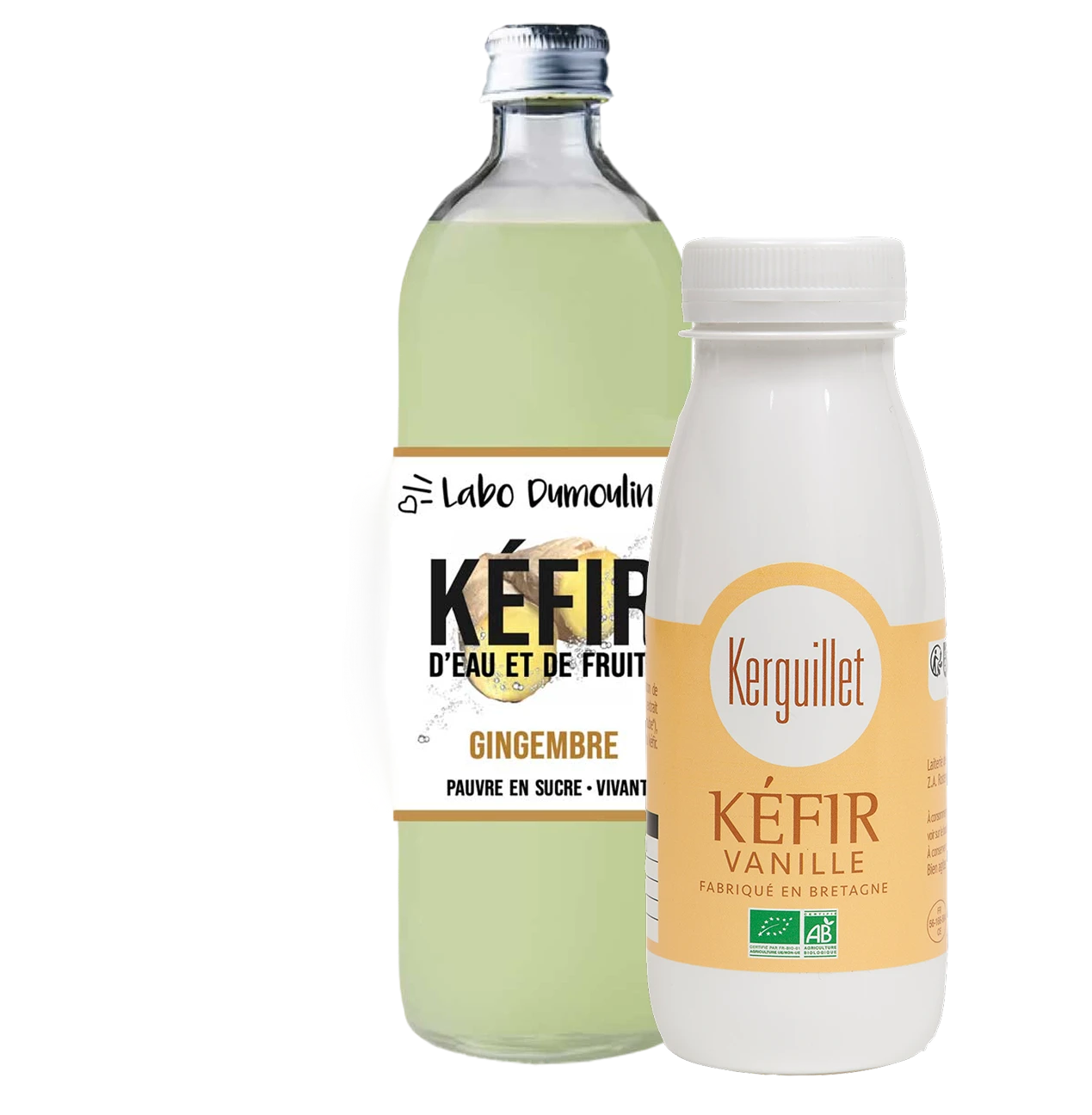
Kefir is a fermented beverage that comes in two distinct versions: milk kefir, obtained by fermenting cow, sheep, or goat milk with kefir grains; and fruit kefir (or water kefir), obtained by fermenting sweetened water with fruit.
Even older than kombucha, kefir originated in the Caucasus and has been consumed there for centuries. Its richness in probiotics—it contains between 10 and 34 different strains of bacteria and yeast, compared to 2 to 7 for a standard yogurt according to INRAE—makes it highly popular among consumers concerned about digestive health.
In France, kefir remains less visible than kombucha in supermarkets. It is mainly distributed through organic stores (Biocoop, La Vie Claire) or artisanal producers. Brands like Labo Dumoulin or the ranges of certain regional dairies are beginning to venture into it.
Source: Greenweez, Organic Alliance
Mate
Mate is an infusion prepared from the dried and crushed leaves of Ilex paraguariensis, a tree native to South America. The national beverage in Argentina, Uruguay, and Paraguay, it is traditionally drunk hot from a gourd using a bombilla (a metal filtering straw), a strong social ritual in these cultures.
Its composition is remarkable: it contains caffeine (between 65 and 130 mg per 200 ml, which is as much as a cup of coffee), theobromine (also present in chocolate, with mild stimulating effects), antioxidants, and B-group vitamins. It is this combination that gives it its reputation of "crash-free" energy, unlike coffee.
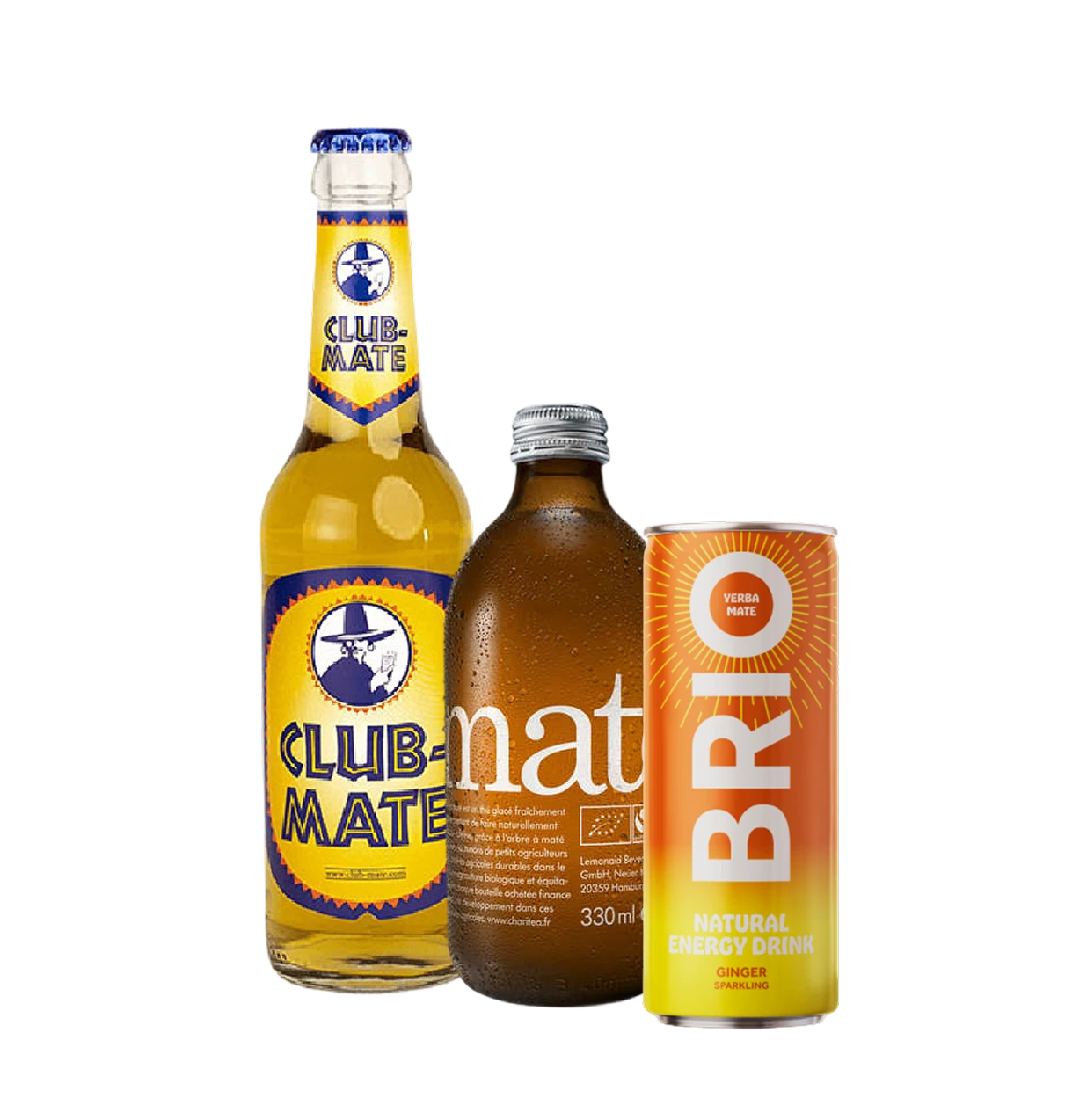
In Europe, mate was first popularized through Club-Maté, a carbonated German beverage that became cult in Berlin's tech circles. Since then, brands like Charitea or Brio Maté have tried to democratize it in France, and some have pivoted towards the natural energy drinks segment, leveraging mate's caffeine and theobromine as an alternative to the synthetic formulas of Red Bull and Monster. A strategic repositioning, but one that confuses the beverage's identity even more for the general public.
Source: Delidrinks, BienManger.com
What these three beverages have and do not have in common
What brings them together: all three are perceived as natural, functional, and alternative options to industrial sodas. All three are part of a wellness narrative. All three emerged in the same context of the rise of conscious eating.
What divides them deeply: their uses do not overlap. Kombucha is drunk cold, on its own or as an aperitif. Kefir is often consumed in the morning, as part of a daily digestive care routine. Mate fits into an energy ritual, as a replacement for coffee. Their buyers are not always the same, and neither are their moments of consumption.
→ Three products often grouped under the same label, but which do not meet the same needs or the same consumption moments. Treating them as a single homogeneous market is already the first analytical mistake.
Who consumes these beverages?
Contrary to what the media buzz might suggest, these beverages are not yet meant for everyone. Their buyers form a fairly homogeneous and somewhat restricted group.
A distinct sociodemographic profile
The typical consumer of kombucha, kefir, or mate in France is relatively well-defined. According to a study by Kantar Worldpanel (2023) on alternative functional beverages, the dominant profile is as follows: woman or man between 25 and 40 years old, living in an urban or dense suburban area, with a middle-to-high income level, sensitive to nutritional and environmental issues.
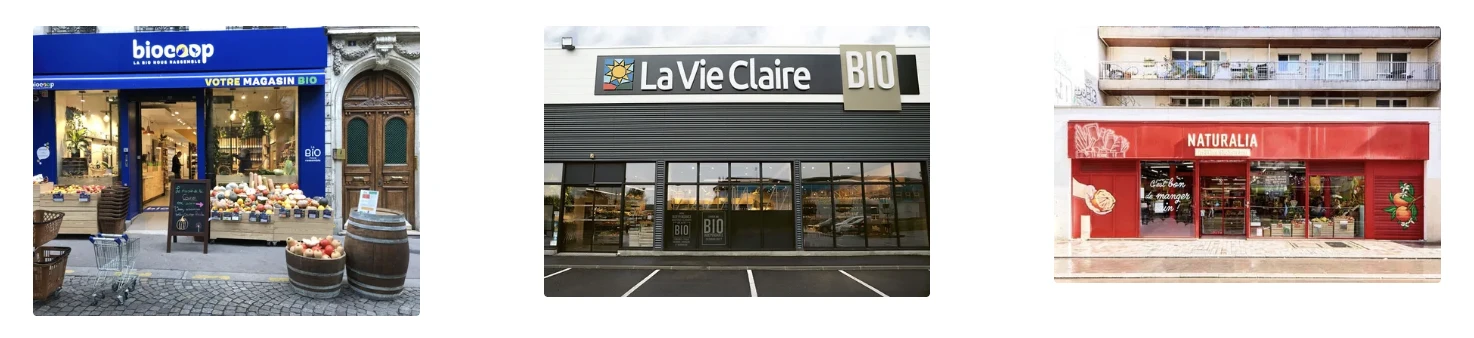
This consumer regularly shops in specific channels: Biocoop, La Vie Claire, Naturalia, Monoprix Bio. They follow nutrition accounts on social media, read labels, and are interested in concepts like microbiota, fermentation, or glycemic index. They are not necessarily vegetarian or vegan, but they are looking to "eat better" without adopting a restrictive diet.
Source: Le Web Grande Conso, La Vie Claire, Magasins Naturalia
As for mate, it reaches a slightly different profile: more masculine, younger (18-30 years old), often connected to creative, tech, or sports circles. It is the beverage of the developer who doesn't want to drink a third coffee, the athlete looking for "clean" energy, and the student in search of an alternative.
Purchase motivations still heavily linked to discovery
What drives purchases is well-documented. According to the Mintel study on Functional Beverages in France (2023), the main motivations cited by consumers are, in order:
Digestive health (probiotics, microbiota) for kombucha and kefir
Sugar reduction and giving up classic sodas
Curiosity and the desire to test something new
Belonging to a lifestyle perceived as aligned with one's values
This last point is important: a significant portion of buyers do not buy these beverages because they need them, but because they align with the image they have of themselves or want to project.
Obstacles still very much present
The barriers to purchase are equally real. First and foremost, price. A 33 cl bottle of kombucha runs between 3 and 5 euros in organic stores, meaning a price per liter that far exceeds that of premium sparkling water or fresh fruit juice. For a product whose health benefits are still perceived as vague, this is a major obstacle.
Secondly, taste. The characteristic acidity of kombucha, the slightly cloudy look of fruit kefir, the bitterness of plain mate: these are all taste profiles that do not match the sensory benchmarks of the general public accustomed to sweet sodas.
Finally, lack of awareness remains high outside the circles of convinced consumers. According to an OpinionWay survey for the Natexpo Trade Show (2022), 62% of French people declared they did not know exactly what kombucha was, and 78% had not consumed it in the past six months.
A consumption behavior that remains highly occasional
This is perhaps the most revealing figure: according to Nielsen data for the French market (2023), among households that bought kombucha at least once in the year, less than 20% repurchase it regularly (more than once a month). The remaining 80% are one-off, curious buyers, but have not converted.
This low repeat purchase rate is structural. It means that the market relies largely on a continuous renewal of new trial buyers rather than on a loyal customer base. A fragile position, especially when the media attention on these products begins to stabilize.
→ The customer of these beverages is for now a specific, sensitive, urban, and informed profile. They are not yet a mass market consumer, and the very low repurchase rate shows that curiosity has not yet transformed into a habit.
A market without a clear identity: neither truly health, nor truly pleasure
This is one of the deepest and least visible problems in this market. The products exist, and so do the consumers. But nobody is telling the same story.
Too many promises, not enough consistency
Browse the fermented beverage shelves in any organic store and look at the packaging. On one: "digestive boost, rich in live probiotics." On another: "the natural energy of fermentation." On a third: "the pleasure of a living beverage, zero compromises." On a fourth: "detox, balance, vitality."
Four bottles, four promises. None says the same thing. And for the uninitiated consumer who stops in front of this shelf for the first time, it's a cacophony.
This problem of collective identity is deep. Kombucha constantly hesitates between two positionings: a health product (with claims on microbiota, digestion, probiotics) and a pleasure product (with flavors, lifestyle packaging, an aperitif or festive positioning). These two positionings are not incompatible, but they do not address the same buyer, nor are they sold in the same place or at the same time of day.
The paradox of health claims
In Europe, regulations are strict: health claims on labels must be approved by the EFSA (European Food Safety Authority). However, to date, no health claim has been officially validated for kombucha as a category. Brands therefore cannot write “improves your digestion” or “strengthens your immunity,” they bypass the rule with vague phrasing (“rich in live cultures,” “obtained from natural fermentation”) that suggestive without claiming.
Result: the consumer senses something but does not truly understand what. They buy in a friendly blur. This works for a first purchase, but less so for a repeat purchase rooted in actual conviction.
We test more than we adopt
This identity confusion has a direct consequence: it feeds trial consumption rather than routine consumption. People buy a bottle of kombucha like they buy any novelty—to see, to taste, to check the “I tried it” box. They do not yet integrate it into their weekly shopping list like they would yogurt or sparkling water.
This contrasts dramatically with mature markets like fresh-squeezed orange juice or even plant-based milk, which have successfully established themselves in daily consumer rituals. Oat milk, for example, took a decade to convince people but is now bought automatically by millions of European households. Kombucha is not there yet.
→ As long as these products do not have a stable narrative, understood the same way by all players in the industry, they will not have loyal consumers. A vague identity is the primary enemy of customer loyalty.
Why performance is so uneven depending on the points of sale
The exact same product, in two different stores, can show opposite results. Indeed, in some points of sale, the product is listed but not actually present on shelves, a classic gap between theoretical assortment and real-world reality.
This is not a matter of quality; it's a matter of the retail environment.
The distribution channel means everything
Here is a concrete example: a French kombucha brand launches its range in 2022. In Biocoop and Naturalia, rotations are good by the third month. In a discount supermarket, the product barely sells and is delisted in less than a year. Same product, same price, same packaging. Opposite results.
This is not an abnormal issue; it is the norm.
These beverages are intrinsically linked to their distribution channel. They emerged in the organic and premium space, and that is where their natural buyers look for them. When they migrate to mass retail channels (hypermarkets, hard discount), they find themselves in front of a consumer whose expectations, budget, habits, and cultural benchmarks they do not match.
According to IRI France (2023) data, more than 65% of kombucha sales take place in specialized organic networks and fine groceries, compared to around 30% in grocery retail. The rest goes through direct e-commerce. This concentration in specialized channels is both a strength (consistency with positioning) and a structural limit to growth.
Shelf placement: an invisible war
Another performance factor that is very often underestimated is physical shelf position. Where do we place kombucha? The question might seem trivial. In reality, it is crucial.
Depending on the store, you can find kombucha:
In the fresh section, next to fresh fruit juices and smoothies
In the beverage aisle, between sodas and waters
In the wellness or health section, next to dietary supplements
Sometimes on promotional endcaps
Each placement tells a different story about the product and exposes it to a different buyer. In the fresh section, it is seen as a premium pleasure drink. In the wellness section, as a health supplement. In the classic beverage aisle, it is drowned out by the competition and its value proposition disappears. This topic is far from trivial: visibility on shelves and shelf-space share directly influence a brand's performance, sometimes more than the product itself.
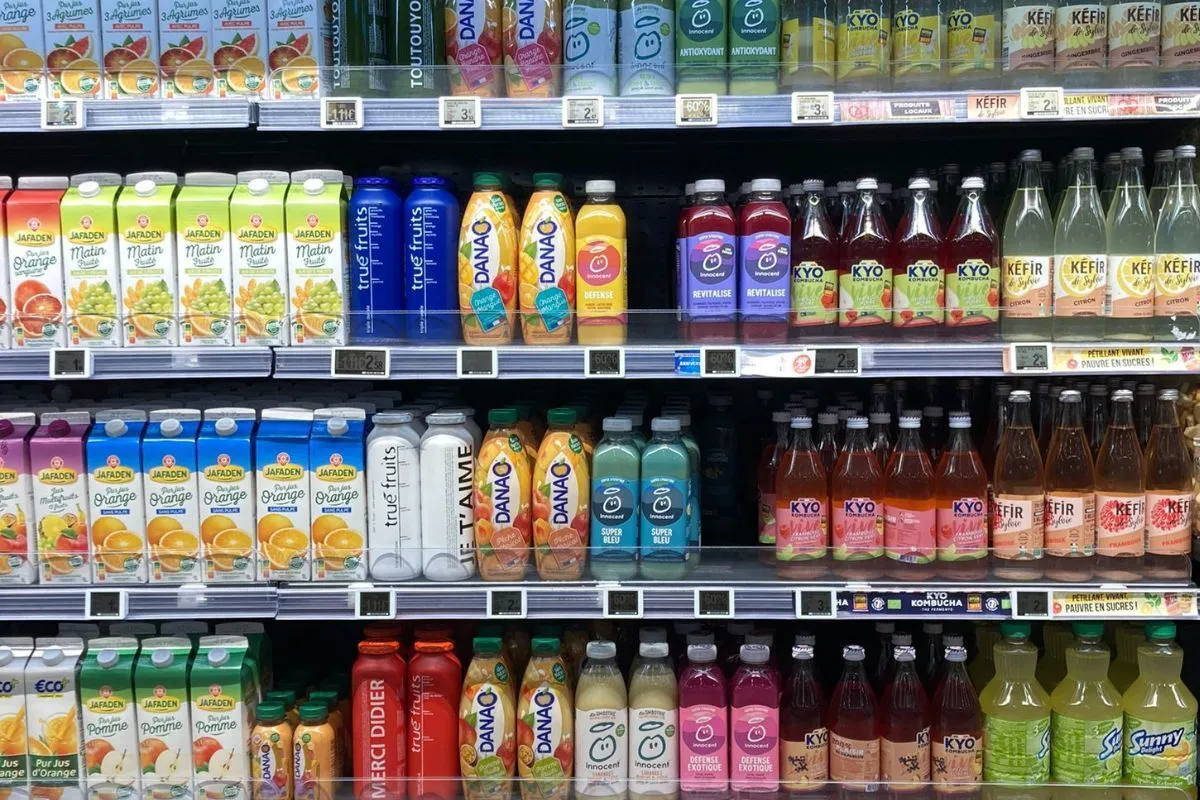
Source: LSA
This lack of a "natural territory" weakens the clarity of the category and makes loyalty even harder: if a consumer does not find the product in the same spot from one store to another, they do not automate their purchase.
Price as a discriminating variable depending on the territory
Kombucha at 4 euros for 33 cl is perceived differently depending on where you live and what you earn. In Paris, Lyon, or Bordeaux, in high-purchasing-power neighborhoods, this price is acceptable—compared to a coffee on a terrace or a squeezed juice, it's not absurd. In rural areas, mid-sized towns, or for budget-constrained families with children, it represents a luxury that is hard to justify for what is still perceived as "a drink."
This price sensitivity mechanically creates dead zones on the map of France. These are not lost markets; they are markets that would require different formats (75 cl bottles, family packs, entry-level versions) and adapted channels. For now, few brands have truly resolved this equation.
→ It is not the product that changes from one store to another, it is the retail environment that makes it succeed or fail. Channel, placement, price, geographical context: four variables that many brands underestimate when deploying.
Too many options, not enough reference points
In just a few years, shelves filled up at high speed. Too fast, perhaps. Because this abundance, far from reassuring the consumer, has often lost them.
The explosion of brands
In 2018, you could count the available kombucha brands in France on one hand. Five years later, according to estimates by the Biolinéaire trade union, there were over 80 kombucha listings in circulation on the French market, between national brands, regional craft brands, and imports. Kefir and mate experienced a similar, though less pronounced, trend.
This explosion was fueled by several factors: relatively low barriers to entry (you can start a craft kombucha production with minimal investment), media hype that attracted entrepreneurs, and organic distributors eager to diversify their shelves with novelties.
An unreadable shelf and contradicting narratives
The problem is that this profusion of offerings has made the aisle incomprehensible to the uninformed shopper. Between unpasteurized "raw" kombuchas and pasteurized versions (which no longer contain live probiotics but have a longer shelf life), flavored and plain versions, formats of 25 cl, 33 cl, and 75 cl, prices going from single to triple... the selection has become a headache. In this context, structured field audits become essential to understand what is actually present, visible, and performing in-store.
And the brand narratives do not help: some highlight the content of live probiotics as the primary argument, which implicitly disqualifies pasteurized versions. Others value the taste and sensory experience without mentioning probiotics. Still others ride on detox or weight loss, claims that flirt with regulatory limits.
Result: no brand is yet dominant enough to act as the reassuring benchmark like Danone in yogurts or Innocent in smoothies. For a consumer trying to understand why they should spend 4 euros on a bottle, it is discouraging. And it feeds skepticism rather than adoption.
→ A fragmented market, without a dominant brand and without a common narrative, is a hard market to defend at the point of sale. The multiplication of products is often seen as a strength; in reality, it is one of the causes of stagnation.
After the hype, time for sorting
The exploration phase is behind us. Retailers studied, observed, and now they are deciding. For many brands, the moment of truth has arrived.
Retailers are rationalizing
Since 2023, an underlying trend has been visible in distribution channels: retailers, whether organic specialty stores or generalists, are rationalizing their listings in the fermented beverages category. Buyers from Biocoop, Naturalia, or Carrefour Bio are making choices: they keep the brands that move, and delist those that collect dust.
This sorting is healthy in the long run; it should improve shelf legibility. However, it is brutal for small artisanal brands that cannot invest in visibility (promotions, POS advertising, in-store demos) and whose volumes remain confidential.
Concretely: a brand with less than 1.5 rotations per week (which is less than one and a half sales per day for a standard facing) risks being dropped. In an environment where every meter of shelf space is optimized, these decisions increasingly rely on reliable, consolidated, and comparable field data across sales outlets.
Performance takes precedence over promises
What has changed is the evaluation criteria. During the exploration phase (2019-2022), retailers agreed to test innovative products even without performance guarantees. "We will see" was acceptable. That era is over.
Several reasons explain this turning point:
pressure on shelves, because space has a cost, and a product that does not turn over occupies space that could be allocated to a profitable product;
the economic context—since 2022, household purchasing power has contracted, consumers are compromising more, and retailers can no longer afford to gamble on products whose demand remains uncertain;
finally, the novelty effect that once carried these drinks has gradually eroded—what was "trendy" in 2019 is no longer enough to justify a listing in 2024.
Today, a distributor listing a new brand of kombucha wants to know: what is the repeat purchase rate? Is there a national communication plan? Will the product benefit from promotional support? Is the brand capable of securing supply chain continuity under cold chain conditions?
These questions immediately eliminate players that are too small or too new. They favor brands that have already proven their ability to generate rotation, even on a smaller scale.
Who will survive?
The brands most likely to cross this rationalization milestone share several features:
A strong and consistent identity (a clear message, a readable brand story)
A loyal fan base capable of generating word of mouth and repeat purchases
The capability to adapt to the channel: different format, price, and packaging depending on the networks
A digital footprint that supports offline demand
The brands at risk of disappearing are those that relied on the novelty effect without building foundations: attractive packaging, trend-aligned pitches, but no embedded consumption habits among their buyers.
→ The market is entering its selective maturity phase. We are moving from "testing what exists" to "keeping what actually works." This is good news for the category and bad news for brands that have not yet built their loyalty foundation.
Kombucha, kefir, and mate meet real and sustainable needs: eating better, taking care of oneself differently, and moving away from ultra-processed sodas. These deeper trends will not disappear.
But this market is only at its second stage. After emergence and curiosity comes selection. The third stage, normalization, will be the one where these beverages finally find their stable place on the shelves and their habits among consumers. To get there, brands must choose their identity and stick to it. Retailers will need to resolve the shelf space territory issue. And the market will need players willing to invest in consumer education, not just in packaging.
The question is no longer "does this market exist?", it does. It is: "who will know how to build it sustainably?". The opportunities are there. For those who understand consumer use before thinking about volumes. In this type of market, performance depends as much on field execution as on the product itself.
Taina left her position as Area Manager at AB InBev for marketing and communications, a true career choice. Having experienced the reality of the sales force from the inside, she writes about the profession without ever distorting it. She doesn't just talk about the field; she comes from it. Outside the office, she tracks down the best tables in town: finding the right spot is a serious business.
See also

Artificial intelligence and field professions: what our 2026 studies reveal
Adoption, barriers, use cases: discover what our three studies reveal about the role of AI among sector managers, sales representatives, and foodservice sales reps.

CHR and RHF Sales Representatives: portrait of a relationship-driven profession in the era of data
Equipment, productivity, AI: discover the major trends for the HORECA and food service sales profession in 2026 through our field study.

Pharmaceutical Sales Representative in France: Portrait of a Field Job Under Pressure
Compensation, aspirations, AI usage: discover the major trends in the pharmaceutical sales representative profession in 2026 through our field study.

Area Sales Managers in France: who are they and how is the profession evolving in 2026?
Compensation, aspirations, AI usage: discover the major trends in the field sales representative profession in 2026 through our field study.
The area manager professions in 2026
Discover the trends, the challenges, and the key figures.