

Exclusive, selective distribution, or franchise agreements: the fundamentals
Exclusive distribution, selective distribution, or franchise: what are the legal and commercial differences? Fundamentals and key watch-outs for brands.

In short
7 min read
Intensive distribution contracts use classic sales or commercial cooperation agreements without network restrictions.
Exclusive distribution reserves the sale of products to a single distributor in a given territory to better control image and service.
Selective distribution restricts distributors to those who meet precise qualitative criteria, while prohibiting resale outside the network.
In franchising, the franchisee is authorized to operate the franchisor's brand, concept, and know-how in exchange for the payment of royalties.
The distribution contract is a framework document governed by the Commercial Code, often accompanied by a Pre-contractual Information Document (PID).
Commercial performance is frequently framed by performance clauses (revenue targets) or minimum quantity quotas.
There are three specific types of distribution contracts that correspond to particular, but also very common, scenarios.
We explain all about it!
In the majority of cases, the distribution of products and services follows one of these 4 models:
Intensive distribution: distributing through a maximum number of sales points to maximize accessibility;
Exclusive distribution: forming an exclusive partnership with a retailer to control brand image;
Selective distribution: choosing distributors who meet precise criteria and commit to respecting certain operational methods;
Franchising: granting partners (franchisees) the right to operate your concept, brand, and expertise in exchange for royalties.
The choice of distribution method determines the contractual agreements put in place with distributors.
In intensive distribution, no channel or distributor is excluded beforehand, and agreements can take the form of an ordinary sales contract. Applied to large-scale retail, this very common model will be formalized by listing and commercial cooperation agreements.
But for the other three distribution methods, dedicated clauses will be the subject of very specific contracts.
Sidely explores here the main principles of these 3 specific distribution contracts:
Exclusive concession contract;
Selective distribution contract;
Franchise agreement.
This article simplifies basic concepts. To draft a contract model, consult a specialized lawyer.
Exclusive Distribution Contract
An exclusive distribution contract (or exclusive concession) is an agreement in which a supplier grants a distributor the exclusive right to sell its products within a given territory. This means the supplier cannot sell its products directly or entrust them to other distributors in that zone.
This model allows brands to better control the image, distribution, and after-sales service of their products.
Main Characteristics
Territorial Exclusivity
The distributor is the only one authorized to sell the products within a defined territory.
The supplier commits not to sell directly or through other distributors in this territory.
Distributor's Obligations
Generally, they must meet sales targets set in the contract.
They must respect the supplier's brand image.
Duration and Renewal
If the contract is for a fixed term, the renewal conditions must be specified;
If it is for an indefinite term, this implies specifying termination conditions.
Possibility of Additional Clauses
Non-compete clause: it prohibits the distributor from selling competing products.
Performance clause: exclusivity is maintained subject to reaching a certain sales volume.
The contract must be signed before March 1st of each year, and include the price scale and the way they are determined.
It is drafted by the supplier, who uses this legal tool to build their distribution network.
Advantages and Disadvantages of the Exclusive Concession Contract
Concerned Party | Advantages | Disadvantages |
|---|---|---|
Distributor | - Benefits from a monopoly in their territory. | - May be subject to high sales targets. |
Supplier | - Simplifies management by having a single point of contact. | - Dependence on a single distributor for a given market. |
Examples
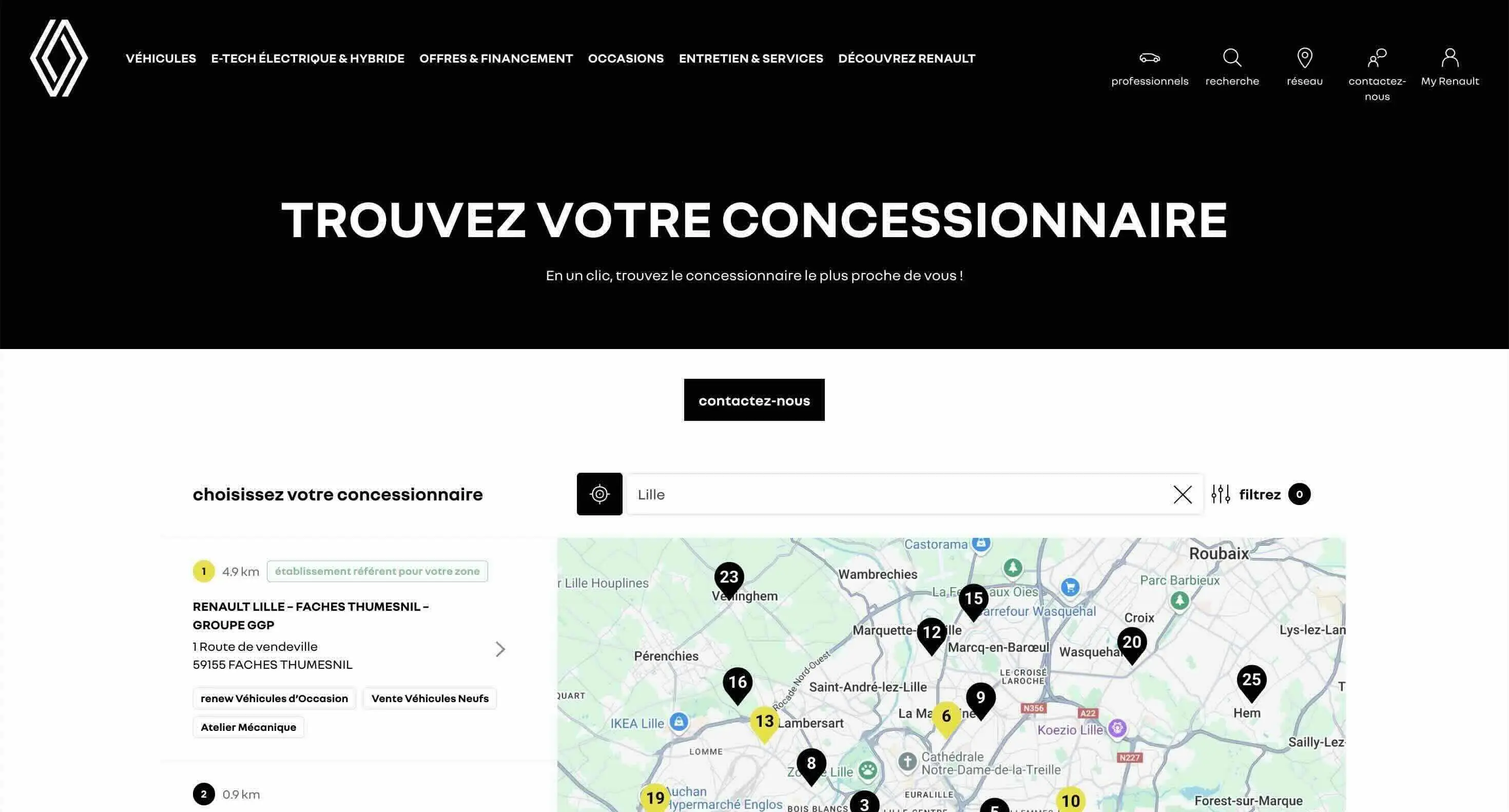
This model is omnipresent in the automotive sector: manufacturers (Mercedes-Benz, BMW, Renault) operate through dealerships that are the only ones authorized to sell their vehicles in a defined zone.
Other industries use it as well: Caterpillar or John Deere in industrial equipment, Rolex in luxury goods.
© Renault
Selective Distribution Contract
The selective distribution contract is an agreement in which a supplier selects its distributors based on precise criteria (image, expertise, quality of service, location…) to guarantee marketing consistent with its positioning.
Main Characteristics
Selection of Distributors
The supplier imposes qualitative criteria (customer service, staff training, retail environment, etc.).
Absence of Territorial Exclusivity
By default, multiple distributors can be authorized within the same territory.
However, sales outside the network (e.g., resale by unauthorized actors) are prohibited.
Protection of Brand Image
The supplier maintains strict control over the sales environment and customer experience.
Objective: preserve the perceived value of the product.
E-commerce
The supplier can regulate online sales, but a total ban is considered an anti-competitive restriction and can be penalized by competition authorities.
Advantages and Disadvantages of the Selective Distribution Contract
Concerned Party | Advantages | Disadvantages |
|---|---|---|
Distributor | - Accesses a reputable brand with limited local competition. | - Must meet strict requirements (training, in-store presentation…). |
Supplier | - Controls their brand image and customer experience. | - Risk of limiting distribution and slowing down sales. |
Examples
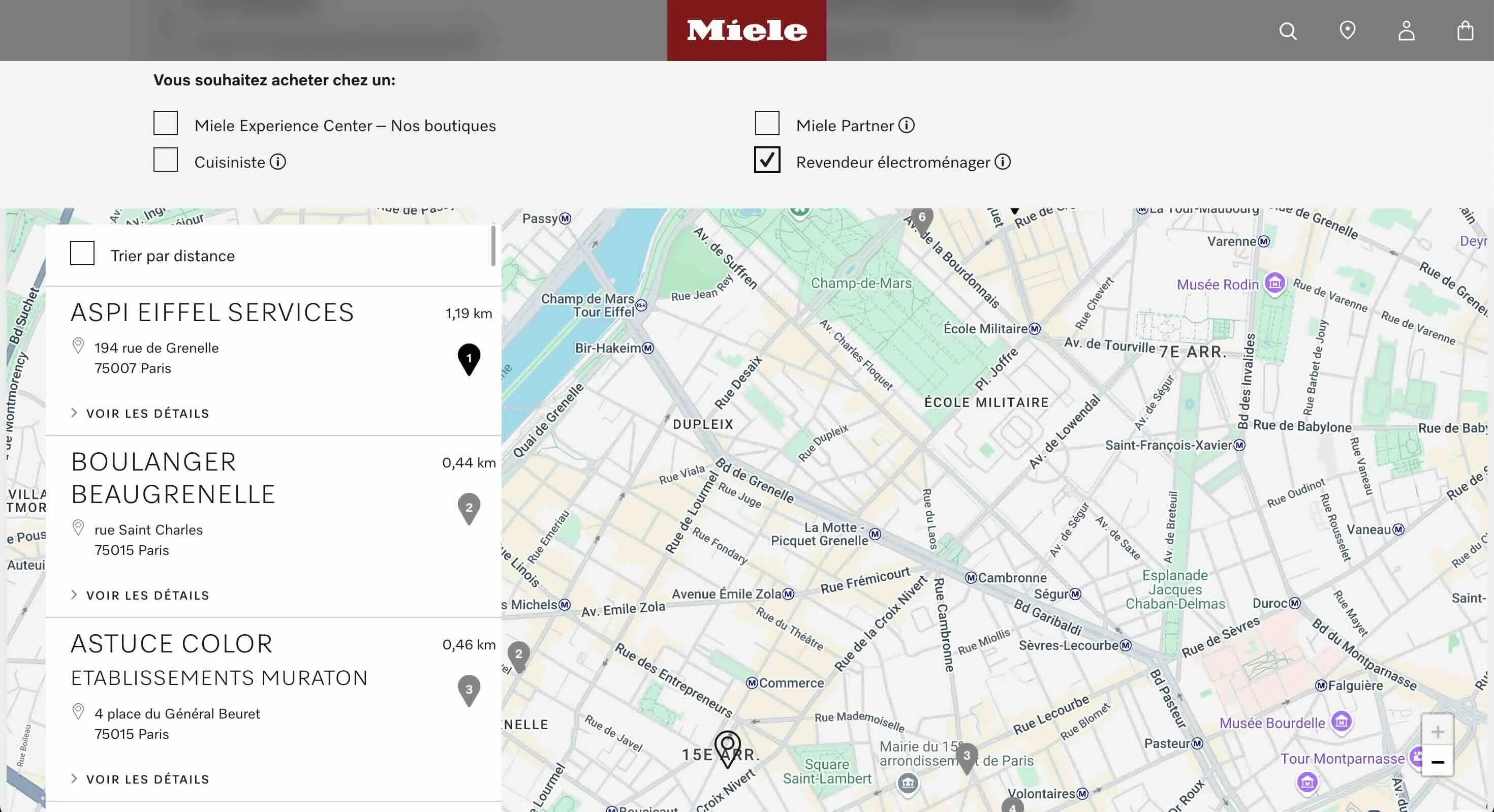
Based on the control of brand image and positioning, this operating model is very widespread in luxury and fashion, such as at Chanel, Louis Vuitton, or Dior. It is also found in tech with Apple (Apple Stores and authorized resellers) or premium home appliances (Miele, Dyson).
© Miele
💡 Also discover how to choose your distribution model.
Franchise Agreement
The franchise agreement is an agreement between a franchisor (owner of a brand and a business concept) and a franchisee (independent entrepreneur who operates this concept in exchange for a fee).
The franchisee benefits from the expertise, reputation, and support of the franchisor, but must respect strict obligations and pay royalties.
Main Characteristics
Independence of the Franchisee
The franchisee is an autonomous entrepreneur, owner of their business, who operates the concept of a third-party brand.
Transfer of Expertise
The franchisor provides an operations manual detailing sales and management methods.
Initial and continuous training programs are established.
Use of the Brand and Concept
The franchisee operates the name, products/services, and business model of the franchisor.
They must respect a quality charter to guarantee network uniformity.
Financial Obligations
The franchisee generally pays a flat initial franchise fee, an entry fee granting the right to operate the brand and receive ongoing assistance. Sometimes, a contribution to the national advertising budget is also added.
Duration and Renewal
The contract is often signed for 5 to 15 years, with the possibility of renewal.
The franchise agreement is by far the most complex to draft, and both the franchisor and network members must ensure that their protection is duly guaranteed. The franchisor particularly safeguards the integrity of intellectual or industrial property, as well as the network's reputation.
The contract contains many dedicated clauses that specify the rights and obligations of each party, notably pricing conditions and contract duration, how expertise is transferred to franchisees, assistance procedures, the territory covered by exclusivity, or the non-compete principle.
Advantages and Disadvantages of the Franchise Agreement
Concerned Party | Advantages | Disadvantages |
|---|---|---|
Franchisee | - Benefits from the recognition and credibility of an established brand. | - High initial investment required (entry fee, store setup…). |
Franchisor | - Expands their network with limited investment (each franchisee finances their own store). | - Risk of underperforming franchisees hurting the network's image. |
💡 When a French brand wishes to franchise businesses abroad, the contract may stipulate the application of French law, but this does not exempt it from compliance with local laws as well as international law. A sworn translator drafts the contract in the franchisee's language.
Examples
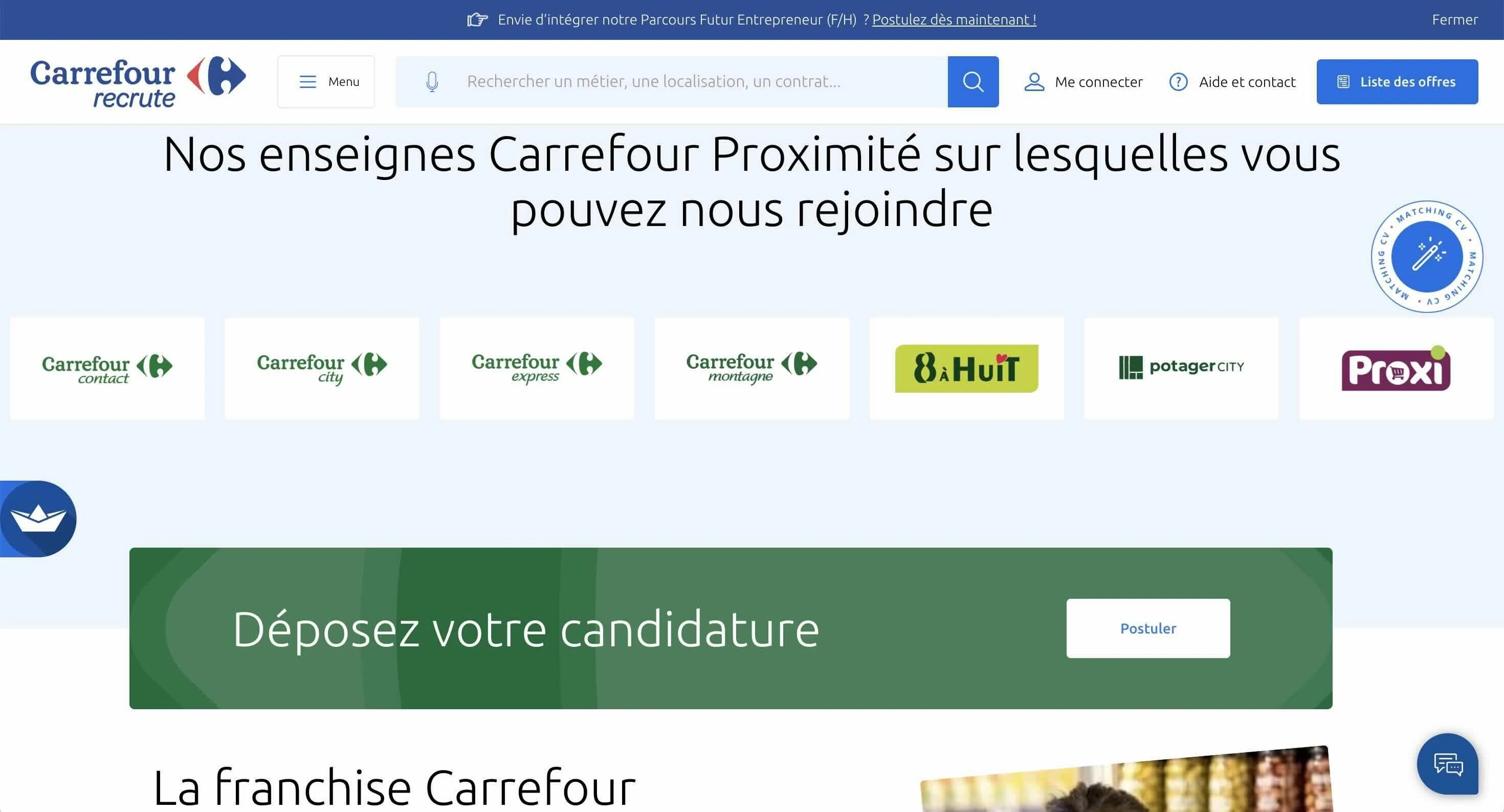
Carrefour Proximité offers a franchise model adapted to convenience stores under various banners (Carrefour City, Contact, Express), providing logistics and marketing support while leaving some autonomy to franchisees.
Yves Rocher operates on a joint-franchise model where franchisees are also partners of the brand, benefiting from sales and marketing support while participating in strategic network decisions.
© Carrefour
We will now address more general concepts about the distribution contract itself.
💡 Sidely does not provide legal advice. For expert guidance, consult a specialized lawyer.
Distribution Contract: What You Need to Know
The distribution contract is a commercial agreement. As such, it is governed by the French Commercial Code and is subject to compliance with competition law. The signing parties must operate under commercial status.
By formalizing the distribution agreement, the distribution contract serves as a legal framework for the commercial relationship, logically based on the mutual benefits it brings to both entities.
Its purpose is to define the conditions under which a distributor (or retailer) agrees to sell products or services of a supplier (or producer) in their own name. For this purpose, it contains as many clauses as necessary to correspond to the specificities of the commercial relationship (exclusivity, quota, yield, non-compete, etc.).
The supplier's primary objective is to boost access to their products by potential customers. The distribution contract then allows them to leverage an already acquired customer base or existing expertise of the distributor, avoiding the financial investments required to create their own points of sale.
On their side, the distributor generally benefits from the reputation or brand image of the products involved in the distribution contract. In some cases, the exclusivity clause gives them a competitive advantage in their market.
Conditioning of Commercial Performance
The distribution contract may specify sales targets:
The performance clause imposes a minimum level of commercial performance, such as sales revenue or volume to be achieved, under threat of penalties (reduction of benefits, termination of contract, etc.).
The quota clause, for its part, sets a minimum quantity of products that the distributor must purchase or sell over a given period. This clause allows the supplier to secure sales and ensure active commitment from the distributor in marketing their products.
Documents Associated with the Distribution Contract
- Pre-contractual Disclosure Document (DIP)
To ensure the validity of the distribution contract, the supplier provides the distributor with a pre-contractual disclosure document, which aims to provide clear, transparent, and detailed information on the terms of the contract, obligations, risks, and associated costs. It helps protect both parties and ensures that the future partner is well informed before committing.
- Written Agreement
A written agreement formalizes the commitments of the parties (supplier and distributor), specifying rights, obligations, and terms of the agreement (e.g., price scales, general sales conditions, etc.). This document ensures better legal security, avoids misunderstandings, and facilitates conflict resolution. It must be signed by all parties involved to be considered valid and binding.
Importance of Legal Monitoring
Legal monitoring is essential in managing distribution contracts. Laws and regulations are subject to change. The latest very significant changes were:
The Hamon Law (2014) which strengthened consumer rights and introduced obligations of transparency and withdrawal;
The Macron Law (2015) which adjusted certain practices regarding commercial contracts, particularly in terms of payment deadlines, relations between suppliers and distributors, and non-compete rules.
Termination of the Distribution Contract
The termination of a distribution contract must respect the conditions specified in the contract, such as notice periods, legitimate grounds for termination (failure to meet targets, breach of obligations, etc.), and specific procedures. In case of dispute, conciliation or mediation can be considered before any legal action. Consulting a specialized lawyer is essential.
Distribution contracts can also be modified, but these amendments must respect conditions of consent, formalization, and legality. In general, an amendment or a new contract is used to officialize changes.
Assignment of the Distribution Contract
The assignment of a distribution contract legally implies the transfer of the rights and obligations of the initial distributor to a third party, subject to the supplier's approval if required by a clause. It may require signing an amendment or a new contract. In the absence of a specific clause, the assignment may be refused if it substantially modifies the contractual balance.
Margot has been working in Tech and SaaS for 8 years, with a multi-product experience that has given her a unique understanding of business challenges. On a daily basis, she analyzes, relentlessly tests, and relies on facts to shed light on market trends and help sales teams move forward.
See also

Artificial intelligence and field professions: what our 2026 studies reveal
Adoption, barriers, use cases: discover what our three studies reveal about the role of AI among sector managers, sales representatives, and foodservice sales reps.

CHR and RHF Sales Representatives: portrait of a relationship-driven profession in the era of data
Equipment, productivity, AI: discover the major trends for the HORECA and food service sales profession in 2026 through our field study.

Pharmaceutical Sales Representative in France: Portrait of a Field Job Under Pressure
Compensation, aspirations, AI usage: discover the major trends in the pharmaceutical sales representative profession in 2026 through our field study.

Area Sales Managers in France: who are they and how is the profession evolving in 2026?
Compensation, aspirations, AI usage: discover the major trends in the field sales representative profession in 2026 through our field study.
The area manager professions in 2026
Discover the trends, the challenges, and the key figures.