
Cash and carry: the network and its opportunities for brands
What is cash and carry? Key players, how the network operates, and distribution opportunities for brands looking to develop this channel.

In short
9 min read
Definition and concept of the cash and carry business model.
Presentation of the main players and banners in the sector.
Analysis of the logistical and operational functioning of this distribution network.
Identification of the competitive advantages for brands wishing to integrate this channel.
Strategies for optimizing product presence and visibility in warehouses.
While supermarkets and hypermarkets are the channels that secure the largest sales volumes for manufacturers, businesses targeting dining trade professionals inevitably turn to cash and carry.
Indeed, whether they are small producers wishing to expand locally or national brands setting out to conquer France, this channel has no equivalent for B2B distribution.
And yet, with only two major players strictly meeting the definition of cash and carry, it is also a very restricted network in terms of access; it is therefore important to be well informed before prospecting the two giants, Metro and Promocash.
That is why Sidely offers you a deep dive into the heart of this distribution network dedicated to professionals.
On the agenda:
Introduction to the cash and carry network;
Focus on Metro France;
Focus on Promocash;
Businesses and out-of-home catering (RHF) distribution;
How to get listed.
Cash-and-carry: network overview
The cash and carry model is a distribution method exclusively designed for professionals, such as merchants, restaurant owners, and businesses, who want to buy wholesale products without going through an intermediary.
Historically, cash payments were preferred, and customers had to carry the goods away themselves - hence the term cash and carry. Now, customers are free to choose their payment method (business checks are generally accepted) and delivery services complement what stores offer.
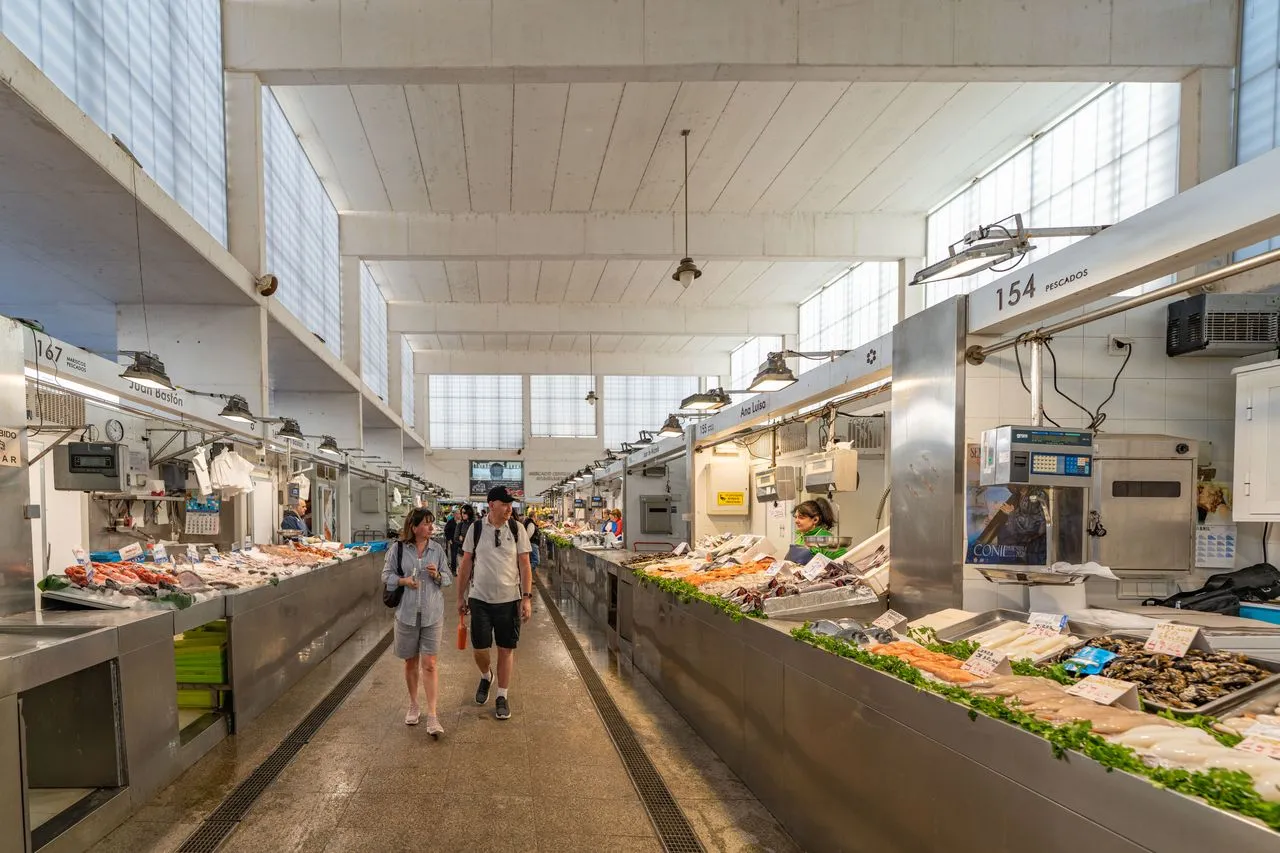
Cash and carry outlets are laid out like self-service warehouses; their layout is designed to optimize space and facilitate access to wholesale products, displayed on massive shelving units. The customer journey is organized to maximize the speed of purchases and the smooth flow of movement.
The goal is to reduce service costs associated with sales, allowing customers to benefit from more competitive prices. A hybrid format between wholesale and large-scale retail, cash and carry offers a deep and broad assortment (up to 20,000 items for the largest stores), representing the perfect compromise between merchandising and logistical optimization.
This store format makes volume sourcing easy for professionals, and also allows for quick restocking in case of product shortages for food and dining businesses. Cash and carry is thus an essential sales channel for reaching out-of-home dining (RHD). Access is moreover reserved for those holding proof of professional or non-profit association status.
The French market is dominated by two major players. On one hand, Metro France with its €5.24 billion in revenue in 2023; a subsidiary of the eponymous German group, the brand presents itself as the "number 1 supplier to restaurants and businesses," and the "number 1 in Foodservice". Promocash, on the other hand, is the subsidiary dedicated to Horeca (CHR) belonging to the French giant Carrefour, and boasts no fewer than 150 points of sale across the country.
Although they address the same professional target, cash and carry players differ from food wholesalers like Pomona, Transgourmet, or Sysco. Indeed, these companies base their model on delivering foodstuffs and hygiene products to food businesses, whereas cash-and-carries are primarily physical points of sale where professionals choose to go.
Furthermore, the term cash and carry is sometimes used to refer to other warehouse stores, such as Atacadao and Supeco - two Carrefour group brands recently established in France - or the American Costco. However, because these players also serve individuals, it is more consistent to classify them among discount brands.
Thus, Metro France and Promocash are the only food cash and carry brands in the French market strictly speaking, considering their 100% B2B point-of-sale model. Note, however, that the expansion of this warehouse-store model to individual customers shows a keen interest in hybrid business models that allow wholesale prices to be offered to shoppers.
Finally, the cash-and-carry offering stands out for its very strong local and sustainable focus, both in terms of inventory building and key player communications. Although this store format also offers commercial equipment or hygiene products, the assortment is heavily focused on food (90% of the surface area of Metro stores).
Focus on the METRO France brand
METRO France is a subsidiary of the German group METRO AG, one of the world leaders in wholesale distribution, specializing in supplying the food and dining trades (bakers, butchers, caterers, grocers, etc.), and more broadly all professionals in the Horeca (Hospitality, Restaurant, Cafe) sector.
With a presence in France since 1971, the brand has established itself as an essential player in cash & carry, with a simple promise: to provide products and services adapted to the needs of food professionals.
METRO France currently has nearly 100 warehouses distributed throughout the country. These outlets offer a wide assortment of 20,000 food-related items (fresh, frozen, grocery, beverages, etc.) and non-food items (equipment, packaging, tableware, hygiene, etc.).
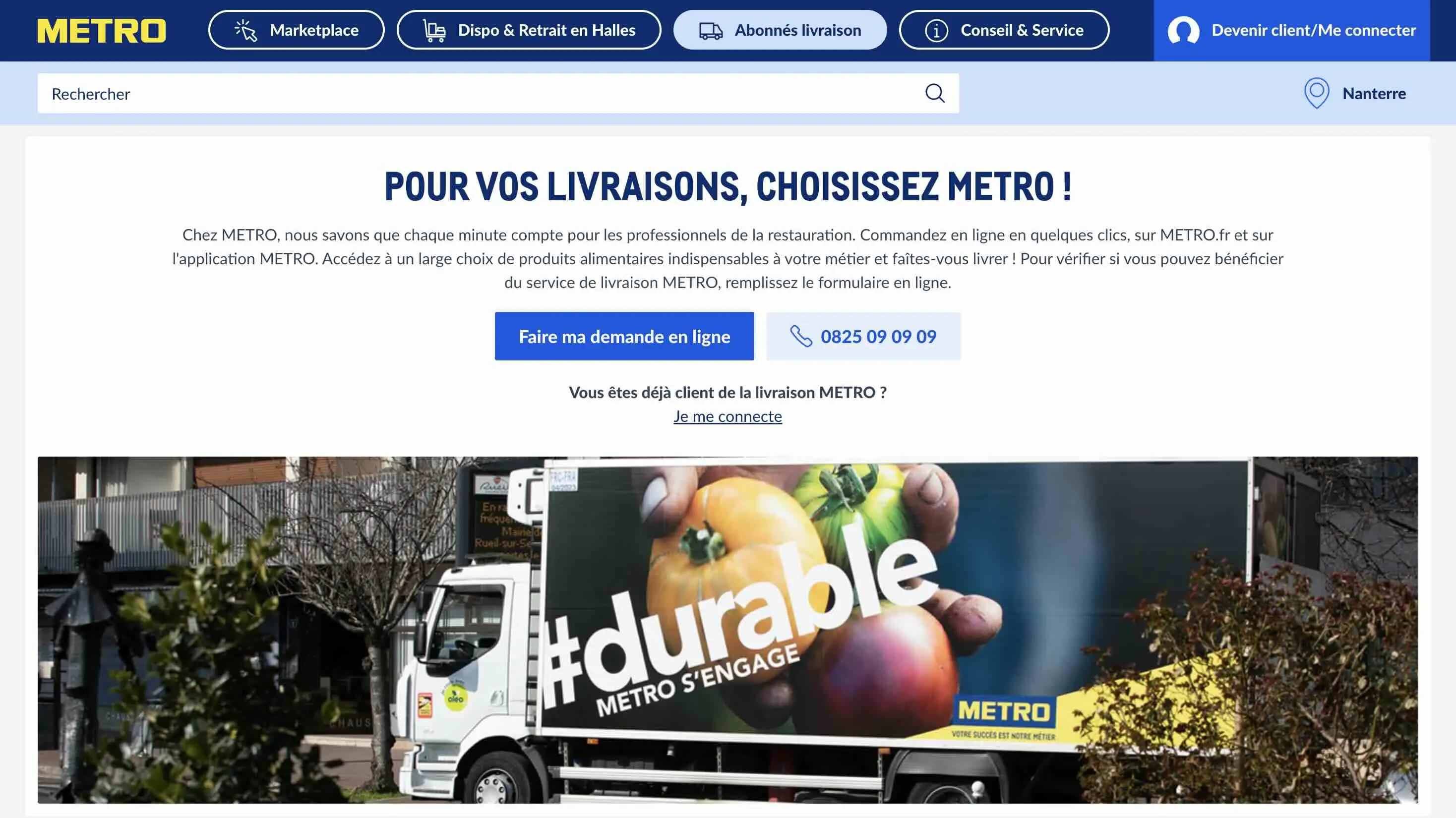
The brand is developing numerous services alongside its historical business, such as online ordering with store pick-up or delivery, financing solutions, website creation for independent businesses, partnerships with third-party companies (for example, for food hygiene consulting, etc.), or even the design of professional kitchens.
METRO France has invested heavily in its digital transformation and supports food professionals in theirs, notably through an impressive marketplace offering no fewer than 200,000 Horeca items.
Regarding positioning, the company places great emphasis on sustainable development and short supply chains, with local products, high-quality sourcing, and a major selection of organic, Label Rouge, sustainable seafood, and French-origin products. Its ambition is to combine economic performance and social responsibility for restaurant and food retail professionals in France.
Focus on the Promocash brand (Carrefour)
Created in 1965, Promocash experienced steady growth in the 90s, before becoming a subsidiary of Carrefour following the French giant's merger with Promodès in 1999. Promocash thus became its cash-and-carry brand, specializing in the sale of food and non-food products to restaurateurs, caterers, bakers, butchers, institutions, and other food professionals.
The Promocash network has about 150 stores in France, located in major metropolitan areas as well as medium-sized towns. Some of the stores are owned and operated directly by the Carrefour group, while others are managed by independent franchisees. This organization allows Promocash to combine national purchasing power with local adaptation.
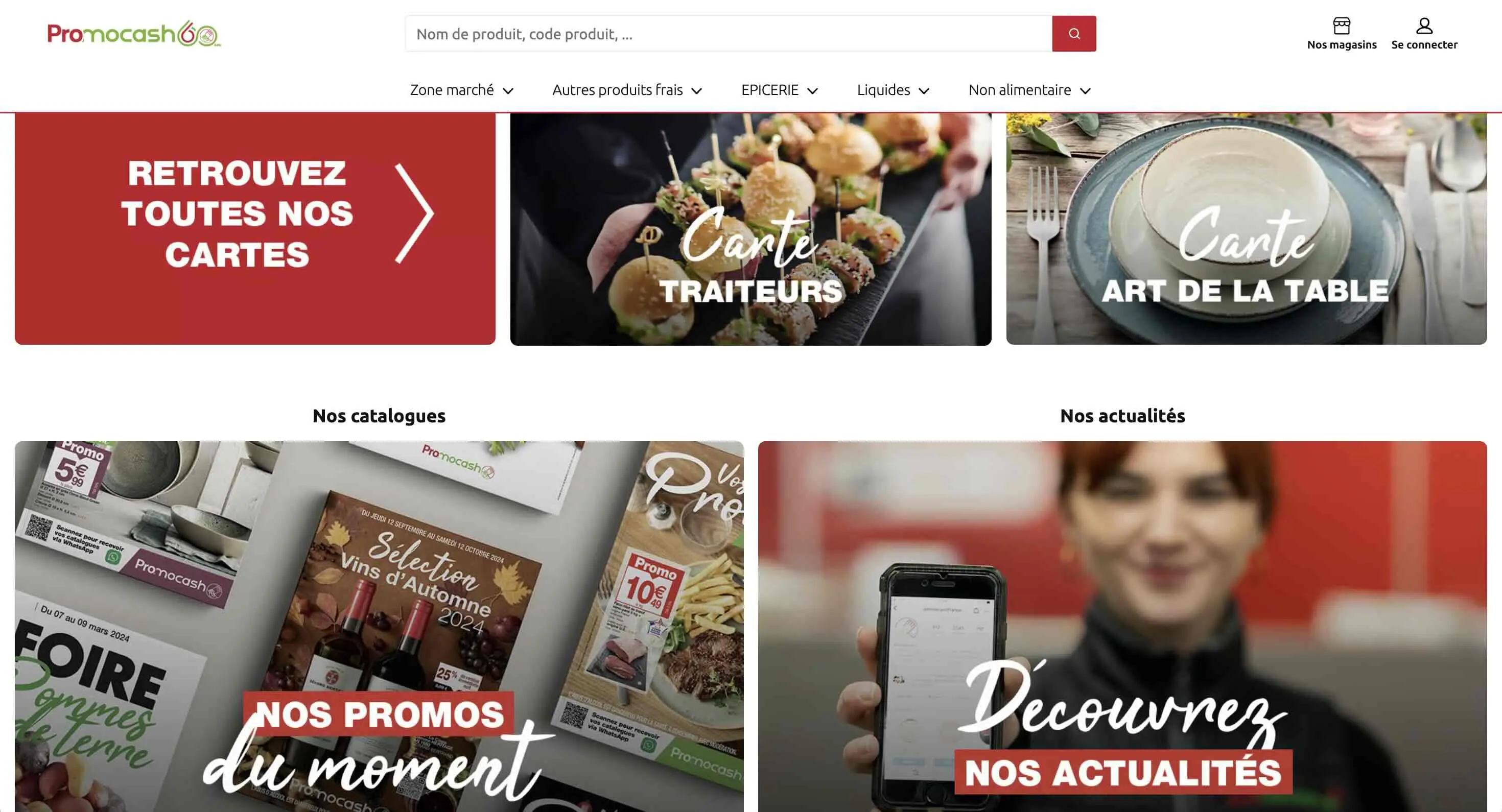
Promocash offers a comprehensive range of over 16,000 items, from fresh products (meat, fish, fruits, and vegetables) to frozen food, groceries, beverages, hygiene products, packaging, and professional equipment.
Its offering has largely digitalized in recent years with an e-commerce platform allowing customers to prepare orders remotely, benefit from personalized promotions, and facilitate daily purchasing management.
Promocash has developed a comprehensive logistics approach and offers different procurement options: in-store, delivery, drive-thru, or cart delivery. The brand also supports its customers with services designed for professionals: online ordering, refrigerated truck rental, or even kitchen and lab design and installation. Partnerships are also in place for HACCP solutions, restaurant digitalization, or the resale of unsold surplus.
Finally, Promocash relies on strong field proximity, with teams trained in the specific characteristics and expectations of the Horeca sector. The company also values local products, short supply chains, and high-quality sourcing; each store adapts its selection to include regional products, in partnership with local producers.
| METRO | |
|---|---|---|
Revenue | No public corporate data available, | €5,240,300,000 (2023) |
Parent company | Carrefour (France) | METRO AG (Germany) |
Number of points of sale in France | 150 | 99 (Halls) |
Store sizes | On average 750 to 4,000 m² | 3,000, 6,000, and up to 15,000 m² |
Assortment | Up to 16,000 items in store | Up to 20,000 items in Halls |
Employees | No public data | 9,000 |
Suppliers | No public data | 4,000 |
Point-of-sale ownership | Franchised or directly operated | Directly operated |
How businesses face food service (RHF) distribution
Suppliers view the Cash & Carry network as a strategic opportunity to directly reach professional clients.
Furthermore, this distribution channel fosters large sales volumes without the need for intermediaries, thereby optimizing profitability. Thanks to bulk purchasing and specific formats offered, companies can efficiently move their products while benefiting from high shelf visibility.
Therefore, while national brands can get their products listed across the entire network, local producers can rely on the short supply chain and quality strategies of both retail groups.
Local brands and regional producers
If cash and carry brands prioritize local and sustainable products to such an extent, it is to meet a growing consumer demand and satisfy the expectations of restaurant owners and food retailers. An increasing number of them prioritize fresh, high-quality products, which are essential for offering a unique culinary experience to customers who care about the environmental footprint of their food.
By supporting local producers, Promocash and METRO reduce their carbon footprint and position themselves as responsible players in a competitive market, while fulfilling the needs of restaurateurs and shop owners.
Consequently, of the 4,000 suppliers in METRO's selection, ¼ are local players. The brand states on its website that some 1,300 local producers "supply the METRO Halls located less than 100 km from their farm," corresponding to 10,000 local product items. In addition, fresh and extra-fresh products account for 60% of the brand's revenue.
Promocash is not left behind, with "a controlled supply network, locally or nationally, and a dedication to offering seasonal products". Every cash and carry retail point is therefore an opportunity for nearby local producers to offer their goods for sale.
Manufacturers and national brands
Of course, large agrifood brands also use the cash and carry network to reach professional targets. Among them are food giants like Nestlé Professional, Unilever Food Solutions, or Bonduelle Food Service, as well as alcoholic and non-alcoholic beverages intended for Horeca, such as Pernod Ricard, Coca-Cola, PepsiCo, Heineken, or AB InBev.
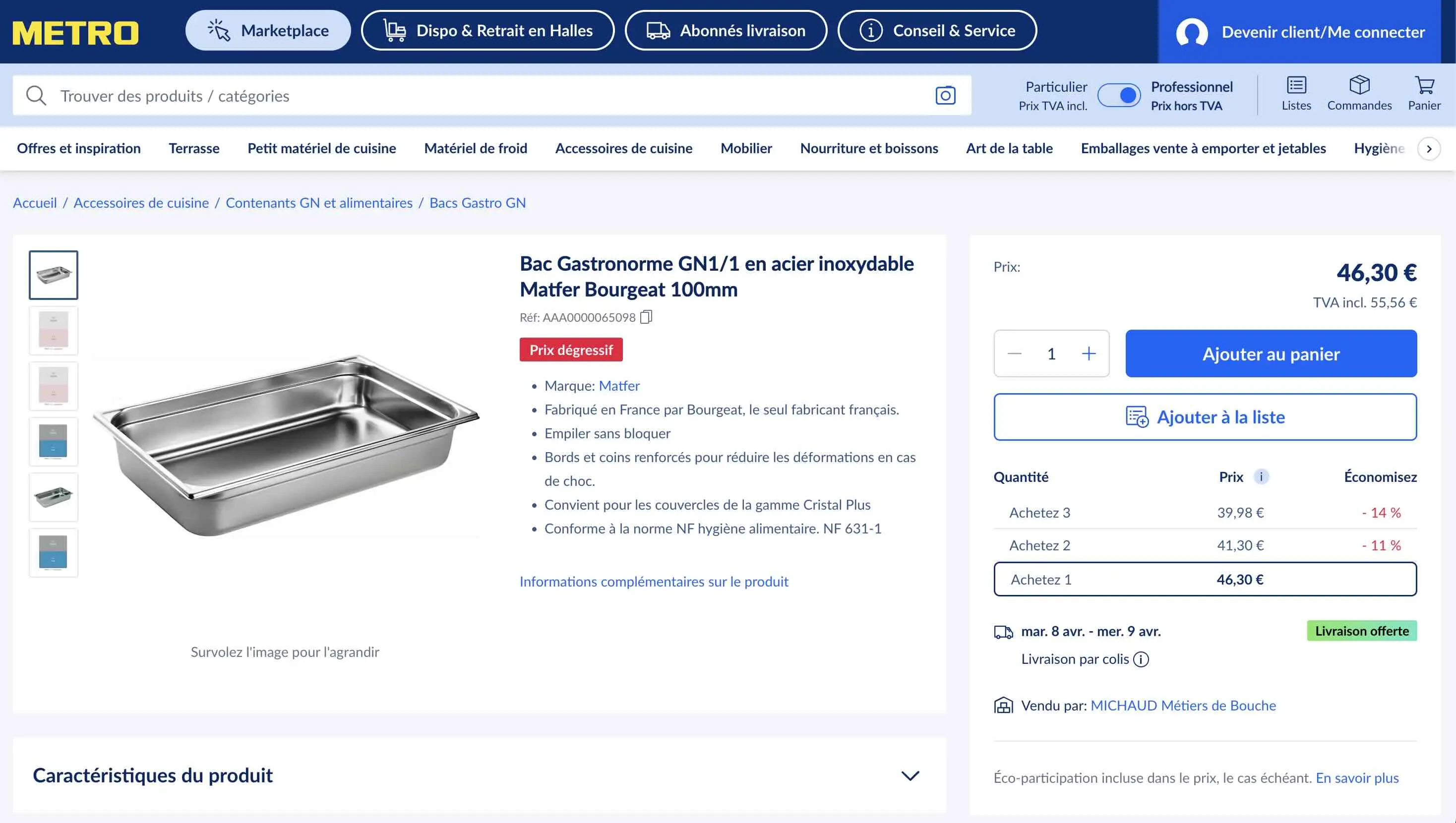
Cash and carry is also the network of choice for kitchen equipment and Horeca accessories brands like Matfer Bourgeat, Hendi, or Robot-Coupe, food packaging and transport solutions (Duni, Comatec), general merchandise and small equipment (BIC, Duracell, Stanley), or professional apparel (Lafont, Robur).
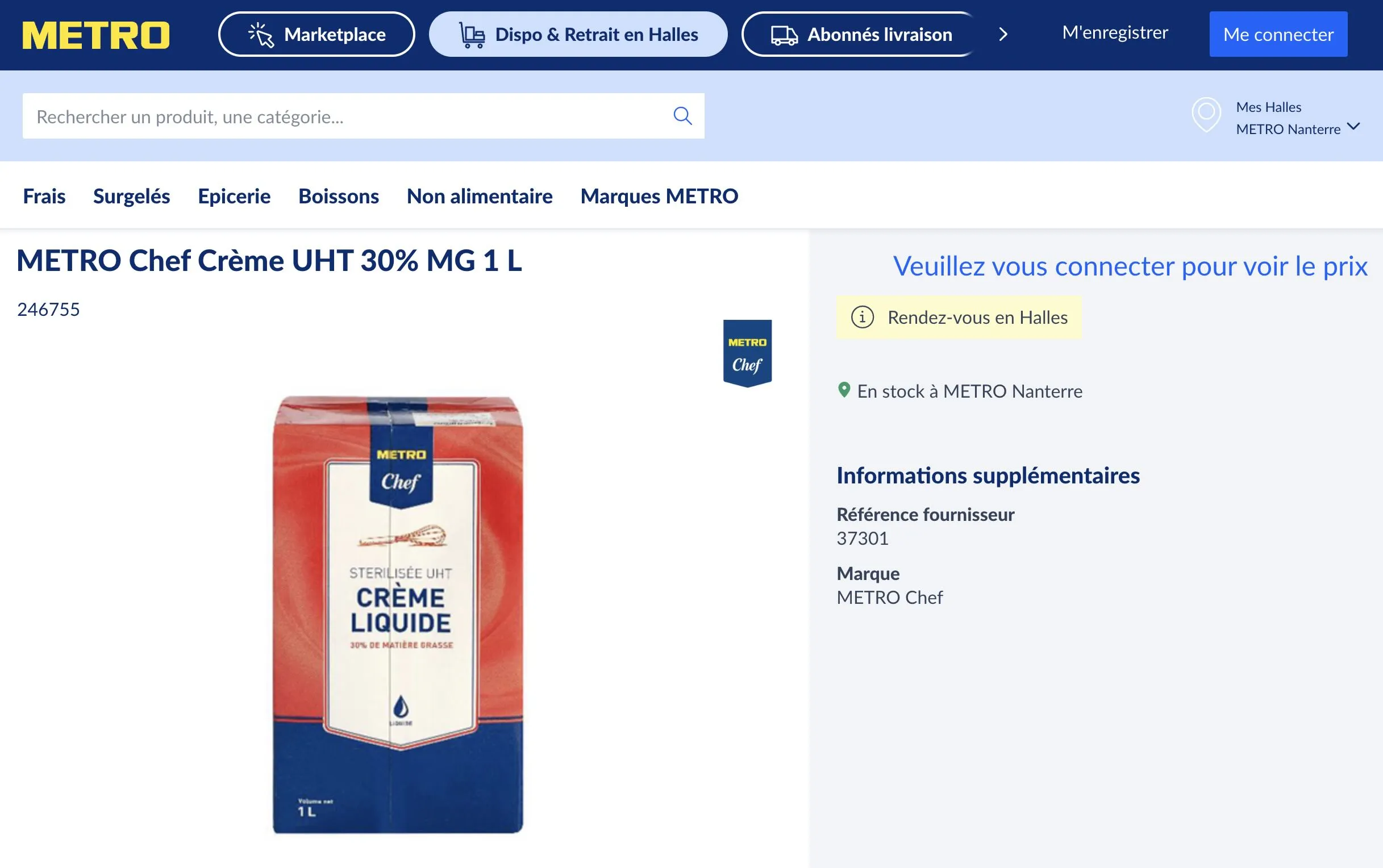
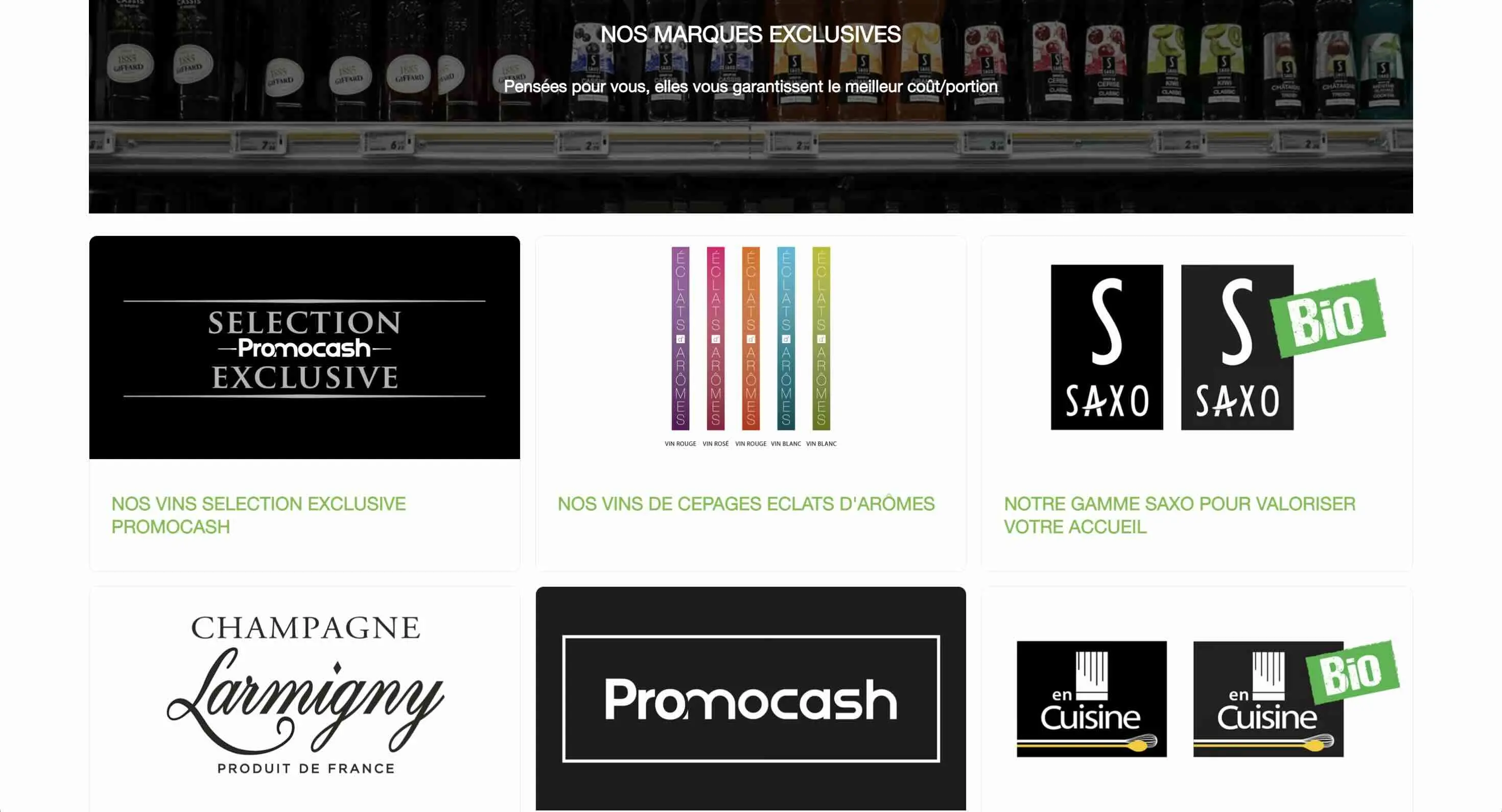
Just as in traditional consumer retail, manufacturers must remain vigilant regarding private label development by these stores; cash and carry chains have also developed their own private label brands, whether in food or non-food sections (equipment, materials, household and personal care).
How to get listed in cash & carries
Local listing and national listing are two very different paths. Furthermore, Metro and Promocash have very different operational methods.
METRO listing
Getting listed at METRO follows three primary scenarios.
Channel | Decision Maker | Access Method |
|---|---|---|
Local / Fresh products | Local METRO France team | Contact regional warehouses |
Marketplace | Online platform | Registration on the Seller Office |
National / brand products | METRO AG (Germany) or METRO France | Direct approach to the Purchasing team |
1. METRO Local
For local producers, there is a dedicated form to submit a listing application. It is also possible to prospect stores directly.
2. METRO Marketplace
If you wish to sell your products on the METRO Marketplace, go to the METRO Seller Office website and register as a seller.
Your products must be intended for the HoReCa (Hotel, Restaurant, Cafe) sector. You must also have a warehouse in France to manage shipments and returns. Finally, you will be required to provide a set of documents for account approval.
Once approved, you will be able to register your products on the Marketplace and manage your sales via the Seller Office.
3. National listing
The purchasing strategy is heavily centralized on an international scale via the METRO Global Sourcing structure, based in Germany for distribution in France. This mainly concerns national and international consumer packaged goods (CPG) brands (Unilever, Nestlé, Coca Cola, etc.) and private labels. For more specific or local products (fresh goods, regional private labels, French SMEs), METRO France retains a degree of autonomy in its purchasing decisions.
💡 METRO France uses Salsify's SupplierXM platform to collect and share product details from its suppliers. This platform facilitates listing and bringing your products to market across METRO's physical and digital channels.
Promocash listing
The Promocash network can be described as hybrid or mixed, as some outlets are directly operated, while others are franchised (independent).
A differentiated approach strategy is available to companies that wish to get their products listed there.
Store Type | Who decides on listing? | Sourcing Process | How to approach? |
|---|---|---|---|
Directly operated | Promocash Purchasing Center / Carrefour Group | Carrefour / Promocash logistics platforms | Contact Promocash headquarters (via Carrefour) |
Franchised | The franchisee themselves (more freedom) | Carrefour platforms and direct local sourcing | Contact the franchisee directly |
National listing
For brands targeting the entire network (national brands, CPG, and private labels), sourcing is centralized through the Carrefour purchasing center (or Eureca on a European scale). These products are available to all points of sale, whether franchised or directly operated, via Carrefour logistics platforms.
Local listing
Franchisees can list products locally, often tailored to their restaurant clientele (fresh products, local specialties, beverages, etc.). They can go through Carrefour platforms or buy directly from the manufacturer/artisan. Suppliers can therefore prospect franchisees one by one, starting with those whose selection or clientele matches their products.
💡 Tips for getting listed in food service distribution
Present a detailed product catalog (formats, margins, delivery terms).
Highlight the added value for clients (quality, profitability, time savings).
Ensure you have appropriate certifications (IFS, HACCP, ISO standards, etc.).
Participate in trade shows where these brands search for suppliers (SIRHA, Sandwich & Snack Show, EquipHotel).
Specific expectations of chains from their suppliers
Finally, compared to traditional supermarkets, cash and carry brands can have unique expectations from their suppliers due to their B2B clientele:
Specialized ranges: products adapted to the specific needs of professionals (HoReCa, retailers) which may differ from retail consumer products.
Product availability: clients (restaurateurs, merchants, etc.) often buy based on immediate needs. Suppliers must be able to offer rapid replenishment, suitable formats, and responsive logistics. Delivery times must be respected with a high service rate, as professionals cannot afford stockouts.
Formats: design larger packaging sizes, bulk packs, or even ready-to-use / ready-to-sell formats.
Advisory support: provide technical talking points, demonstrations, or even training (to help restaurant owners showcase a product, cook it, or suggest it to their own patrons).
Promotions: bundle deals, wholesale net prices, volume-purchase discounts. Suppliers must offer attractive, short-term promotions, customized to specific clients if possible.
Pricing: professional clients look for rapid gross margins, so suppliers must be able to offer a good quality-to-price ratio with minimal unnecessary marketing costs.
Technical and regulatory documentation: provide detailed technical sheets, information on product traceability, and shelf-life storage.
Performance analysis: in distribution, it is indispensable to establish an effective tracker for sales performance. The Sidely CRM allows you to monitor your presence, and your merchandising, and perform highly accurate shelf audits in just a few clicks.
In conclusion
The cash and carry network is highly strategic for brands addressing dining trade professionals. Local producers and large corporations can get listed, but METRO and Promocash represent the entirety of the channel; it is therefore essential to understand the organization and positioning of these two brands, and to adapt your strategy and prospecting to their operational structures.
Alexis co-founded Sidely after several years of service as a sales director. To understand what builds, or breaks, a salesperson's performance, he conducted more than 100 telephone interviews with field sales representatives. At Sidely, he transforms this raw knowledge into concrete support, based on facts rather than assumptions.
See also

Artificial intelligence and field professions: what our 2026 studies reveal
Adoption, barriers, use cases: discover what our three studies reveal about the role of AI among sector managers, sales representatives, and foodservice sales reps.

CHR and RHF Sales Representatives: portrait of a relationship-driven profession in the era of data
Equipment, productivity, AI: discover the major trends for the HORECA and food service sales profession in 2026 through our field study.

Pharmaceutical Sales Representative in France: Portrait of a Field Job Under Pressure
Compensation, aspirations, AI usage: discover the major trends in the pharmaceutical sales representative profession in 2026 through our field study.

Area Sales Managers in France: who are they and how is the profession evolving in 2026?
Compensation, aspirations, AI usage: discover the major trends in the field sales representative profession in 2026 through our field study.
The area manager professions in 2026
Discover the trends, the challenges, and the key figures.